Understanding landforms Normal Science Worksheets for Ages 5-9
3 filtered results
-
From - To
Explore the wonders of the earth with our "Understanding Landforms" worksheets, designed for children ages 5-9! These engaging resources introduce young learners to key concepts in geography and science through vibrant illustrations and interactive activities. Young learners will discover various landforms, such as mountains, rivers, and deserts, fostering curiosity and encouraging observation of the world around them. Each worksheet provides a fun and educational experience, promoting critical thinking and enhancing knowledge retention. Ideal for both classroom and home learning, these worksheets facilitate guided exploration, helping young minds grasp the basics of landforms while developing essential skills. Start your adventure today!
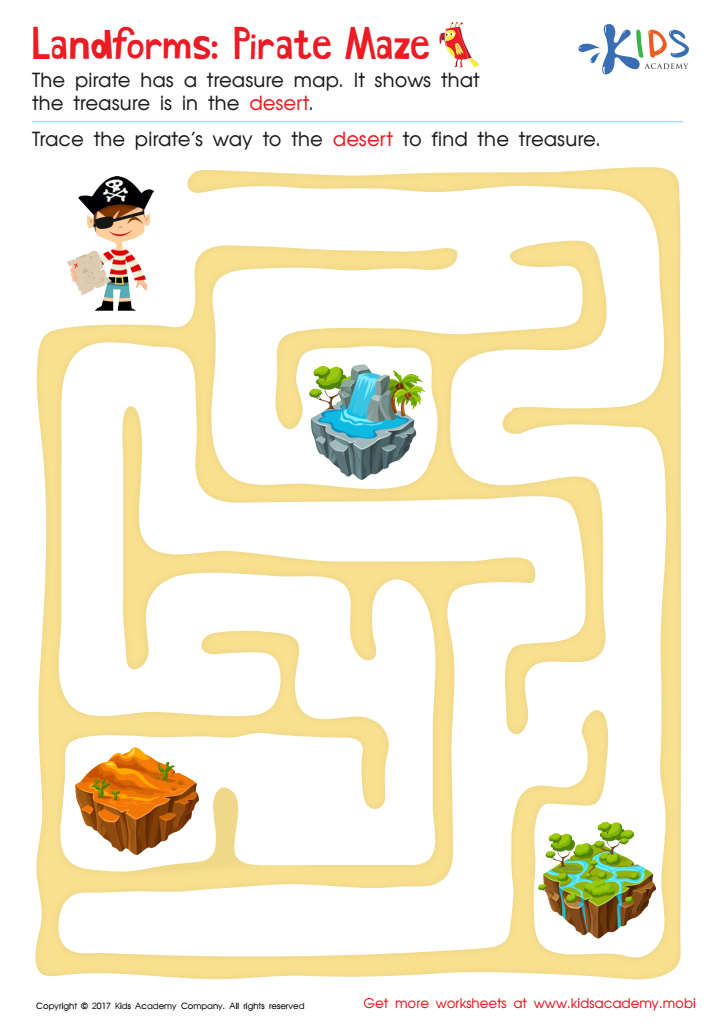
Landforms: Pirate Maze Printable
 Assign to My Students
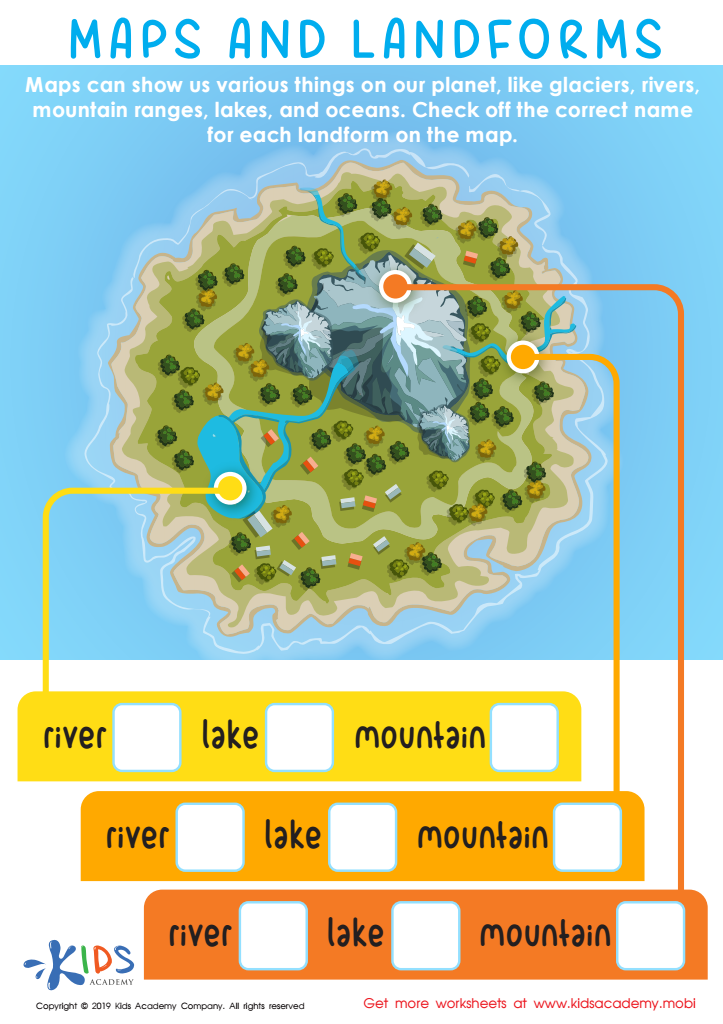
Maps and Landforms Worksheet
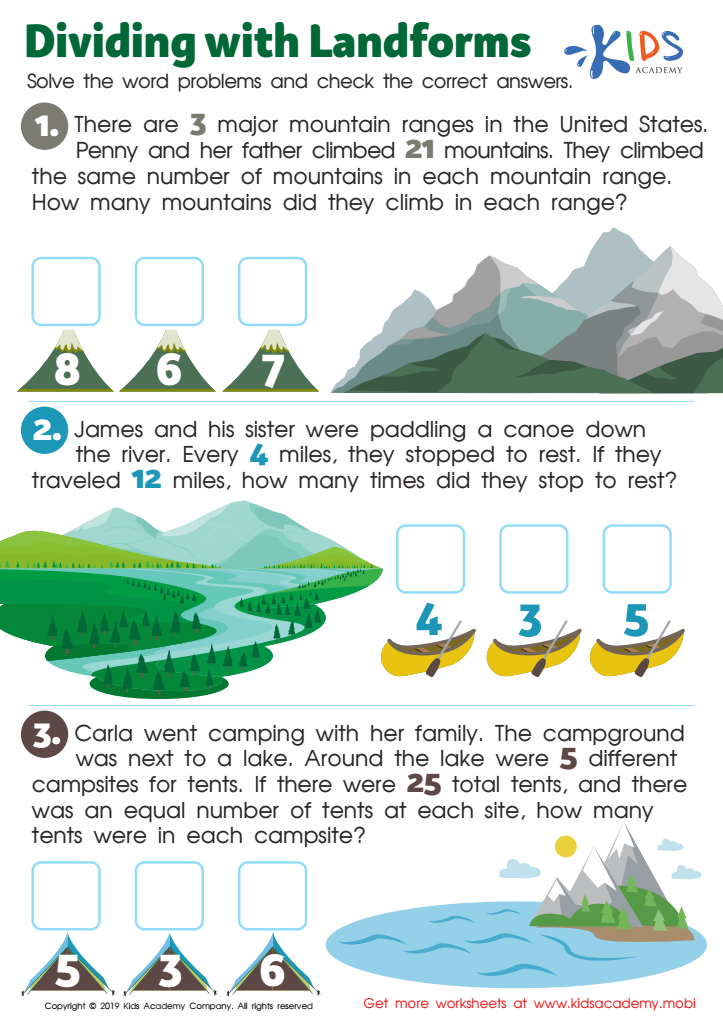
Dividing with Landforms








Understanding landforms is crucial for young learners, as it lays the foundation for their geographic knowledge and critical thinking skills. For children ages 5-9, grasping the concept of landforms—such as mountains, valleys, rivers, and plains—helps them connect with their environment and fosters a sense of curiosity about the world.
Parents and teachers play a pivotal role in guiding this exploration, as early experiences shape children's perspectives on nature and geography. Learning about landforms encourages observational skills and empowers children to ask questions, stimulating their natural inquisitiveness.
Moreover, comprehension of landforms supports broader learning, integrating science with art, storytelling, and even mathematics through concepts like measurement and spatial awareness. As children engage with landforms in their lessons, they develop not only cognitive skills but also an appreciation for the Earth's diversity and the importance of conservation.
Incorporating landform education helps make connections to cultural and historical contexts, thereby enhancing children's understanding of global communities. Consequently, when parents and teachers prioritize exploring landforms, they facilitate lifelong learning, curiosity, and environmental stewardship in their children. This foundational knowledge equips young learners for more complex subjects in later grades and nurtures informed, engaged citizens.







