Understanding forces Normal Physical Science Worksheets for Ages 5-9
6 filtered results
-
From - To
Dive into the fascinating world of physics with our "Understanding Forces" printable worksheets, designed specifically for children aged 5-9. These engaging activities introduce young learners to fundamental concepts such as gravity, push, pull, and friction. Crafted by educational experts, each worksheet blends fun illustrations with easy-to-follow instructions, making science both exciting and accessible. Perfect for classroom use or homeschooling, our worksheets encourage critical thinking and hands-on learning, laying a strong foundation for future scientific exploration. Empower your child to discover the wonders of physical science through interactive lessons that spark curiosity and inspire lifelong learning.
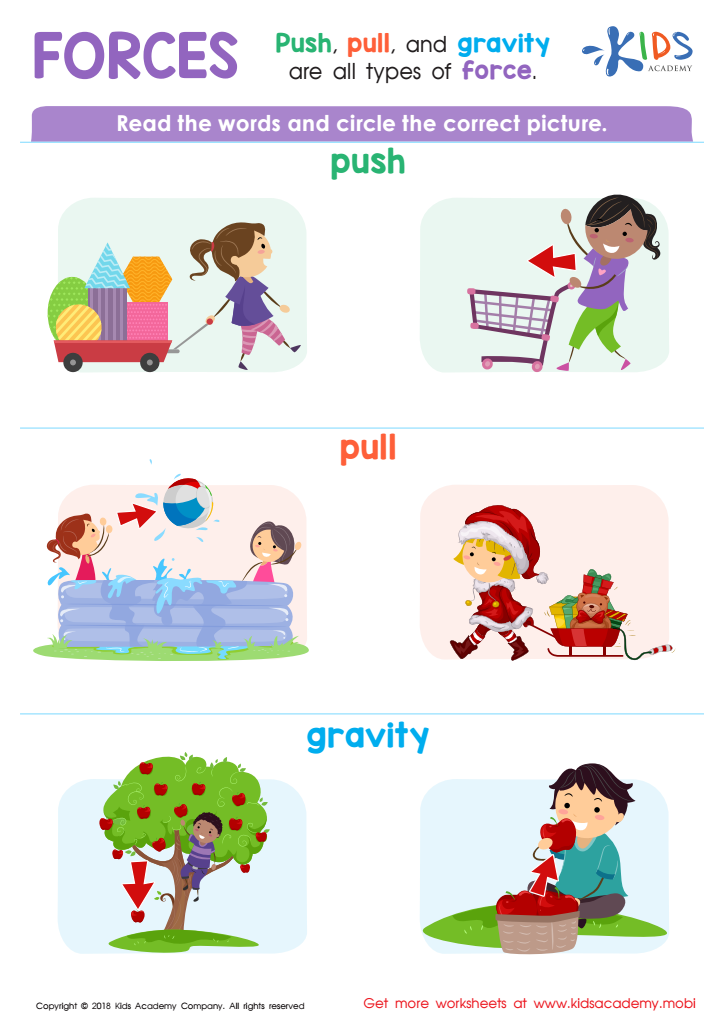
Forces Worksheet
 Assign to My Students
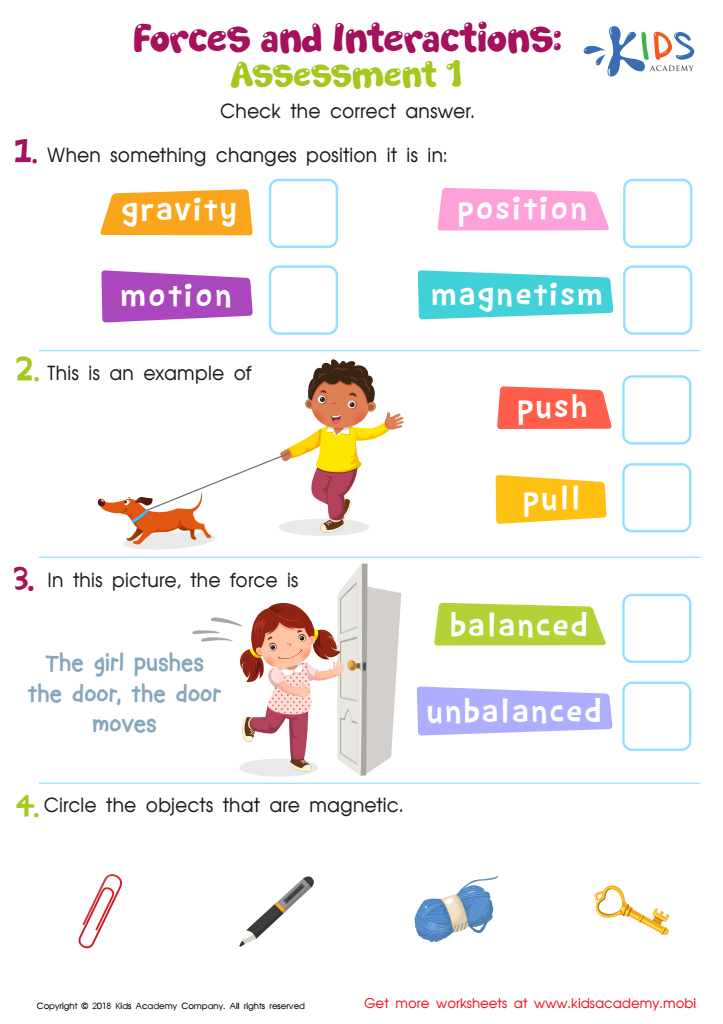
Forces and Interactions Printable
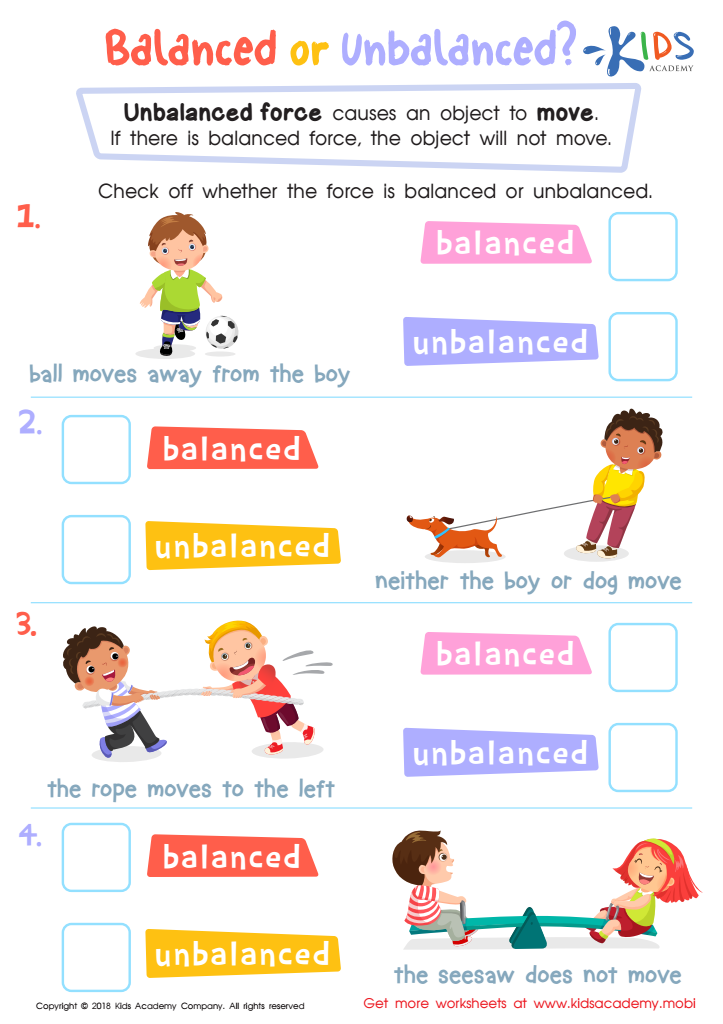
Balanced or Unbalanced Science Worksheet
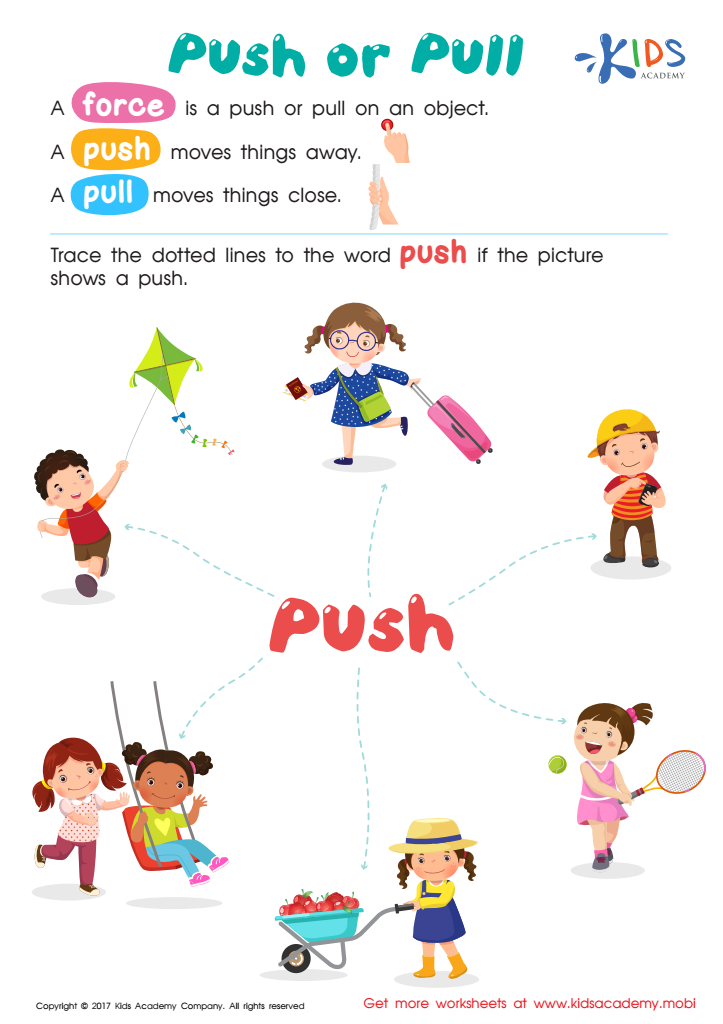
Push or Pull Worksheet
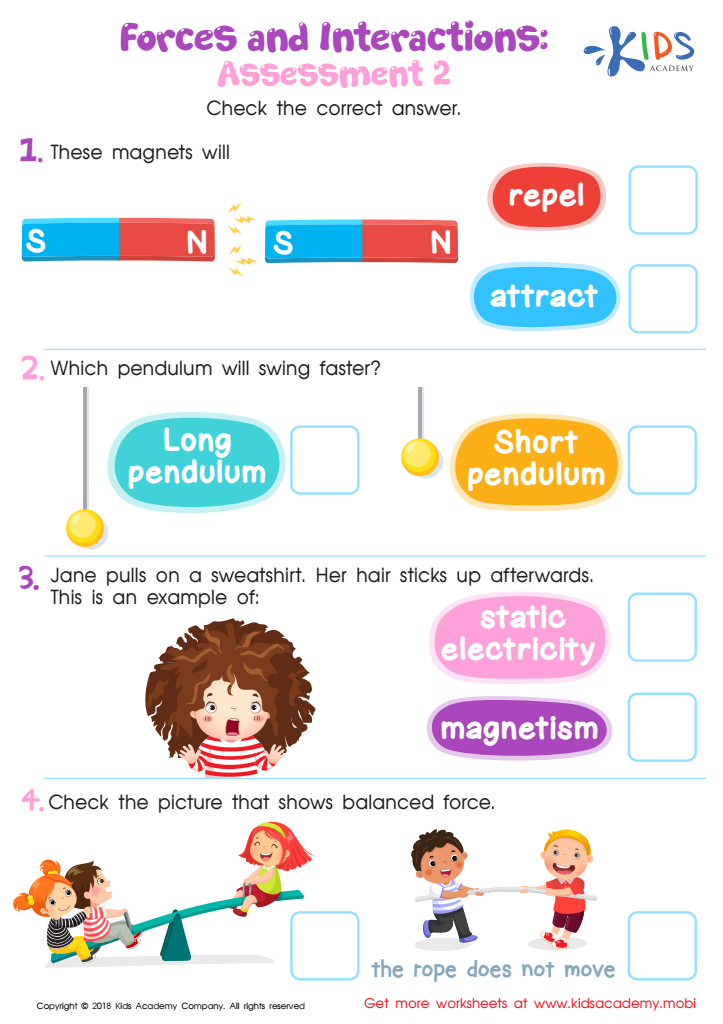
Forces and Interactions Worksheet For 3rd Grade
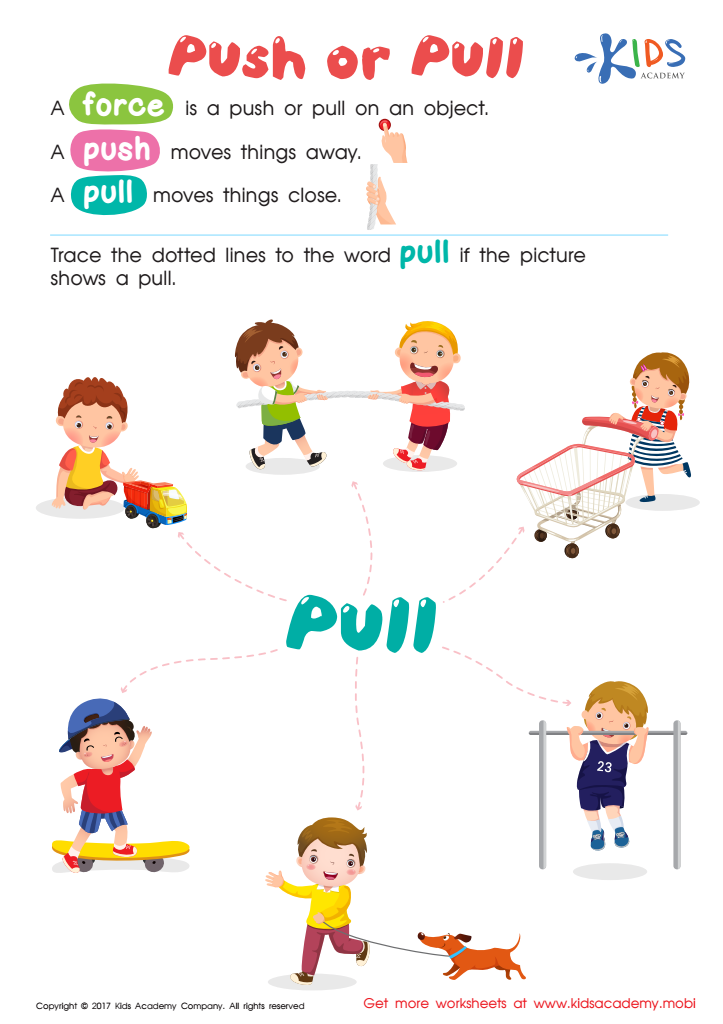
Pull or Push Worksheet







Understanding forces in physical science is essential for young children aged 5-9 because it builds the foundation for future learning and piques their natural curiosity about how the world works. Forces like push and pull are fundamental concepts that kids encounter daily while playing with toys, riding bikes, or even interacting with doors and buttons. By grasping these ideas early, kids can appreciate why things move or stay still, giving them a clearer understanding of the world around them.
For parents and teachers, fostering this awareness can be incredibly beneficial. When children learn about forces through guided play and simple experiments, they develop critical thinking and problem-solving skills early on. For instance, understanding why a ball rolls down a slope or how a magnet attracts objects can intrigue them and ignite a lifelong interest in science and discovery.
Moreover, these scientific principles align with cognitive development stages in this age group. Hands-on activities that illustrate forces can enhance sensory learning, which is crucial between the ages of 5-9. Enabling kids to explore and ask questions about forces helps build their confidence and nurtures a sense of achievement. Essentially, early exposure to scientific concepts like forces can foster a deeper, more rounded educational experience, making science not just a subject but a discovery adventure.







