Phonics recognition Normal Consonants Worksheets for Ages 6-8
3 filtered results
-
From - To
Discover our engaging Phonics Recognition Normal Consonants Worksheets designed specifically for children aged 6-8! These interactive resources help young learners develop essential phonics skills by focusing on consonant sounds. With colorful visuals and fun activities, these worksheets make learning enjoyable, promoting better reading and pronunciation abilities. Each worksheet targets different normal consonants, allowing children to practice sound recognition through various exercises, including matching, tracing, and fill-in-the-blanks. Whether in the classroom or at home, our worksheets foster an effective learning environment for early readers. Empower your child's literacy journey today with our thoughtfully crafted phonics worksheets that ensure educational success!
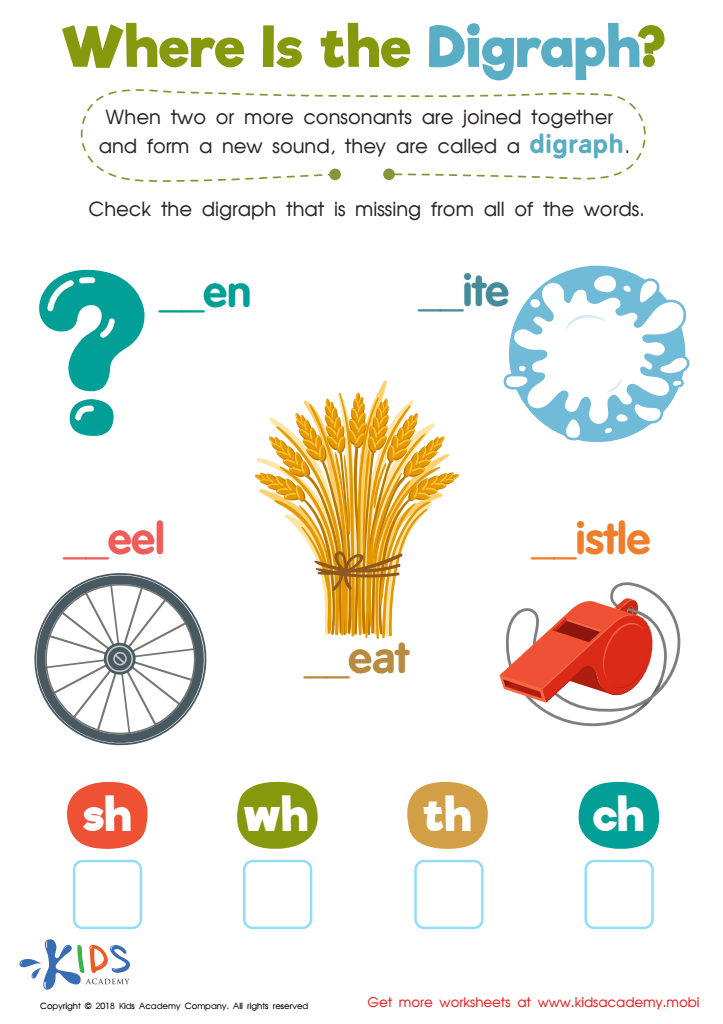
Where Is the Digraph? Worksheet
 Assign to My Students
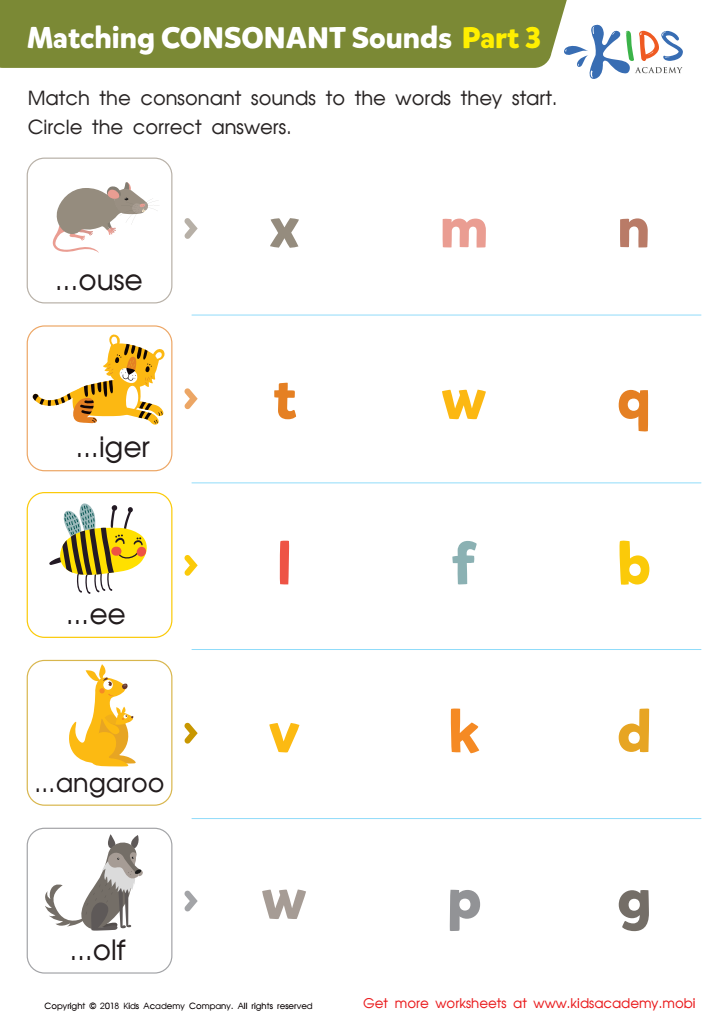
Matching Consonant Sounds: Part 3 Worksheet
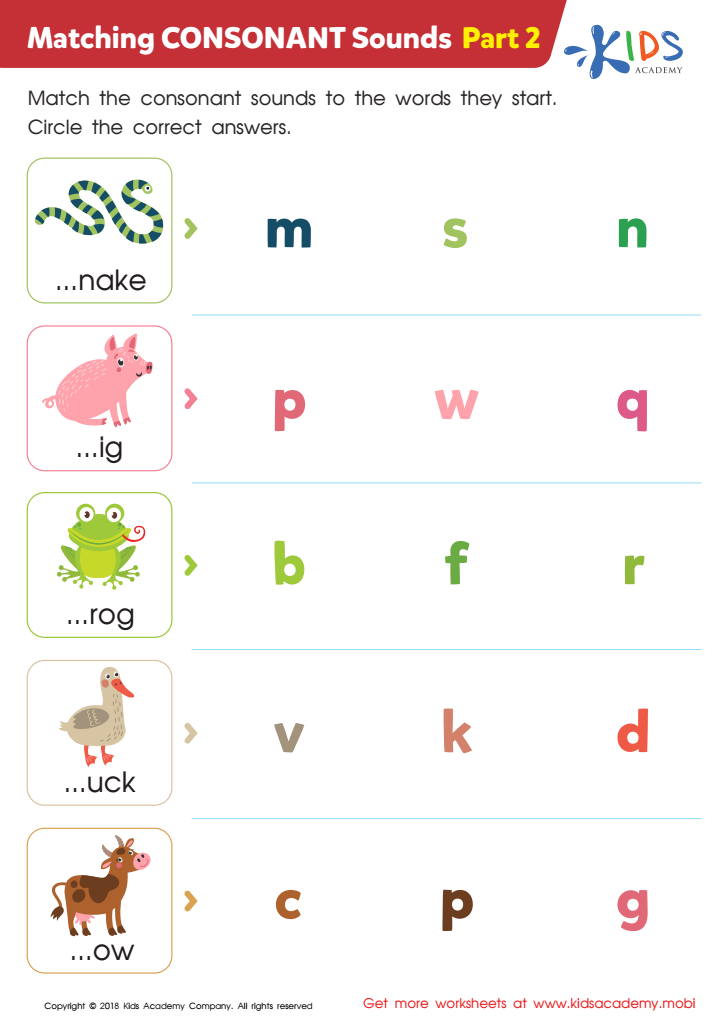
Matching Consonant Sounds: Part 2 Worksheet



Phonics recognition of normal consonants is crucial for children aged 6-8, as it lays the foundational skills for reading and writing. At this age, children are beginning to decode words, and understanding the sounds associated with consonants is essential for blending sounds into recognizable words. Proficient phonics skills help improve vocabulary, spelling, and overall literacy.
Parents and teachers should prioritize phonics because it supports cognitive development and enhances language acquisition. Children who grasp phonics tend to become confident readers, which fosters a love for books and learning. Additionally, familiarity with consonants aids in distinguishing between different sounds, making it easier for children to identify letters and build words.
Moreover, early mastery of phonics alleviates future reading difficulties, promoting smoother transitions to more complex texts. Engaging children with interactive phonics activities, songs, and games encourages their interest and retention. Overall, focusing on consonant recognition during these formative years is essential for empowering children to thrive academically and socially, ultimately contributing to lifelong literacy and communication skills. Parents and teachers play a vital role in nurturing these skills, ensuring children feel supported and capable as they embark on their reading journeys.






