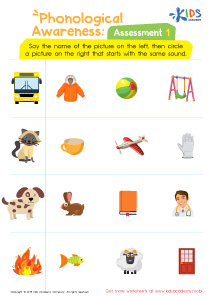
Spelling practice Normal Elementary Phonics Worksheets for Ages 6-8
3 filtered results
-
From - To
Boost your child's literacy with our Spelling Practice Normal Elementary Phonics Worksheets, designed specifically for ages 6-8. These engaging worksheets help young learners enhance their spelling skills through interactive phonics activities tailored to their developmental stage. Children will explore letter sounds, blend words, and practice spelling in a fun, supportive environment. Our carefully crafted exercises encourage the application of phonics knowledge, making reading and writing more enjoyable. Perfect for both classroom settings and at-home learning, these worksheets offer the ideal resource to build confidence in young spellers. Discover the joy of learning and watch your child's skills flourish today!
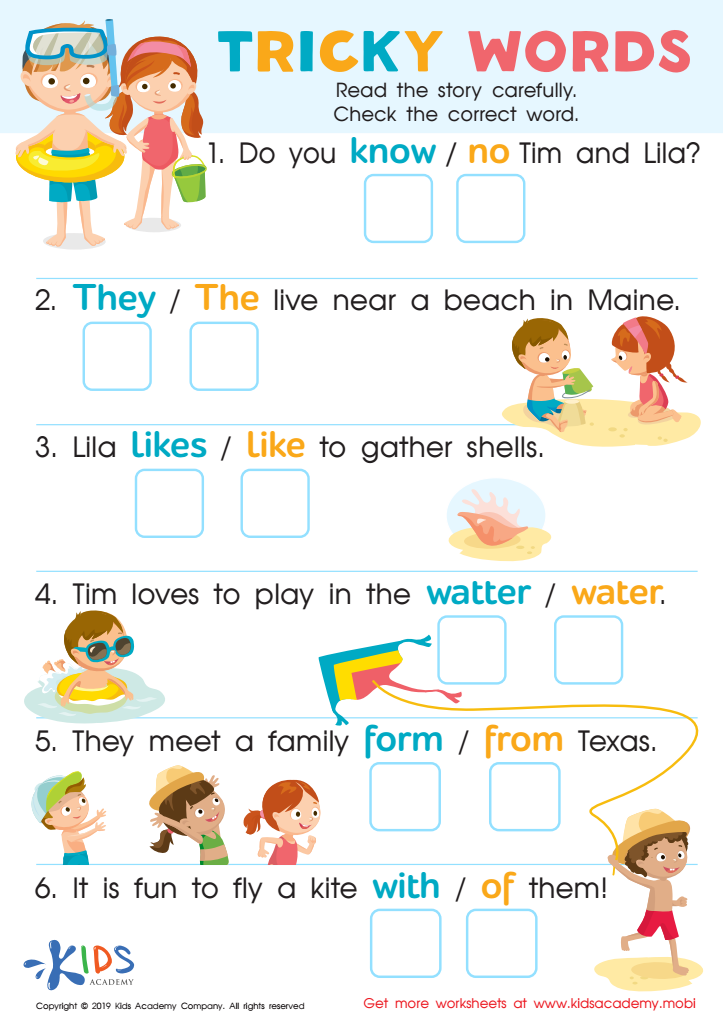
Tricky Words Worksheet
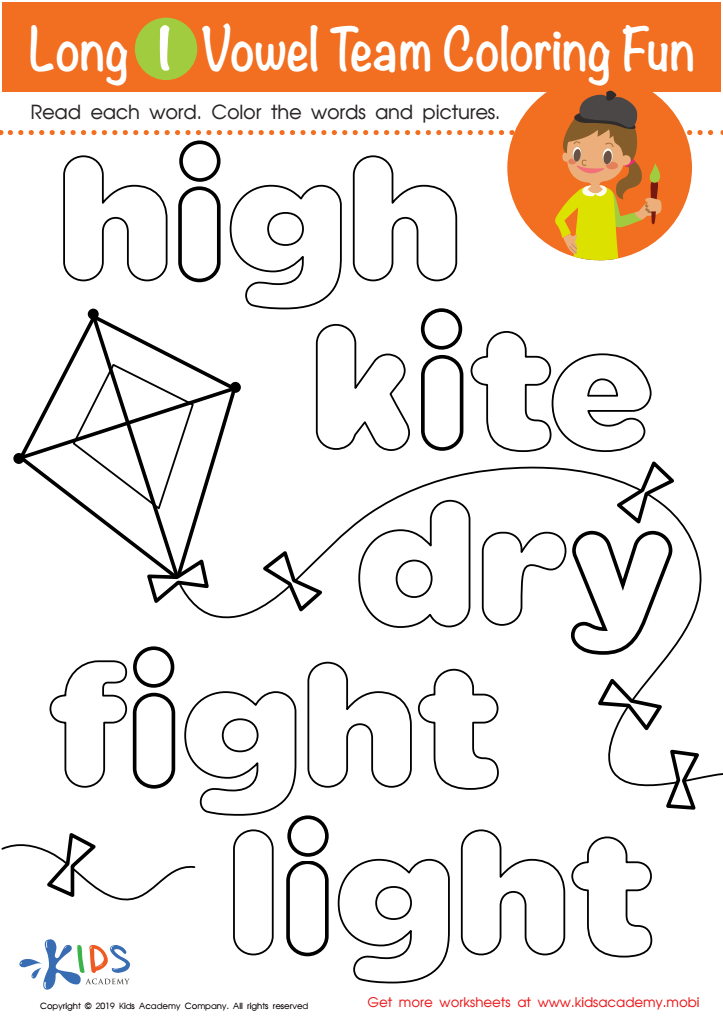
Long I Vowel Team Coloring Worksheet
 Assign to My Students
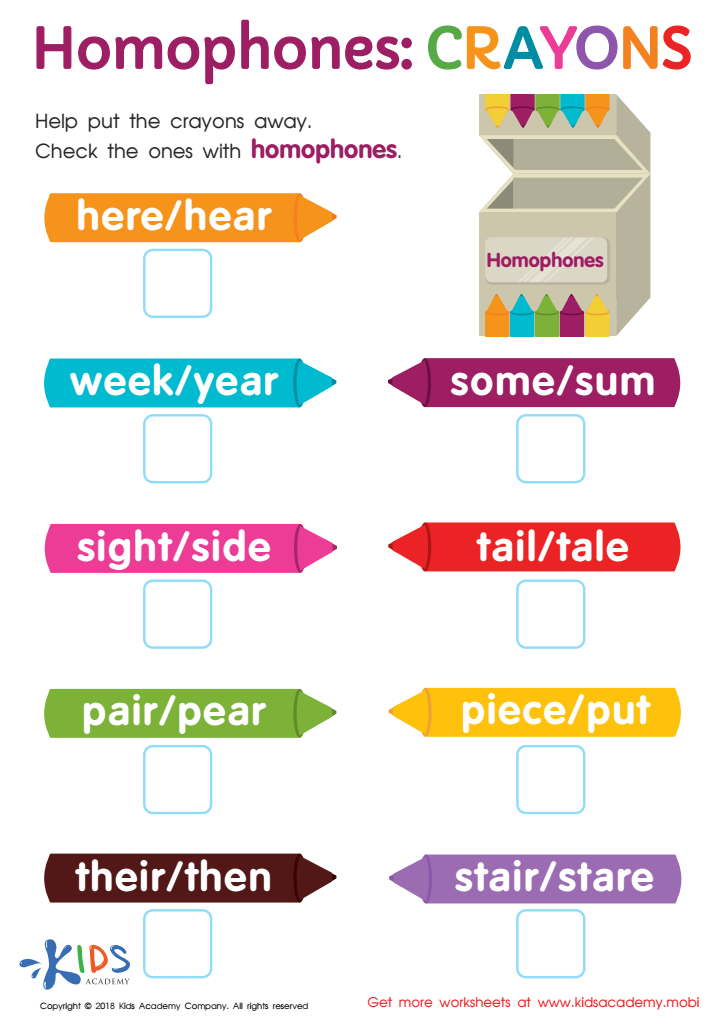
Homophones: Crayons Worksheet




Spelling practice through Normal Elementary Phonics is crucial for children aged 6-8, as it lays a solid foundation for reading and writing. At this developmental stage, students are refining their language skills, and phonics helps them understand the relationship between letters and sounds, which enhances their ability to decode words. Engaging in systematic spelling practice cultivates phonemic awareness, enabling children to blend sounds, segment words, and ultimately decode unfamiliar text independently.
Moreover, mastering spelling boosts children's confidence and fluency in writing. When young learners consistently practice spelling, they become more adept at expressing their thoughts through written words. This skill not only aids in academic success but also prepares them for future literacy challenges.
Additionally, spelling practice can foster a love for language and literature. By recognizing patterns in words and exploring their meanings, children gain a deeper appreciation for vocabulary, which is essential for effective communication.
Parents and teachers play a pivotal role in this journey. By incorporating fun and engaging spelling activities and regularly reviewing progress, they can inspire a lifelong interest in reading and writing while equipping students with the vital skills they need for academic achievement.