Rhyming skills development Normal Alphabet Worksheets for Ages 6-8
4 filtered results
-
From - To
Unlock the magic of rhyming with our engaging Normal Alphabet Worksheets for Ages 6-8! Designed to make learning fun and effective, these worksheets help young learners enhance their rhyming skills through interactive and enjoyable activities. Children will explore different word families, sound patterns, and rhyming schemes, all while reinforcing their alphabet knowledge. Perfect for classroom or at-home use, our worksheets provide a solid foundation for early literacy development. By practicing with these specially crafted sheets, kids will gain the confidence and skills needed to become proficient readers and writers. Start the rhyming adventure today with Kids Academy!
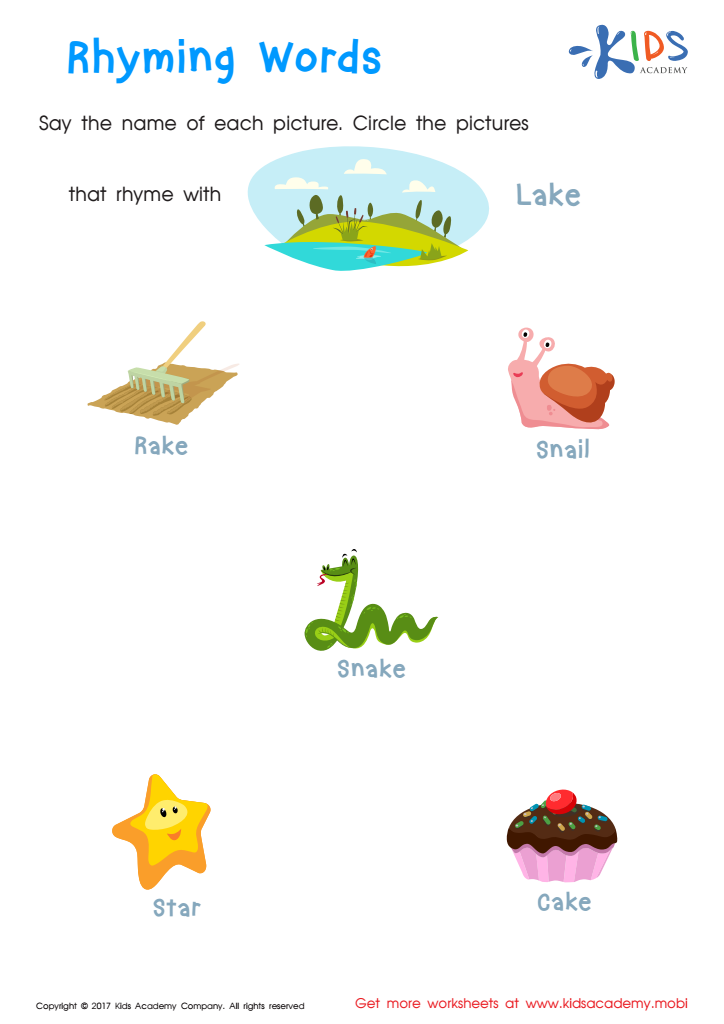
Rhyming Words Rhyming Worksheet
 Assign to My Students
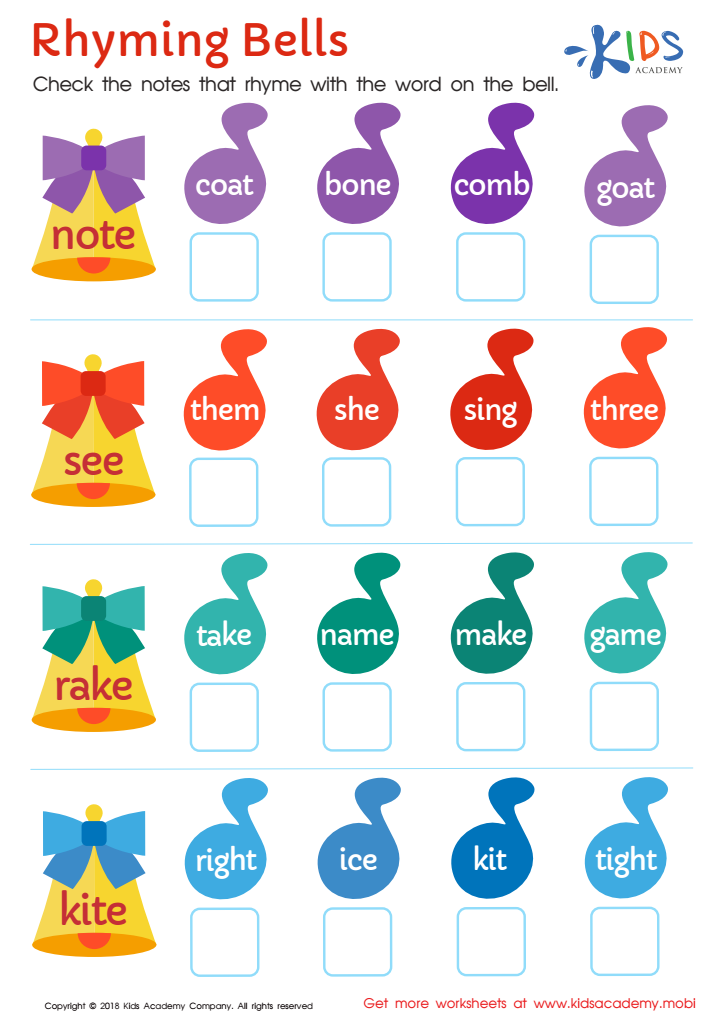
Rhyming Bells Worksheet

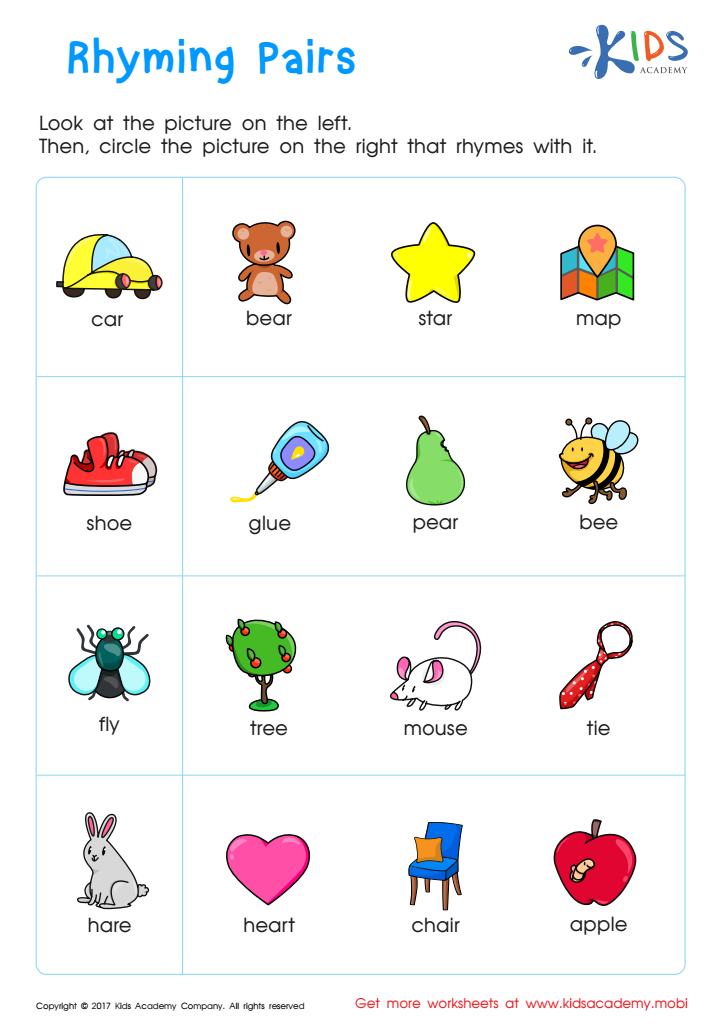
First Words: Picture Rhymes Worksheet








Rhyming skills development is crucial for children aged 6-8, both for parents and teachers to prioritize, as it forms a strong foundation for literacy and language proficiency. Rhyming enhances phonemic awareness, which is the ability to hear, identify, and manipulate phonemes, the smallest units of sound that distinguish words from one another. This skill is fundamental for reading and spelling development.
When children can recognize and produce rhymes, they are essentially practicing listening to sound patterns, which helps them decode new words more easily. This promotes reading fluency as children start to predict and infer the meaning of text based on phonetic and contextual cues.
Additionally, engaging with rhymes encourages a love for language through fun and interactive play. Songs, nursery rhymes, and poems make learning to read an enjoyable experience, fostering a positive attitude towards literacy.
Another benefit is vocabulary expansion. Rhymes introduce children to new words within context, making it easier for them to remember and understand. This exposure often leads to improved listening comprehension and communication skills.
By investing in rhyming activities, parents and teachers equip children with essential tools for academic success and lifelong learning. Ensuring that these foundational skills are developed will help children become confident and proficient readers and communicators.







