Understanding syllables Normal Alphabet Worksheets for Ages 6-8
3 filtered results
-
From - To
Enhance your child's reading skills with our "Understanding Syllables Normal Alphabet Worksheets" designed specifically for ages 6-8. These interactive and engaging worksheets focus on teaching syllable recognition and division, which are crucial for developing literacy. Each worksheet offers fun activities that help students break down words into manageable parts, improving their spelling and reading fluency. Our resources are ideal for homeschooling, classroom use, or supplemental learning. With colorful illustrations and easy-to-follow instructions, these worksheets make it enjoyable for young learners to grasp the concept of syllables. Download our worksheets today and give your child the foundation for successful reading!
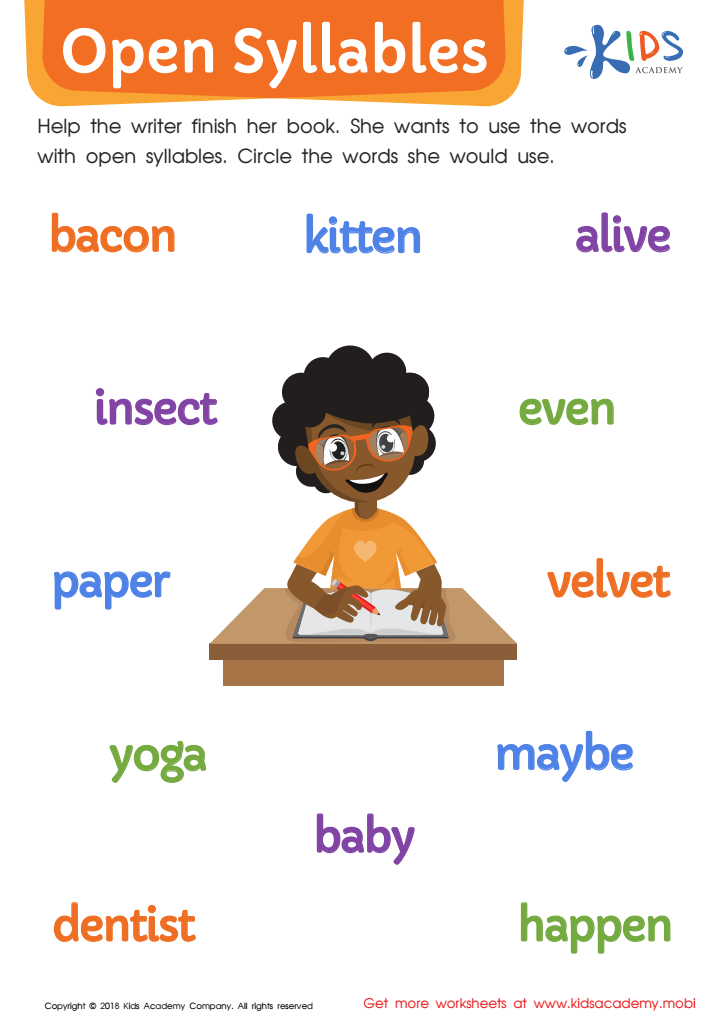
Open Syllables Worksheet
 Assign to My Students
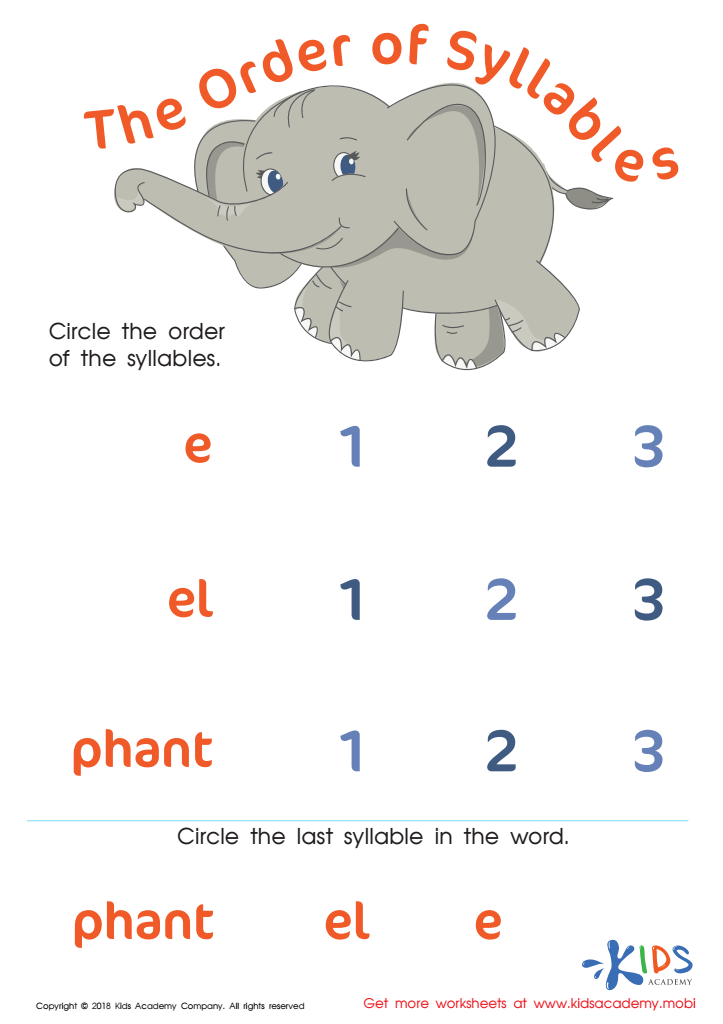
The Order of Syllables Worksheet
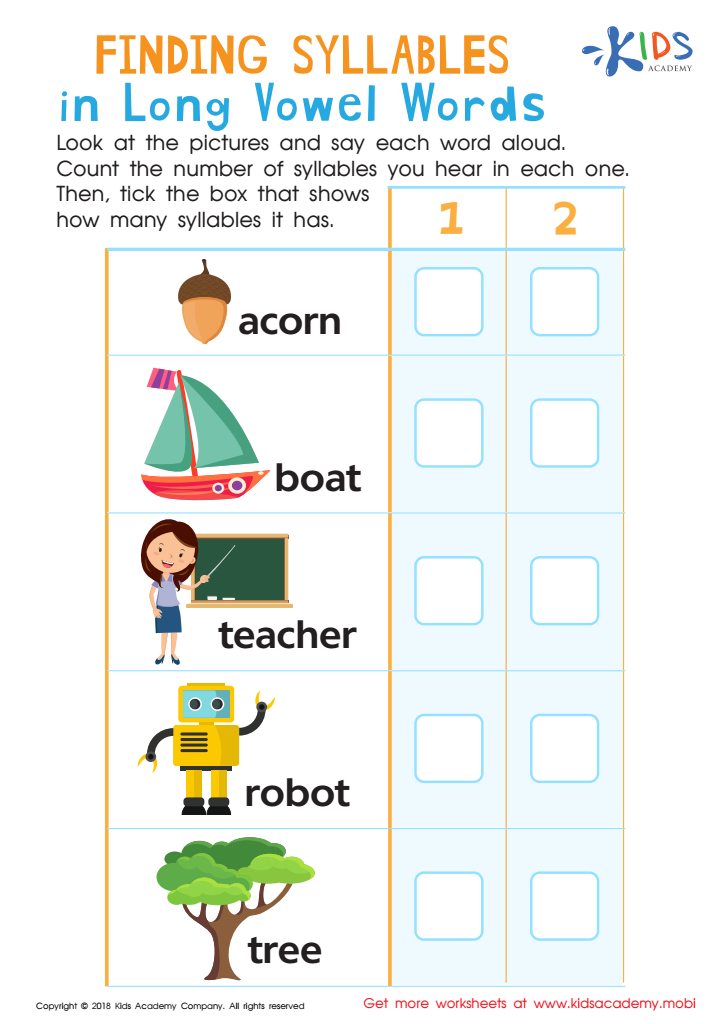
Finding Syllables in Long Vowel Words Worksheet








Understanding syllables and the normal alphabet is foundational for children's reading and writing development, particularly for those aged 6 to 8. At this crucial stage, children are making significant strides in literacy, and grasping the concept of syllables enhances their phonic awareness, aiding in decoding words. Recognizing syllables helps in breaking down complex words into manageable parts, making it easier for students to read unfamiliar text.
For parents and teachers, fostering this understanding can improve children’s spelling skills and vocabulary acquisition. Knowing how to break words into syllables encourages children to explore language more deeply, leading higher engagement in literacy-related activities. This also empowers students to apply their knowledge in both reading and writing, nurturing greater confidence in their abilities.
Moreover, understanding the normal alphabet is essential for children as they learn to identify letters, sounds, and their correlation to syllables. This comprehension forms the basis for advancing literacy skills while supporting phonemic awareness, a critical component of learning to read.
By emphasizing syllable awareness and recognition of the normal alphabet, parents and educators not only play a role in enhancing individual learning outcomes but also prepare children for the lifelong journey of effective communication and literacy.







