
Vocabulary enhancement Normal Letter Recognition Worksheets for Ages 6-8
3 filtered results
Difficulty Level
Grade
Age
-
From - To
Subject
Activity
Standards
Discover our engaging Vocabulary Enhancement Normal Letter Recognition Worksheets, specially designed for children aged 6-8. These worksheets encourage novice readers to strengthen their letter recognition skills while expanding their vocabulary. With fun activities, children will identify letters, practice phonetics, and connect words to illustrations, making learning enjoyable and effective. Our resources promote cognitive development by offering varied and interactive challenges that ignite curiosity. Ideal for classroom use or at-home learning, these worksheets not only build literacy skills but also boost confidence. Equip your child with the essential tools for language mastery and watch their vocabulary flourish! Perfect for early education!
Favorites
With answer key
Interactive
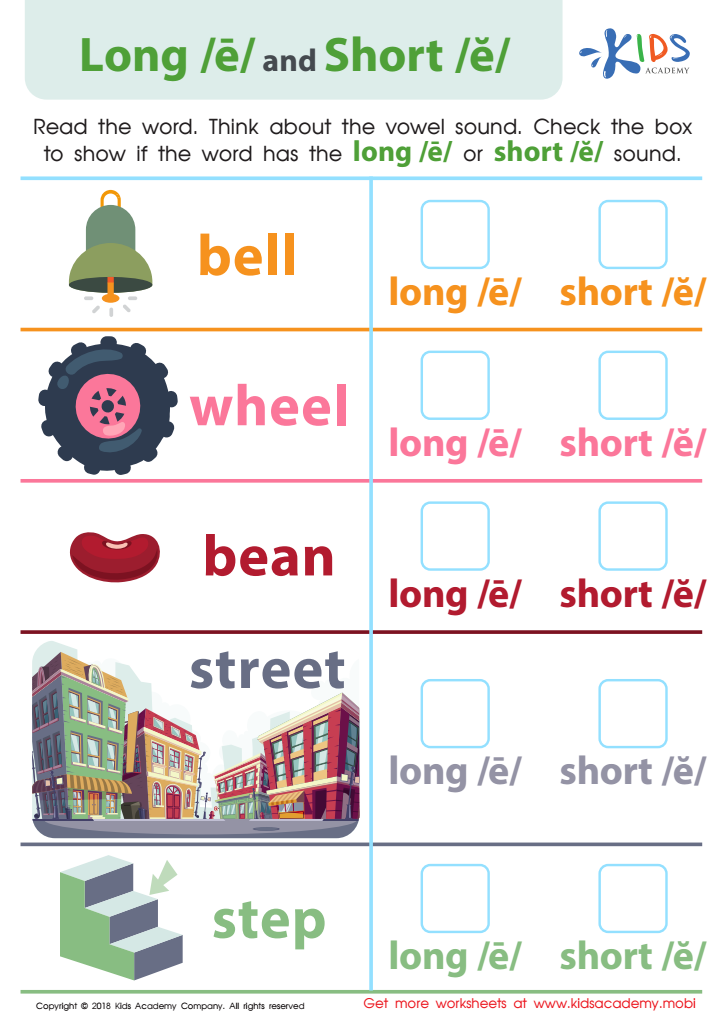
Reading: Long E and Short E Worksheet
Provide your students with valuable practice in distinguishing long and short E sounds with this worksheet. They'll look at pictures and read the words, then decide which sound is being used. It's an effective tool to help them master a difficult concept.
 Assign to My Students
Reading: Long E and Short E Worksheet
Worksheet
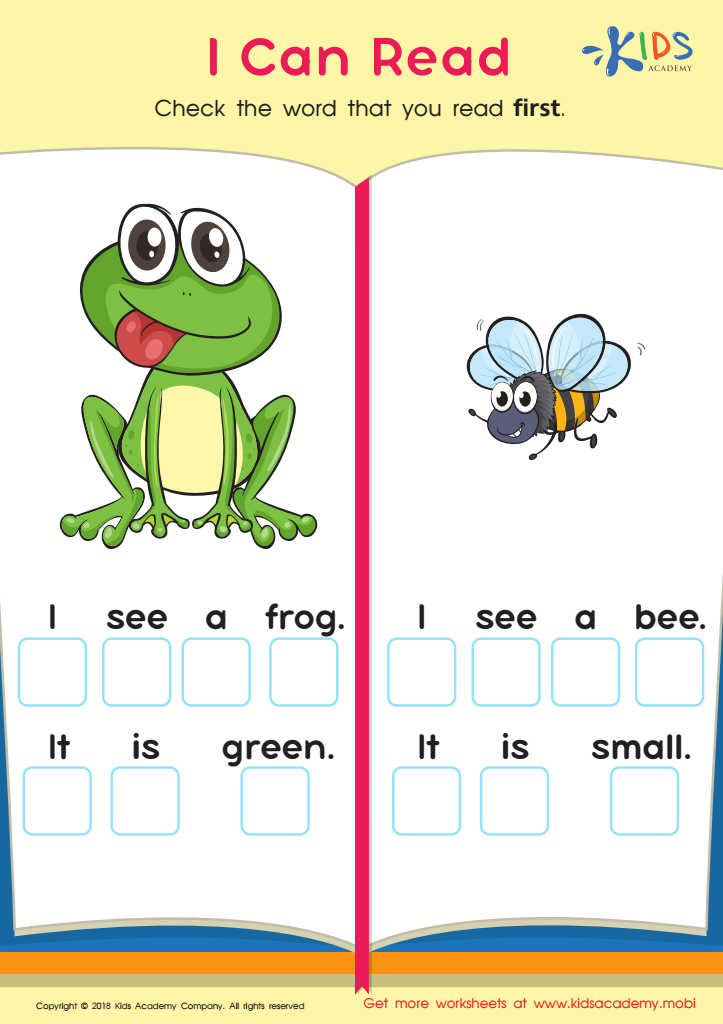
I Can Read Worksheet
Test your child's reading skills with this fun worksheet. See how well they know one-letter, two-letter, and five-letter words. Ask your little one to read the sentences and tick the word they identify first. It's a great way to track their progress and help them become more confident readers.
I Can Read Worksheet
Worksheet
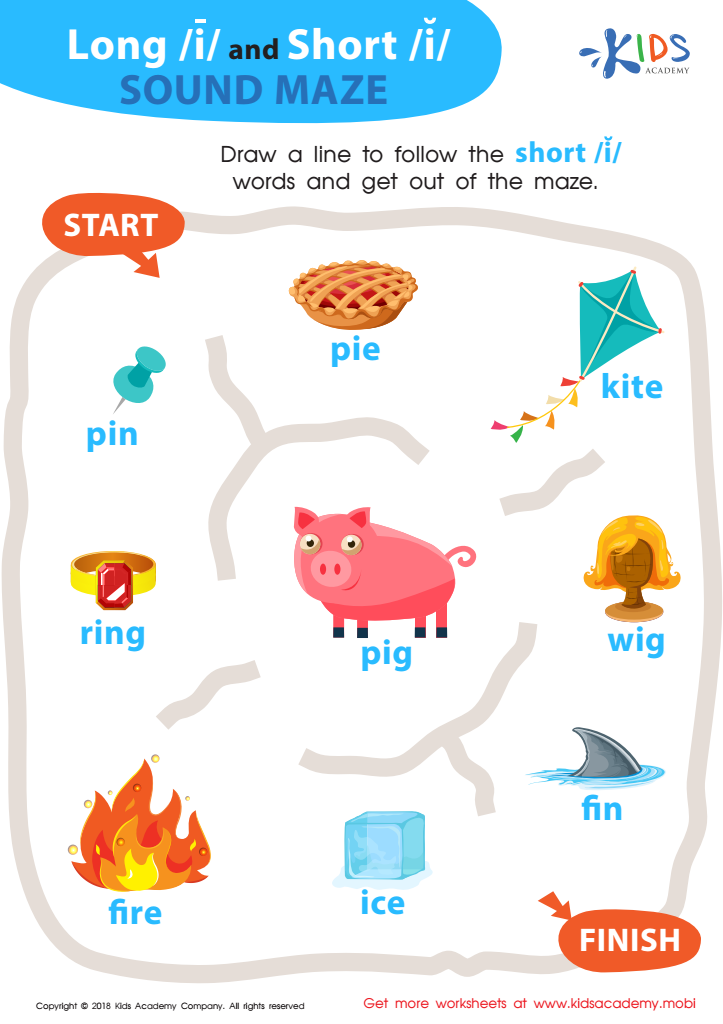
Reading: Long I and Short I Sound Maze Worksheet
Question your students if the worksheet is entertaining. They may respond negatively! Nonetheless, this activity will bring satisfaction while learning the distinction between a long and short I sound. Students read the words in the maze and only follow the words with the short I sound to finish the exercise. Grasping the difference between long and short vowels is demanding, but this worksheet helps students understand this reading skill.
Reading: Long I and Short I Sound Maze Worksheet
Worksheet
Join Kids Academy for Free
Who is primarily going to use this learning content?








Vocabulary enhancement and normal letter recognition are crucial components of early literacy development for children aged 6-8. Parents and teachers should prioritize these skills as they form the foundation for reading and writing. Enhanced vocabulary allows children to express their thoughts more clearly and engage in meaningful conversations. A rich vocabulary also aids in comprehension, enabling them to understand and enjoy more complex stories and texts.
Normal letter recognition is equally important, as it helps children identify and differentiate letters, paving the way for reading development. Mastery of letter recognition enables smoother decoding processes, making the transition from phonics instruction to fluent reading much more manageable.
Furthermore, strong vocabulary and letter recognition skills are essential for academic success across all subjects. They enhance communication abilities, bolster confidence, and promote enthusiastic participation in classroom activities. When children feel competent in their language skills, they are more likely to take risks in their learning, developing a love for literacy that lasts a lifetime.
In summary, focusing on vocabulary enhancement and letter recognition during these formative years not only supports immediate academic success but also helps cultivate lifelong learning habits and a profound appreciation for language.








