Sound Association Normal Letter Sounds Worksheets for Ages 6-8
4 filtered results
-
From - To
Explore our engaging "Sound Association Normal Letter Sounds Worksheets" designed for children ages 6-8! These worksheets facilitate phonemic awareness and improve reading skills by helping kids associate letters with their corresponding sounds. Each activity encourages playful learning through colorful illustrations and interactive exercises that reinforce sound-letter relationships. Ideal for both classroom settings and at-home practice, our worksheets cater to diverse learning styles, fostering confidence and literacy development. Perfect for early grade teachers and parents, these resources make mastering letter sounds fun and effective. Start your child’s journey toward reading fluency with our thoughtfully designed materials today!
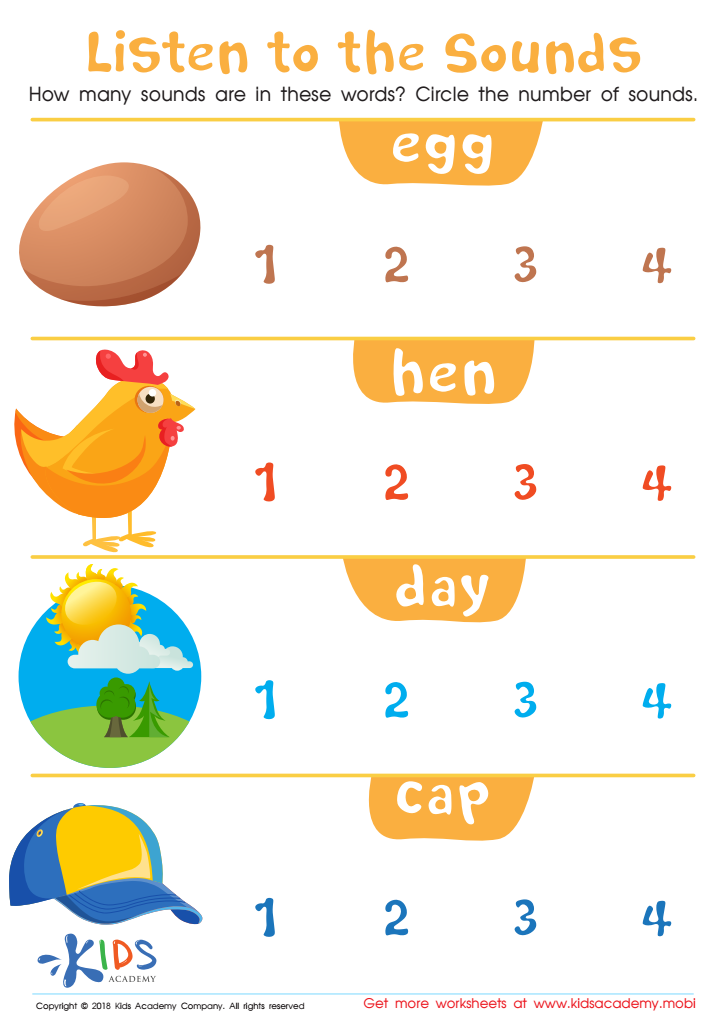
Listen to the Sounds Worksheet
 Assign to My Students
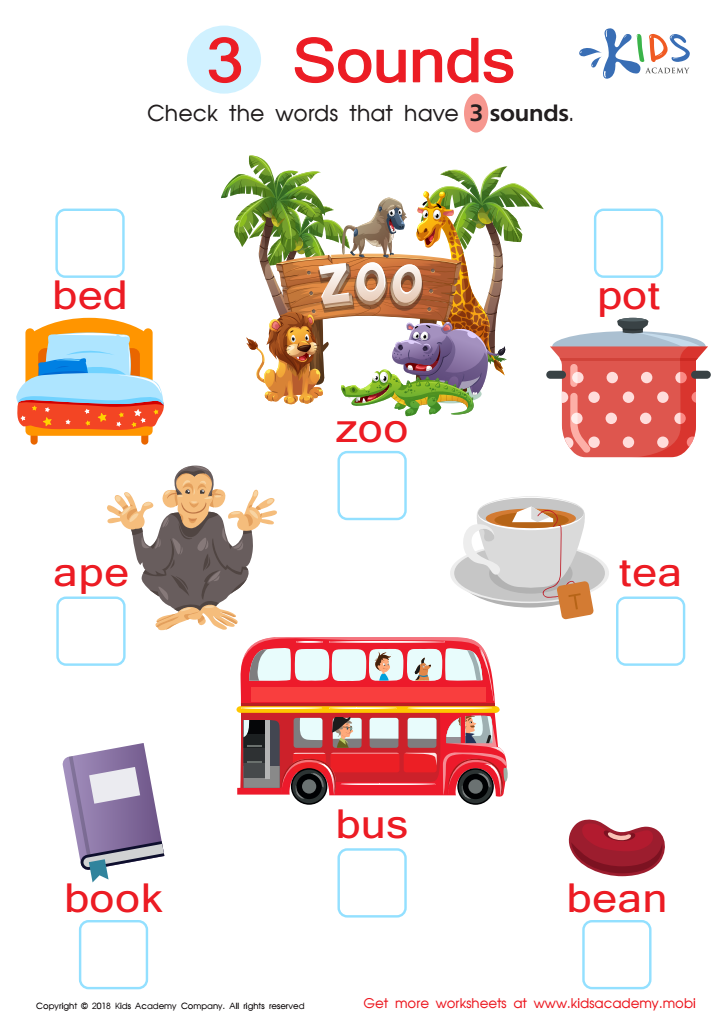
3 Sounds Worksheet
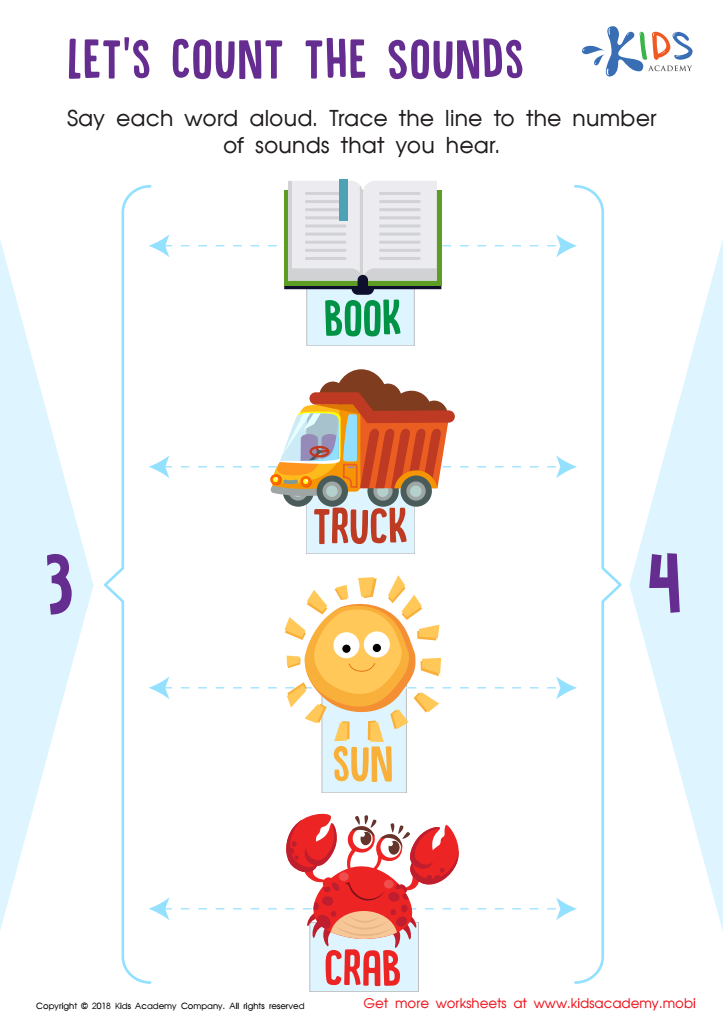
Let's Count the Sounds Worksheet
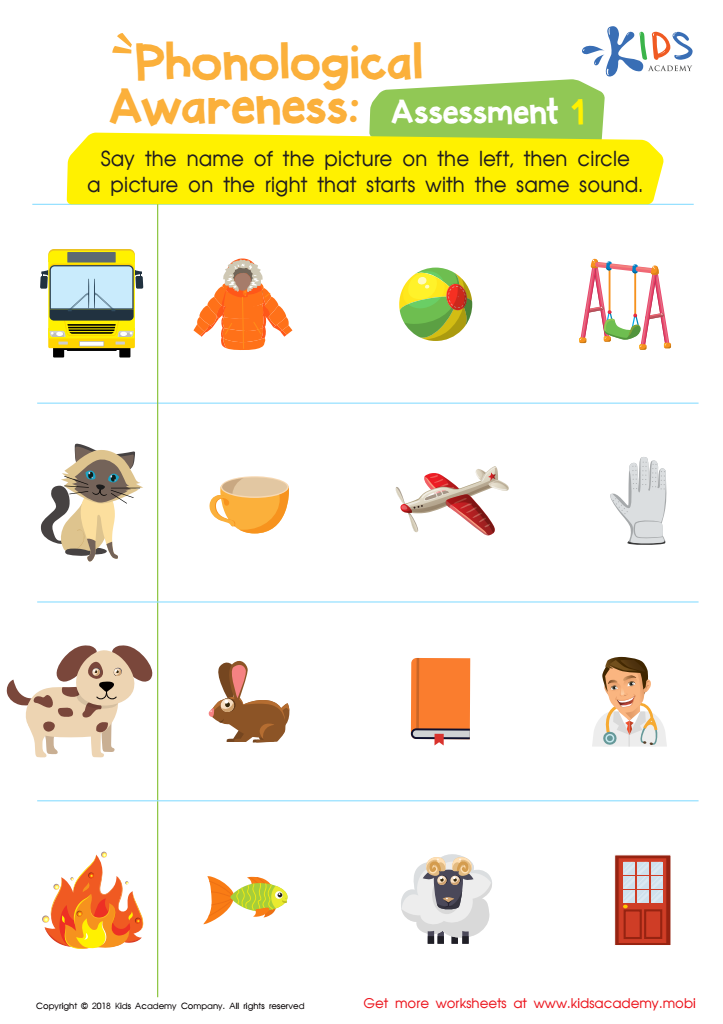
Phonological Awareness: Assessment 1 Worksheet








Sound Association Normal Letter Sounds (SANLS) plays a crucial role in literacy development for children ages 6-8. At this stage, children are transitioning from learning to read to reading to learn, making sound-letter associations fundamental in their educational journey. Understanding how letters correspond to sounds helps kids decode words, vital for phonemic awareness.
Teachers and parents should care because these foundational skills enhance reading fluency, comprehension, and overall literacy success. Improved reading skills correlate with better academic performance in all subject areas. Additionally, strong phonetic skills solidify self-confidence in young learners, motivating them to engage with texts, explore new vocabulary, and enjoy reading as a pleasurable experience.
Furthermore, SANLS serves as a base for more complex literacy concepts such as spelling, writing, and critical thinking. When children are adept at associating sounds with letters, they can better grasp punctuation, grammar, and the processes of language. These skills also translate to effective communication, crucial in both academic and social settings.
In summary, prioritizing SANLS in educational practices is an essential investment in children's literacy and lifelong learning, making it a critical focus for parents and teachers alike. By supporting this development, they help shape confident, capable readers and thinkers.






