Counting skills Normal Phonics Worksheets for Ages 6-8
3 filtered results
-
From - To
Enhance your child's counting and phonics abilities with our "Counting Skills Normal Phonics Worksheets" designed for ages 6-8. These engaging, printable worksheets seamlessly integrate alphabet recognition and phonics exercises with practical counting tasks, promoting a balanced learning experience. Perfect for classroom or home use, they support early learners in mastering fundamental skills essential for academic success. Through vibrant illustrations and interactive activities, children can develop their counting proficiency, phonemic awareness, and a love for learning. Tailored to early grade levels, these worksheets make foundational concepts fun and accessible, setting the stage for lifelong educational achievement.
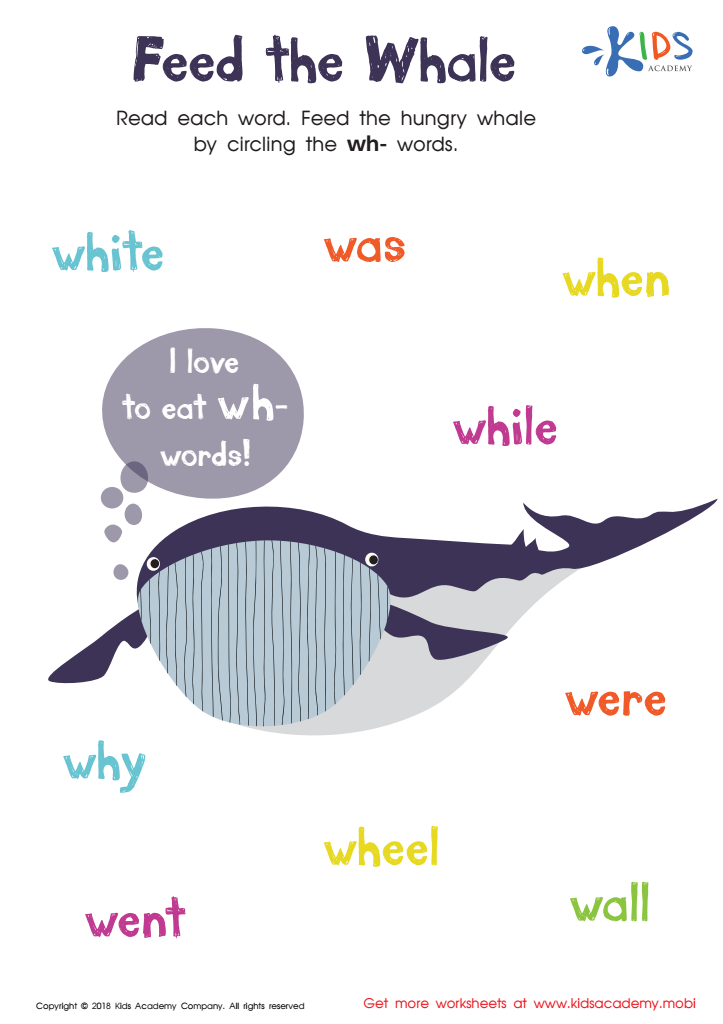
Feed the Whale Worksheet
 Assign to My Students
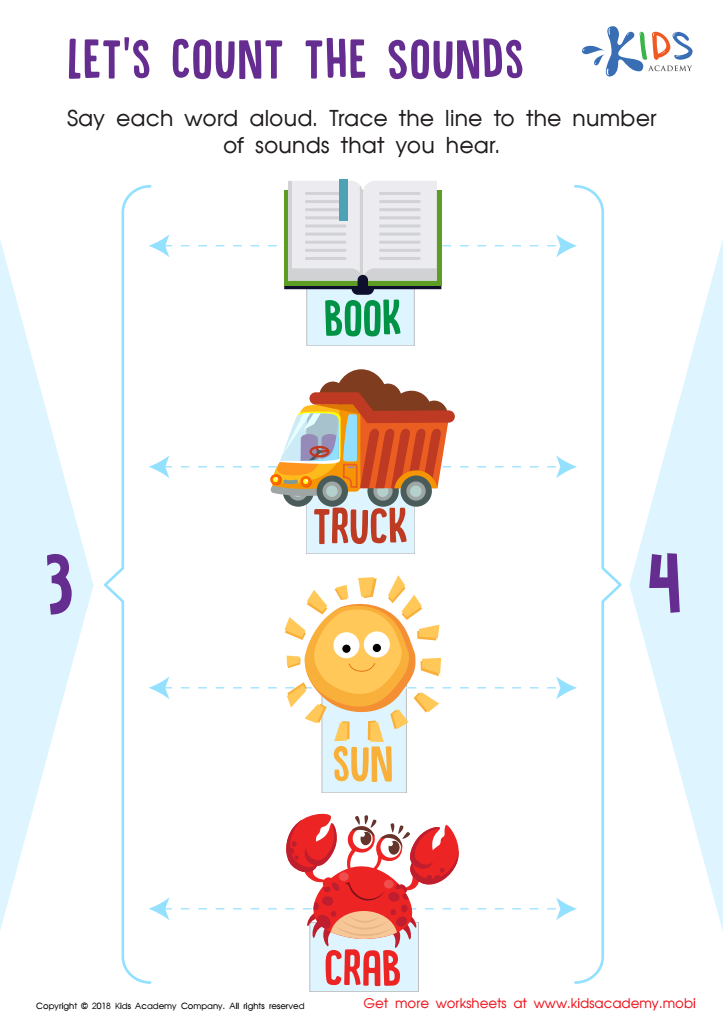
Let's Count the Sounds Worksheet
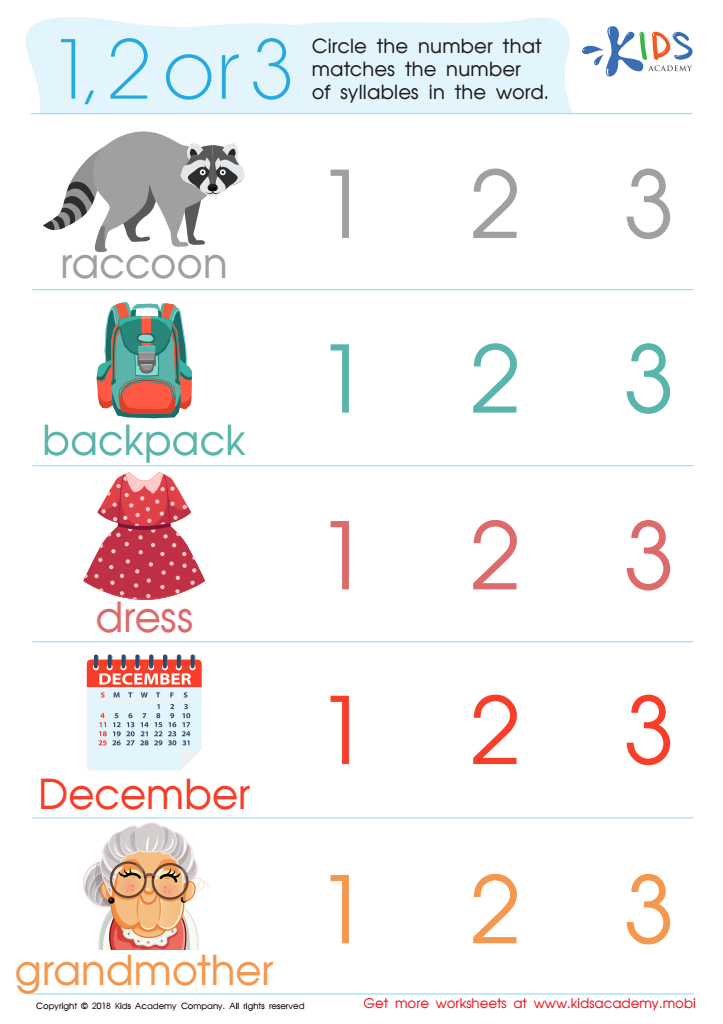
1, 2 or 3? Worksheet








Counting skills and phonics are foundational for young children's overall academic development, making them critical areas of focus for parents and teachers. At ages 6-8, children are at a pivotal point in their cognitive and language development. Mastery in counting equips children with essential numeracy skills, enabling them to understand more complex mathematical concepts like addition, subtraction, and eventually multiplication and division. These early math skills also promote problem-solving abilities and logical thinking, both crucial for success in various subjects and everyday life.
Normal phonics instruction is equally important, as it is the cornerstone of literacy. Learning phonics helps children understand the relationship between letters and sounds, which is vital for decoding new words. This skill greatly enhances reading fluency, comprehension, and overall language proficiency. Strong reading skills are linked to better academic performance across all subjects, as they enable children to fully engage with educational materials.
Neglecting these fundamental skills can lead to difficulties in learning and gaps in knowledge that become increasingly challenging to address as children get older. Therefore, focusing on counting skills and phonics lays a strong foundation for future academic achievement and lifelong learning, giving children the best start possible in their educational journey.







