Understanding syllables Normal Phonics Worksheets for Ages 6-8
3 filtered results
-
From - To
Discover our "Understanding Syllables Normal Phonics Worksheets" designed specifically for children aged 6-8! These engaging worksheets help young learners grasp the fundamental concept of syllables, supporting their reading and writing development. Each worksheet features colorful illustrations and interactive exercises that make learning fun and effective. From identifying syllable patterns to breaking down words into manageable parts, these resources cater to diverse learning styles. Perfect for use at home or in the classroom, our materials encourage independent practice and boost phonemic awareness. Start enhancing your child's literacy skills today with our thoughtfully crafted syllable worksheets that foster a love for reading!
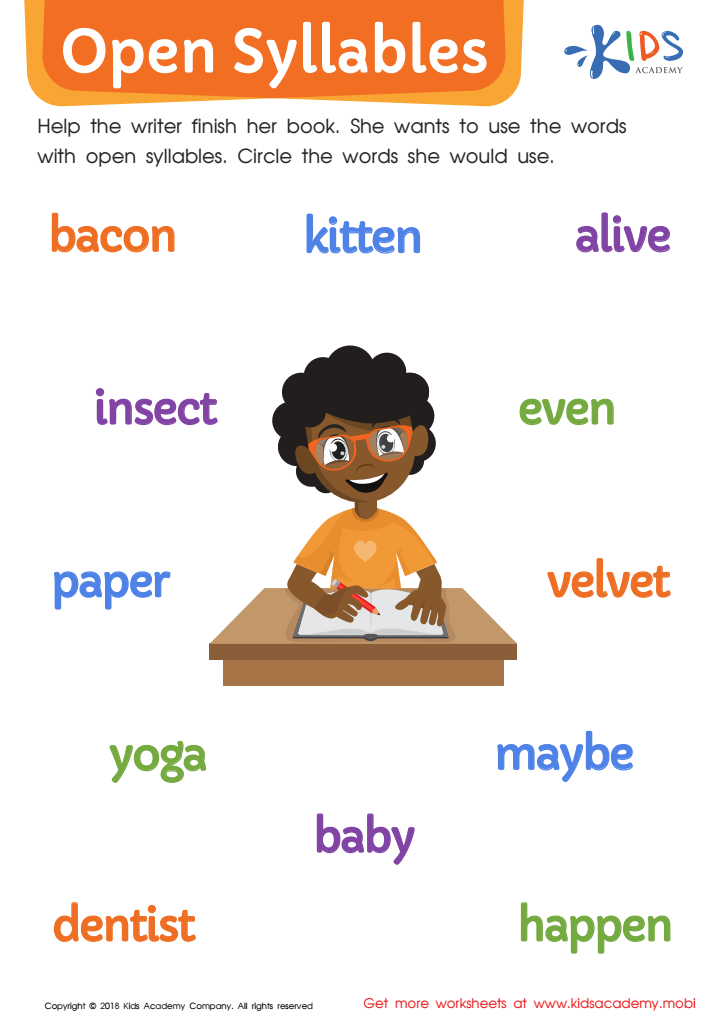
Open Syllables Worksheet
 Assign to My Students
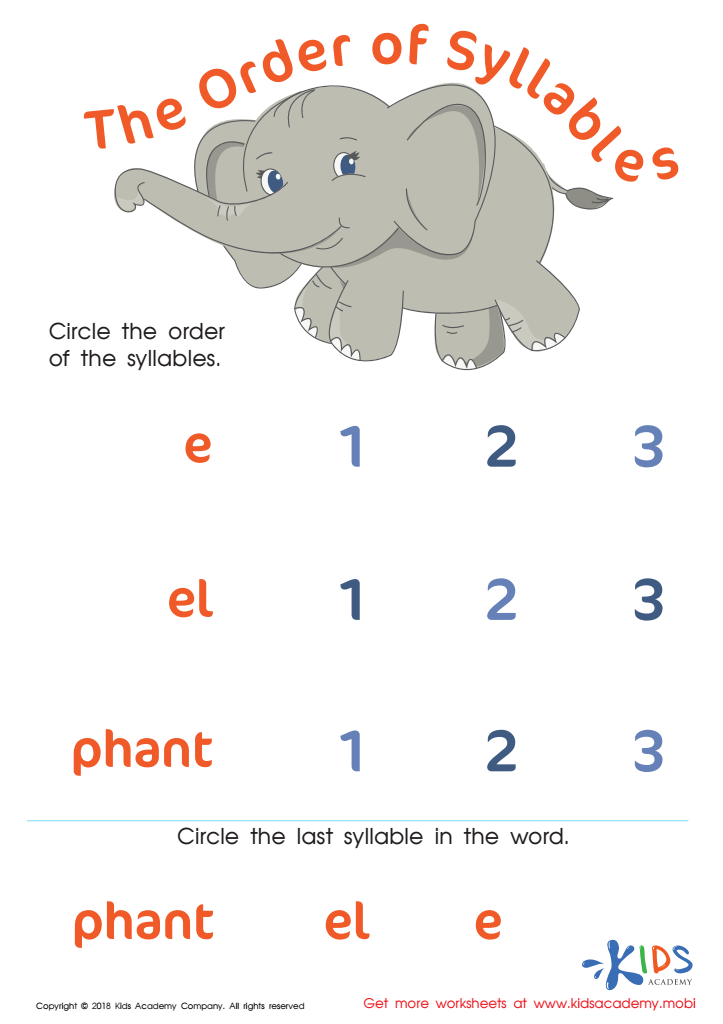
The Order of Syllables Worksheet
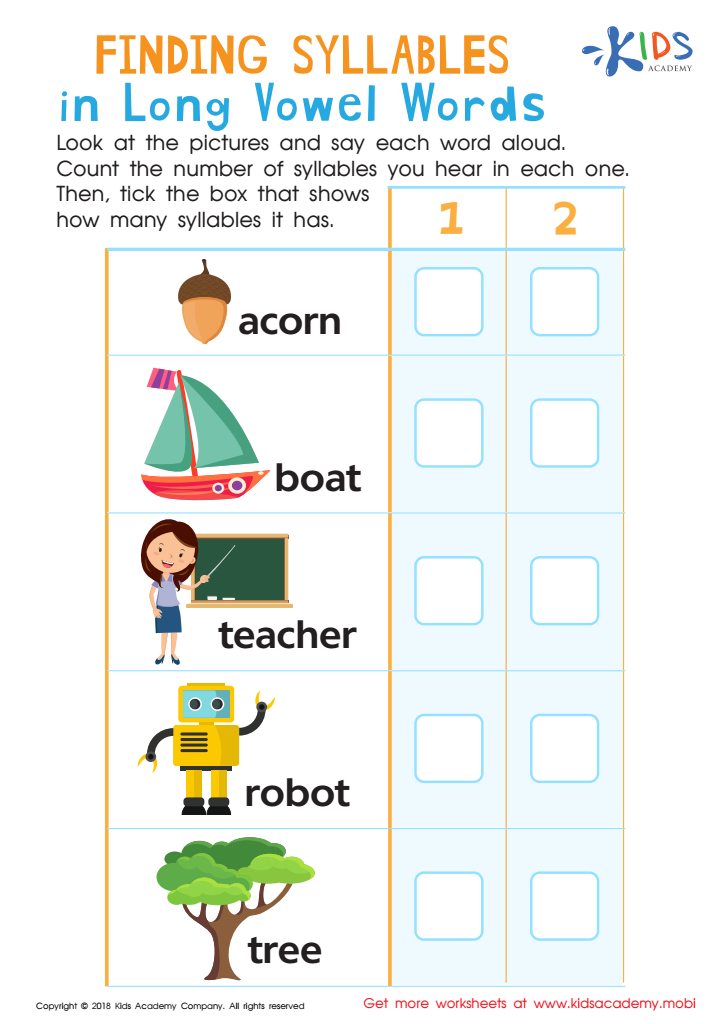
Finding Syllables in Long Vowel Words Worksheet








Understanding syllables and normal phonics is crucial for parents and teachers of children aged 6-8 as it forms the backbone of early literacy skills. At this developmental stage, children are learning the fundamental building blocks of reading and writing. Mastery of syllables helps children break words into manageable parts, making it easier to read unfamiliar words and improving their spelling capabilities.
Phonics instruction aids in teaching the relationship between letters and their sounds, enabling children to decode words effectively. By grasping phonics, children can enhance their vocabulary and reading fluency, which is essential for academic success across all subjects. Furthermore, these skills are linked to better comprehension, allowing children to derive meaning from what they read.
Incorporating syllable recognition and phonics into daily activities fosters enthusiasm for reading, engaging parents and teachers as collaborative partners in the child's learning journey. As children gain confidence in their reading abilities, they are more likely to embrace challenges and develop a lifelong love for literature. Therefore, prioritizing an understanding of syllables and phonics not only supports literacy development but also cultivates essential skills for cognitive growth and academic achievement, ultimately benefiting children in many areas of their education.







