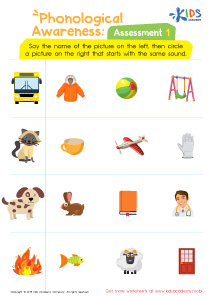
Rhyming skills development Normal Rhyming Worksheets for Ages 6-8
4 filtered results
-
From - To
Enhance your child's reading and phonics skills with our engaging Rhyming Worksheets, designed specifically for ages 6-8. These worksheets focus on developing essential rhyming skills through fun and interactive exercises that capture your child's interest. Each activity encourages critical thinking and boosts vocabulary, helping young learners recognize word patterns and enhance their creativity. Our carefully crafted resources are perfect for both classroom settings and at-home learning, making literacy enjoyable and effective. Let your child explore the joy of rhyming while building a strong foundation for future reading success. Start your child's rhyming adventure today!
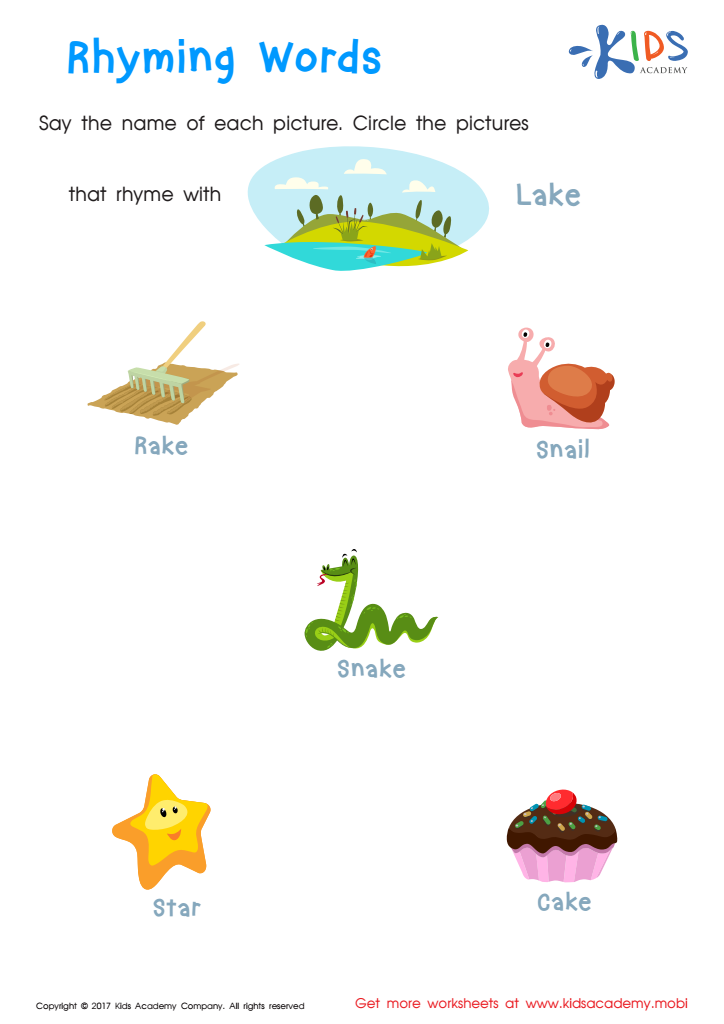
Rhyming Words Rhyming Worksheet
 Assign to My Students
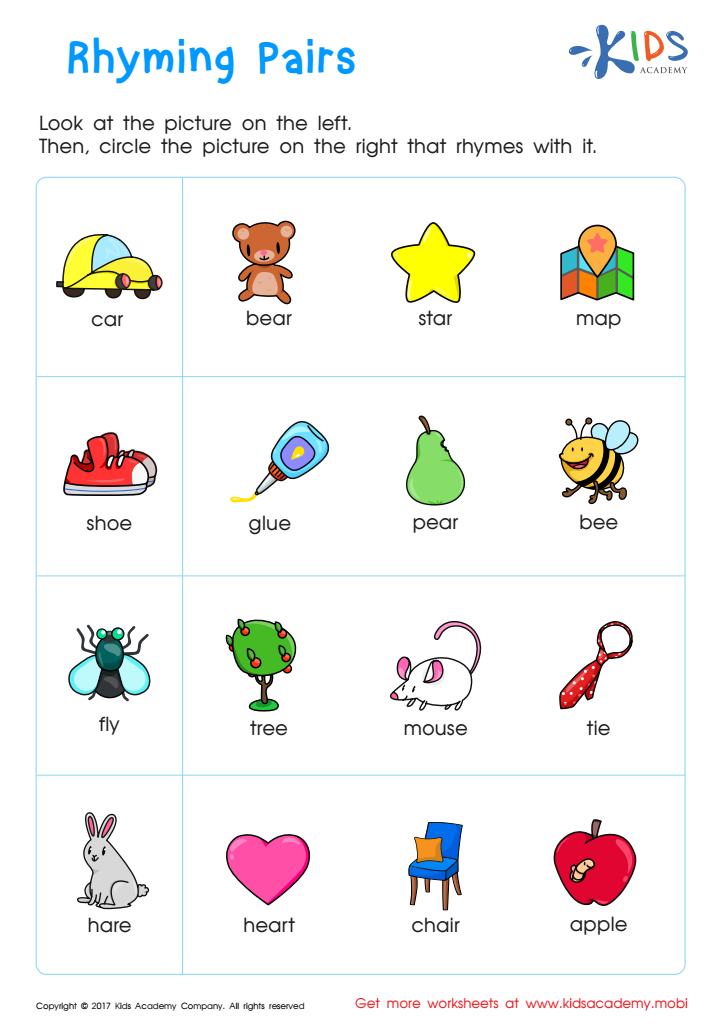
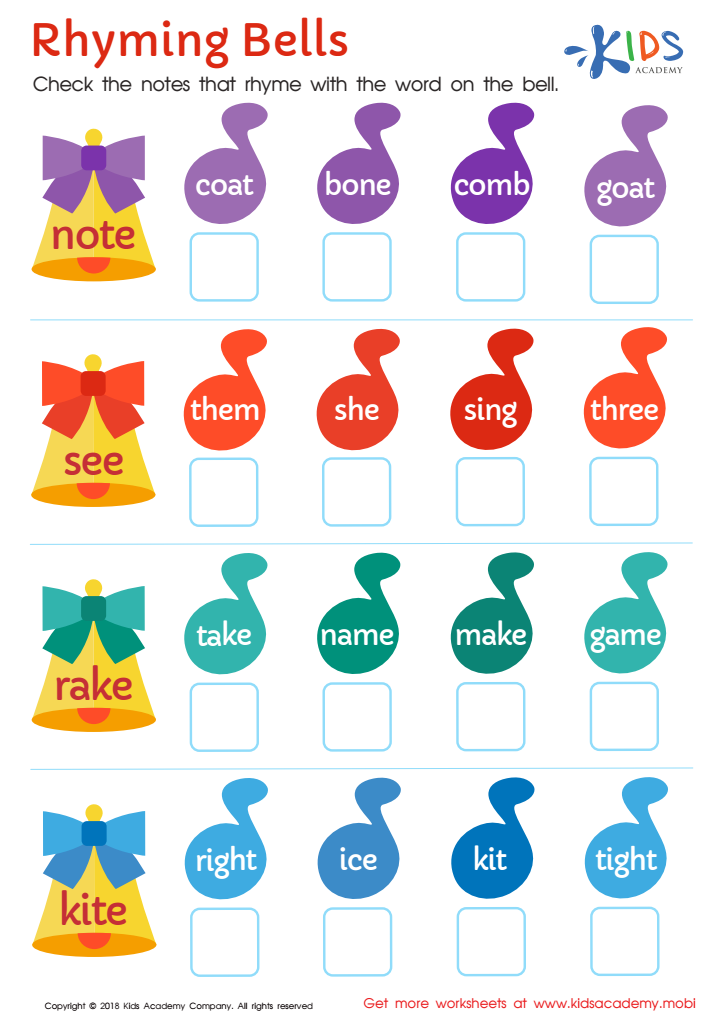
Rhyming Bells Worksheet
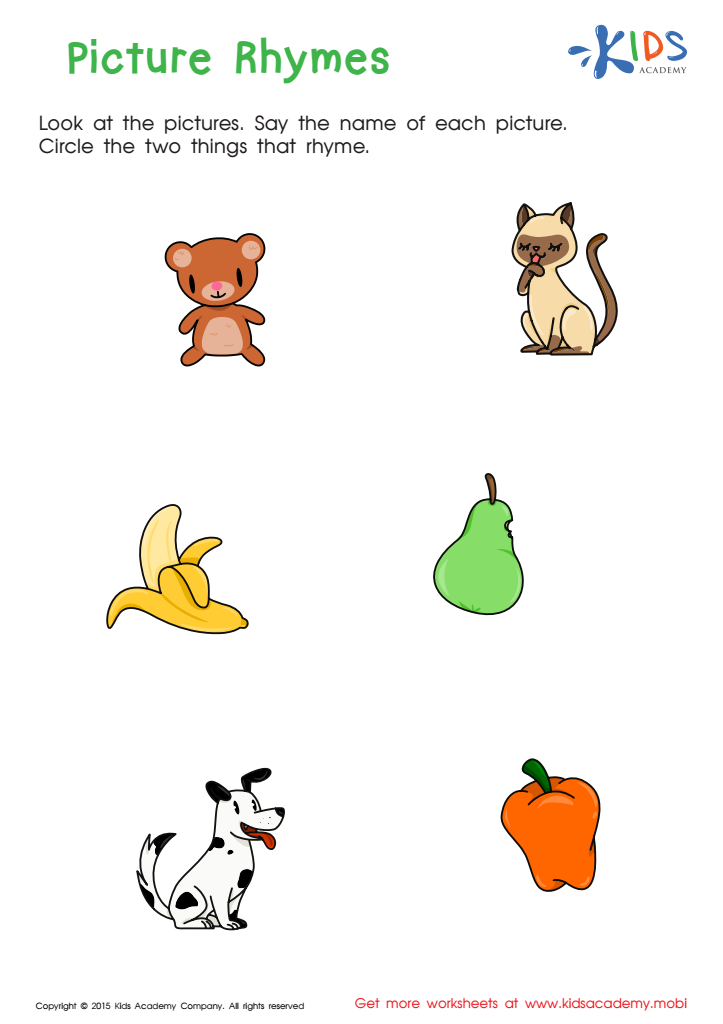
First Words: Picture Rhymes Worksheet








Rhyming skills are fundamental to early literacy development for children aged 6-8. At this stage, children are honing their phonemic awareness—which is the ability to recognize and manipulate the sounds in words—and rhyming plays a crucial role in this process. When children engage with rhymes, they learn to identify syllables and phonemes, aiding their understanding of how words are constructed.
Furthermore, mastering rhyming enhances vocabulary and reinforces spelling knowledge, as children begin to recognize patterns in letters and sounds, making it easier for them to decode unfamiliar words. Rhymes also make language acquisition playful and engaging, fostering a love for reading.
Teachers and parents should care about facilitating rhyming skills because they not only contribute to literacy but also support critical thinking and memory skills. Rhyming games and songs encourage active participation, promoting social interaction as children collaborate with peers in playful learning contexts.
Moreover, these skills serve as a foundation for more complex language tasks such as writing poetry and storytelling in later grades. By nurturing rhyming abilities, parents and teachers help children develop essential communication skills, setting the stage for lifelong learning and academic success.