Hand-eye Coordination Normal Tracing Letters Worksheets for Ages 6-8
4 filtered results
-
From - To
Elevate your child's penmanship and fine motor skills with our Hand-eye Coordination Normal Tracing Letters Worksheets, designed specifically for ages 6-8. These engaging worksheets focus on helping young learners smoothly connect hand and eye movement while tracing letters, a foundational step in mastering handwriting. Each worksheet features carefully curated tracing activities that gradually build confidence and precision in forming letters. Fun and educational, these tracing sheets enhance letter recognition, improve dexterity, and boost concentration. Empower your child’s learning journey with these expertly crafted resources, ensuring a seamless blend of play and practice to support their developmental milestones.
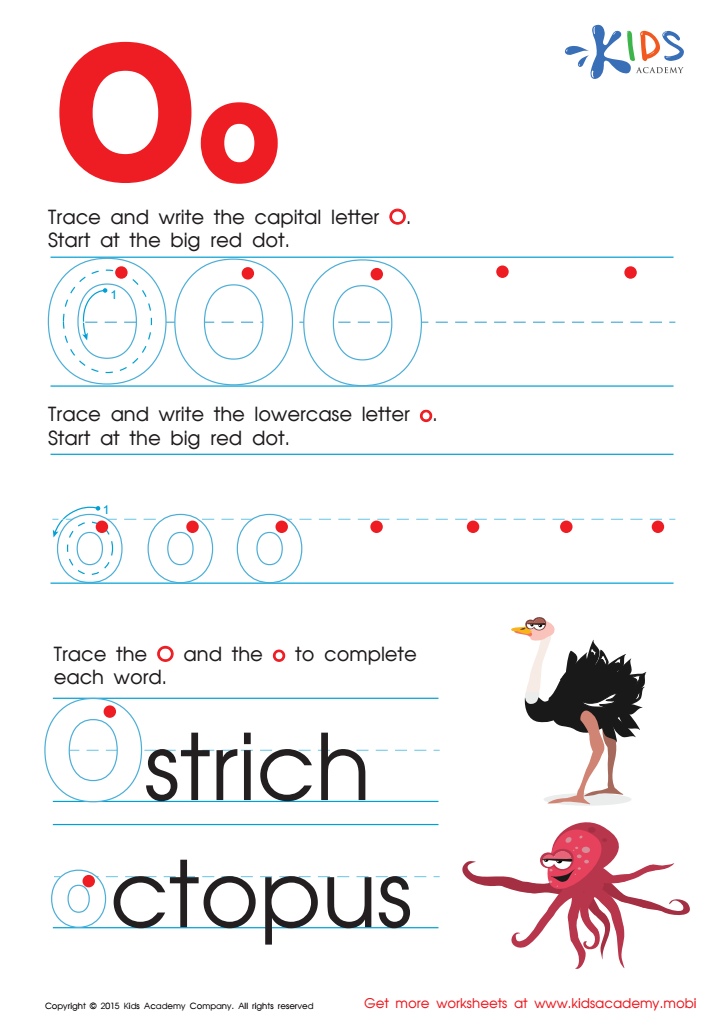
Letter O Tracing Page
 Assign to My Students

Letter P Tracing Page

Letter H Tracing Page

Letter D Tracing Page








Hand-eye coordination is a crucial developmental skill, especially for children ages 6-8, as it links visual input from the eyes to motor actions performed by the hands. Mastering this skill significantly impacts a child's ability to perform everyday tasks and succeed in an academic environment.
Firstly, handwriting is a fundamental skill in early education. Tracing letters helps children develop fine motor skills, precision, and control. Enhanced hand-eye coordination through these activities ensures that children can write legibly and efficiently, which is essential for communication and completing schoolwork.
Secondly, effective hand-eye coordination boosts confidence. Children who can accurately trace and write letters tend to feel more competent in other fine motor activities, such as drawing or using scissors. This self-assurance carries over to other academic areas, contributing to a positive learning attitude.
Additionally, cognitive development is supported by activities that require hand-eye coordination. These tasks encourage children to focus, pay attention to details, and engage their brains in planning and executing precise movements.
Finally, developing hand-eye coordination through letter tracing sets a foundation for more complex skills needed in later life, including sports, typing, and playing musical instruments. Addressing this developmental milestone thus promotes overall physical, cognitive, and emotional development, laying the groundwork for future success in both academic and everyday activities.








