Lowercase letter writing Normal Tracing Letters Worksheets for Ages 6-8
3 filtered results
-
From - To
Improve your child's handwriting with our engaging "Lowercase Letter Writing Normal Tracing Letters Worksheets for Ages 6-8." These worksheets are designed to help early learners master the formation of lowercase letters through fun and interactive tracing activities. Each worksheet includes carefully curated exercises that enhance fine motor skills, build hand-eye coordination, and boost writing confidence. Perfect for home or classroom use, these activities make learning enjoyable and effective. Give your child the tools to succeed in writing with our expertly crafted tracing worksheets, tailored specifically for ages 6 to 8. Download and start tracing today!
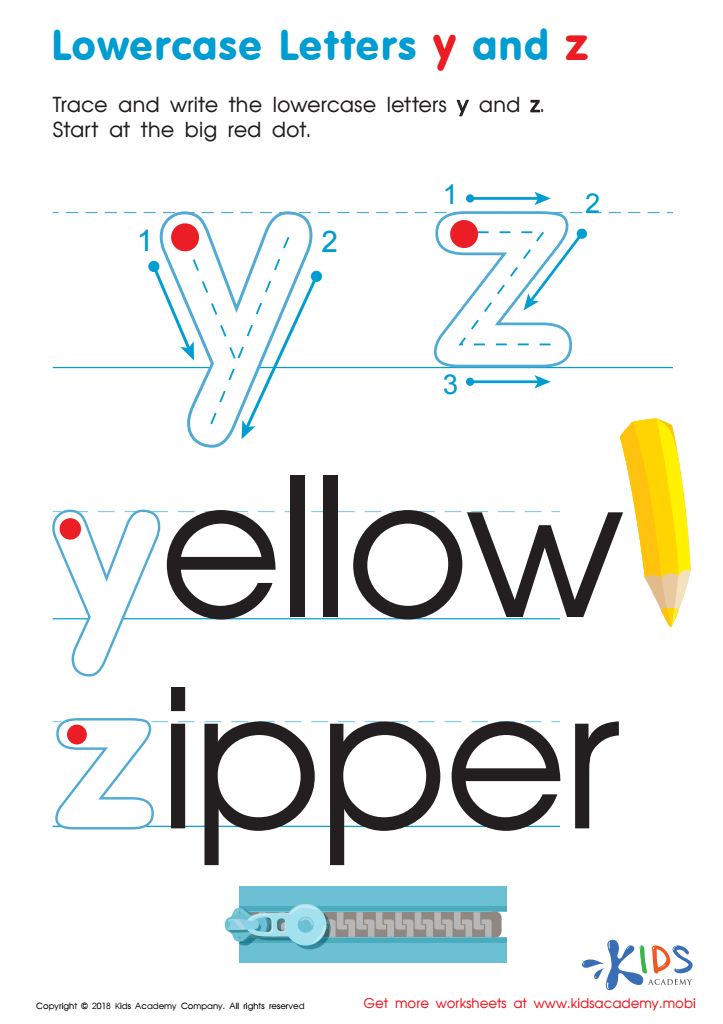
Lowercase Letters y z Worksheet
 Assign to My Students
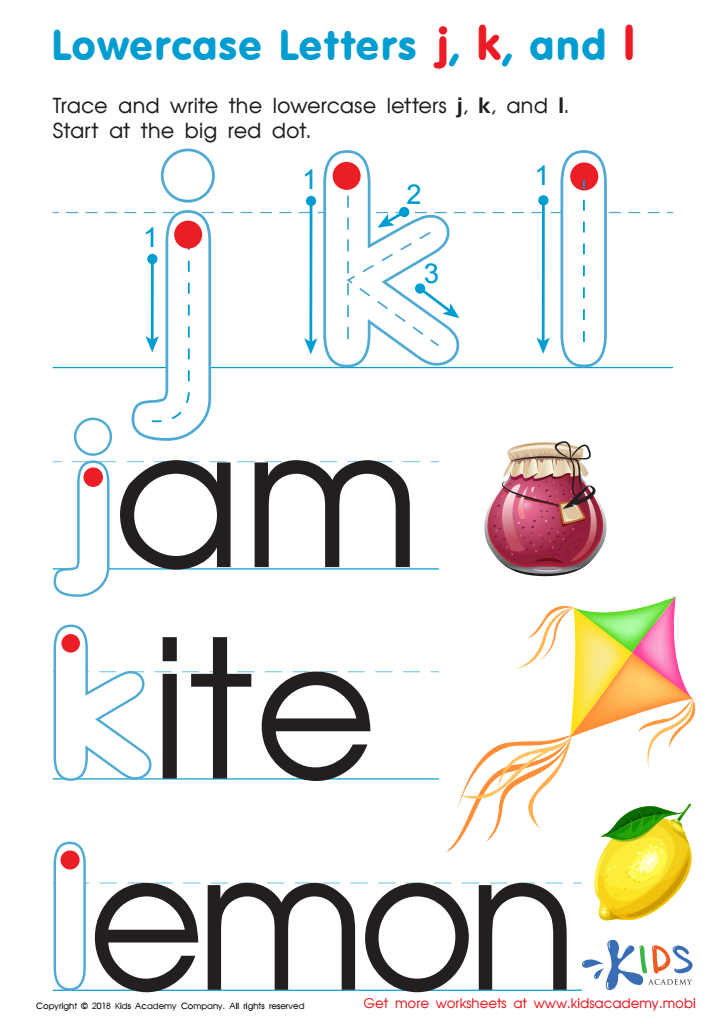
Lowercase Letters j k l Worksheet
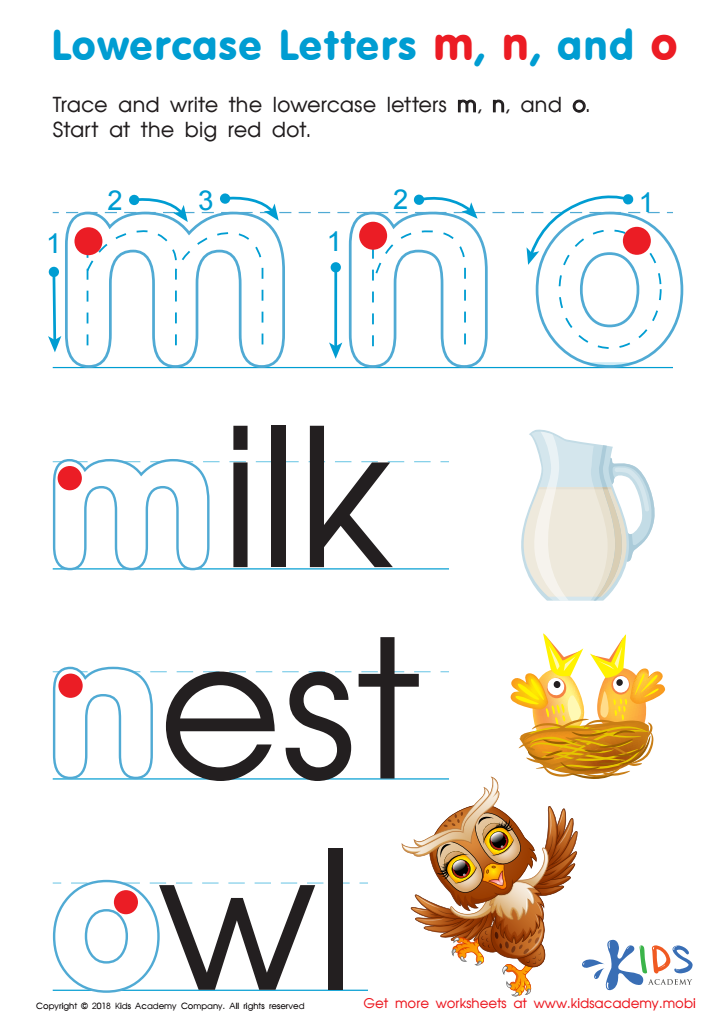
Lowercase Letters m n o Worksheet








Developing the skill of writing lowercase letters through normal tracing exercises is crucial for children aged 6 to 8 due to several important reasons. At this stage of development, children are honing their fine motor skills, and tracing acts as a practical method to refine their hand-eye coordination, dexterity, and grip, all vital for writing fluency. Writing in lowercase also introduces consistency and readability in their writing, essential for clear and effective communication.
Furthermore, engaging in tracing activities helps solidify the foundational knowledge of letter shapes and patterns, paving the way for effortless, automatic writing. This reduces cognitive load, allowing children to focus more on the content of their writing rather than the mechanical process. Proficiency in lowercase letter formation also aligns with most educational curricula, emphasizing its essential role in literacy standards.
Tracing offers a multisensory learning approach by involving sight, touch, and movement, which accommodates various learning styles. Moreover, it nurtures attention to detail, patience, and perseverance, qualities that benefit children academically and beyond.
Ultimately, parents and teachers invest in tracing exercises to build a robust foundation in writing, ensuring that children are not only ready for higher academic demands but are also equipped with a lifelong skill essential for their personal and professional success.








