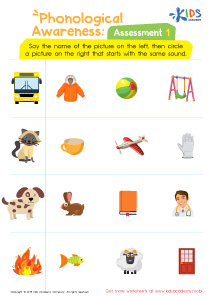
Reading comprehension Normal Two Letter Phonics Worksheets for Ages 6-8
7 filtered results
-
From - To
Boost your child’s reading skills with our "Reading Comprehension Normal Two Letter Phonics Worksheets" designed for ages 6-8. These engaging worksheets focus on essential two-letter blends, helping young learners master early phonics. Each activity is crafted to enhance comprehension, improve vocabulary, and foster a love for reading. Aligned with educational standards, these resources offer a fun and effective way to build a solid literacy foundation. Perfect for classroom use or at-home practice, our worksheets ensure progressive learning through interactive exercises and vibrant illustrations. Empower your child’s reading journey today!
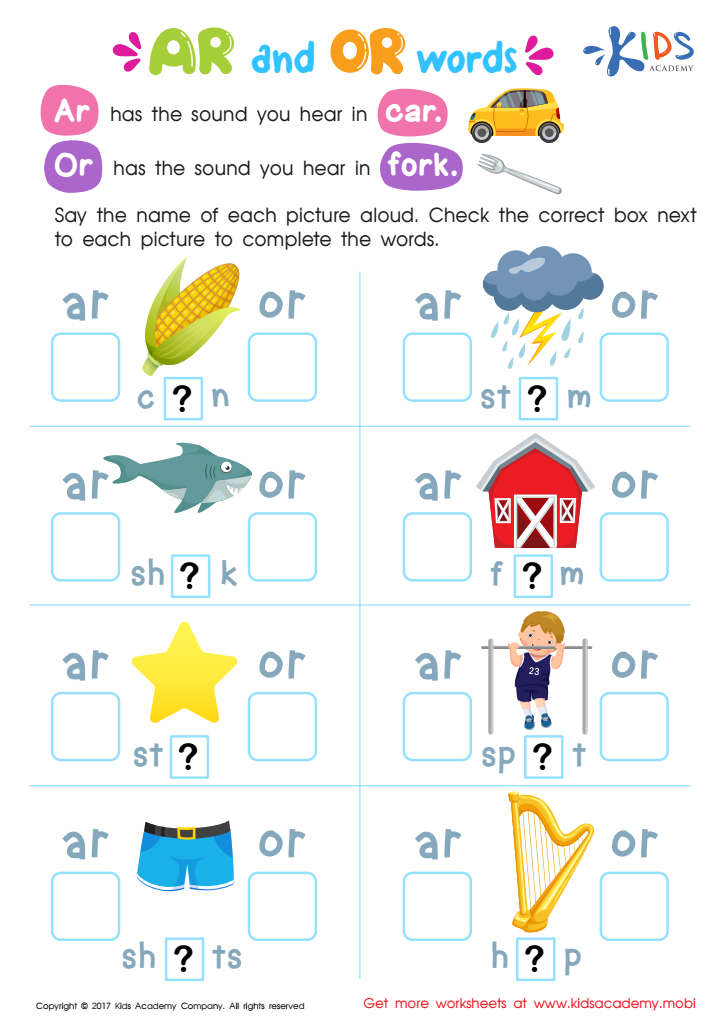
Ar and Or Words Phonics Worksheet
AW Words Team Coloring Fun Worksheet
 Assign to My Students
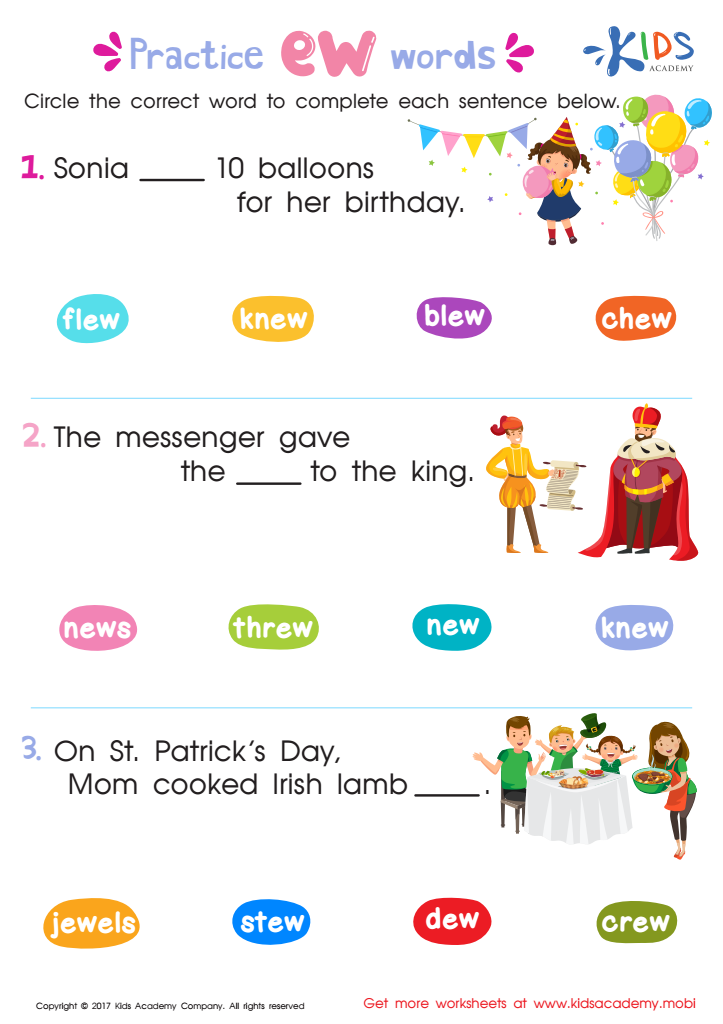
EW Words Worksheet
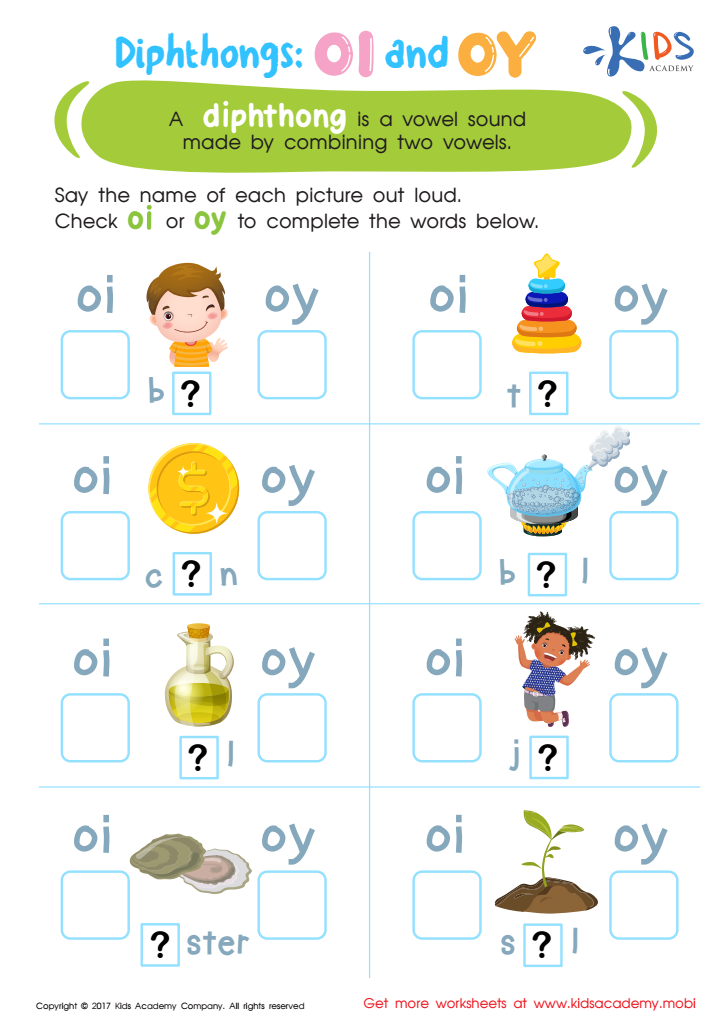
Vowel Diphthongs OI OY Worksheet
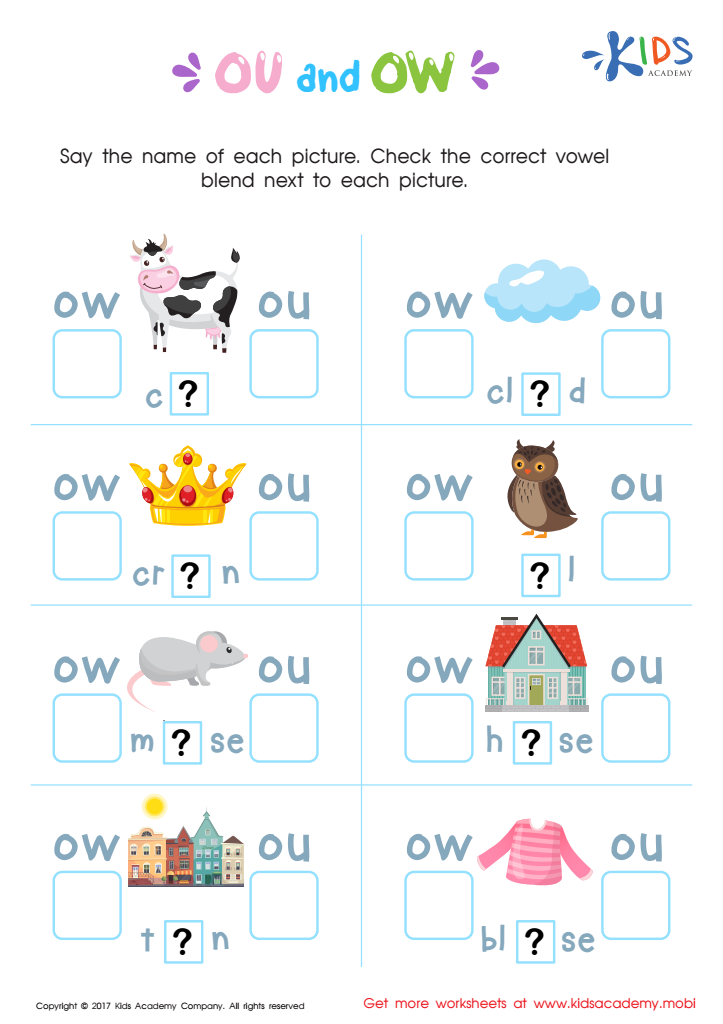
OU and OW Words Worksheet
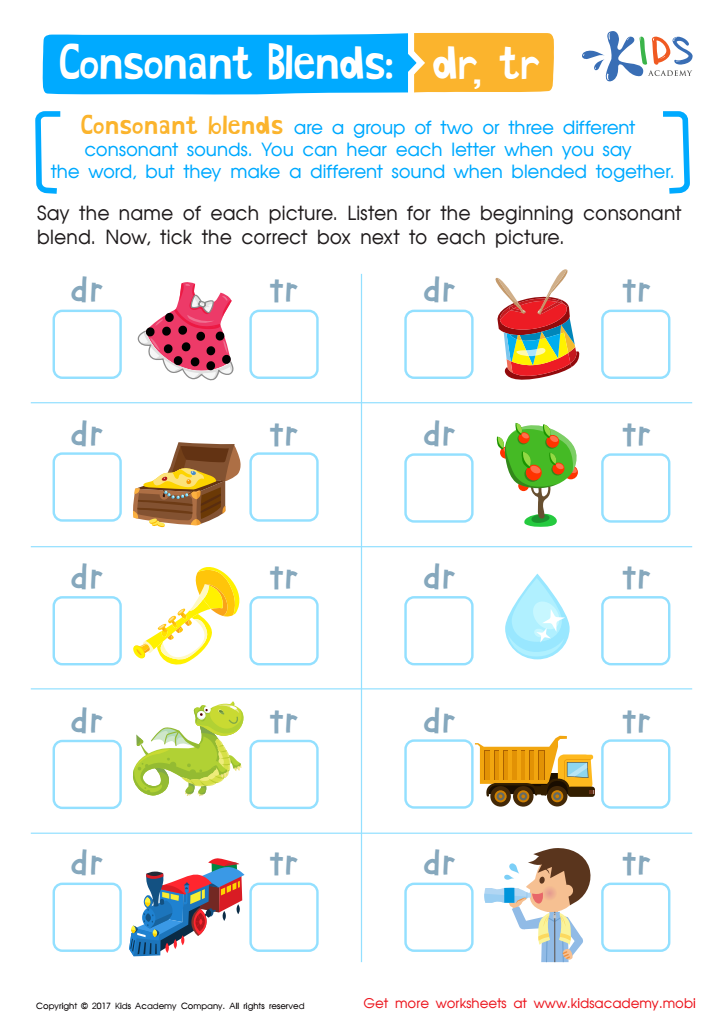
Consonant Blends: "Dr" and "Tr" Printable
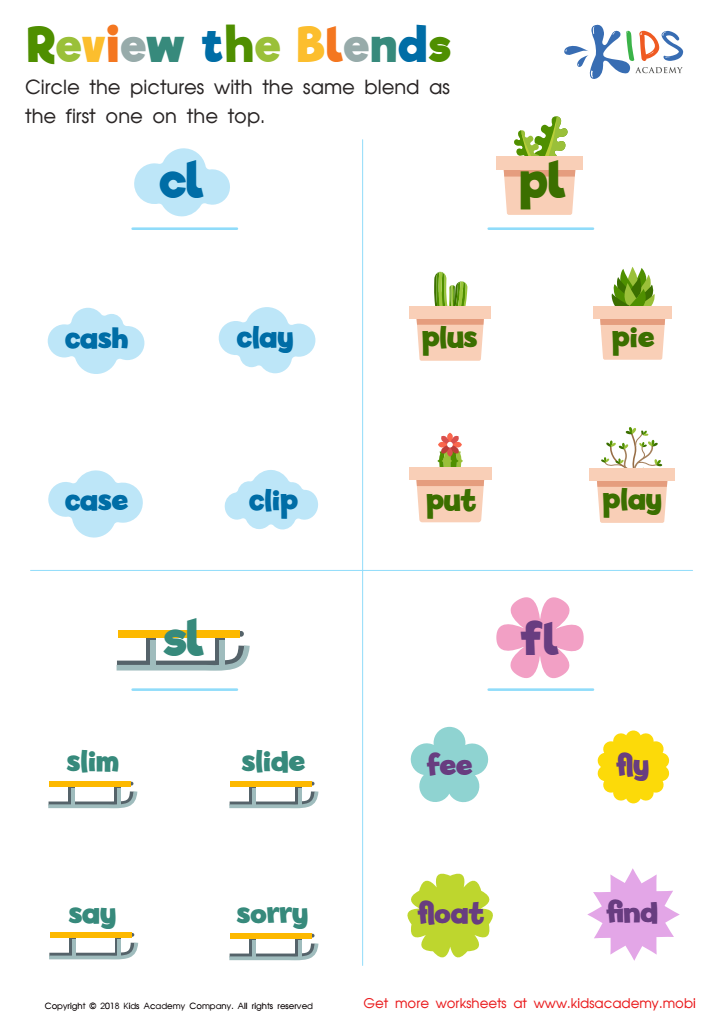
Review the Blends Worksheet



Reading comprehension is crucial for children ages 6-8 as this foundational stage of education sets the stage for all future learning. Parents and teachers should pay particular attention to normal two-letter phonics for several compelling reasons.
First, strong phonics skills form the foundation of reading proficiency. Understanding how two-letter combinations, also known as digraphs, work can significantly enhance a child's ability to decode words, leading to improved reading accuracy and fluency. For example, recognizing that "ch," "sh," and "th" each represent specific sounds helps children to read and spell new words they encounter.
Second, good reading comprehension skills are directly linked to academic success across various subjects. When children comprehend what they read, they are better able to follow instructions, understand storylines and informational texts, and engage in more complex thinking and discussions.
Third, early mastery of these skills can boost a child's confidence and foster a lifelong love for reading. Positive reading experiences can inspire curiosity and a desire to learn, which are essential traits for academic and life accomplishments.
By emphasizing normal two-letter phonics and reading comprehension, parents and teachers are investing in children's cognitive development and creating a strong educational foundation. This concentrated focus on phonics at an early age ultimately facilitates easier transitions to more advanced levels of reading and learning.