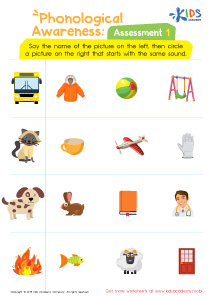
Vocabulary enhancement Normal Two Letter Phonics Worksheets for Ages 6-8
6 filtered results
-
From - To
Enhance your child's vocabulary with our engaging Normal Two Letter Phonics Worksheets designed specifically for ages 6-8. These printable resources support early literacy by focusing on phonics skills while making learning fun! Through age-appropriate activities, children will explore two-letter combinations, learning to recognize and pronounce words confidently. Each worksheet is crafted to promote comprehension, language usage, and sound-letter relationships, ensuring a solid foundation for reading success. Perfect for use at home or in the classroom, our worksheets encourage interactive learning and skill reinforcement. Unlock your child's potential and watch their vocabulary flourish with these reliable, enjoyable phonics tools!
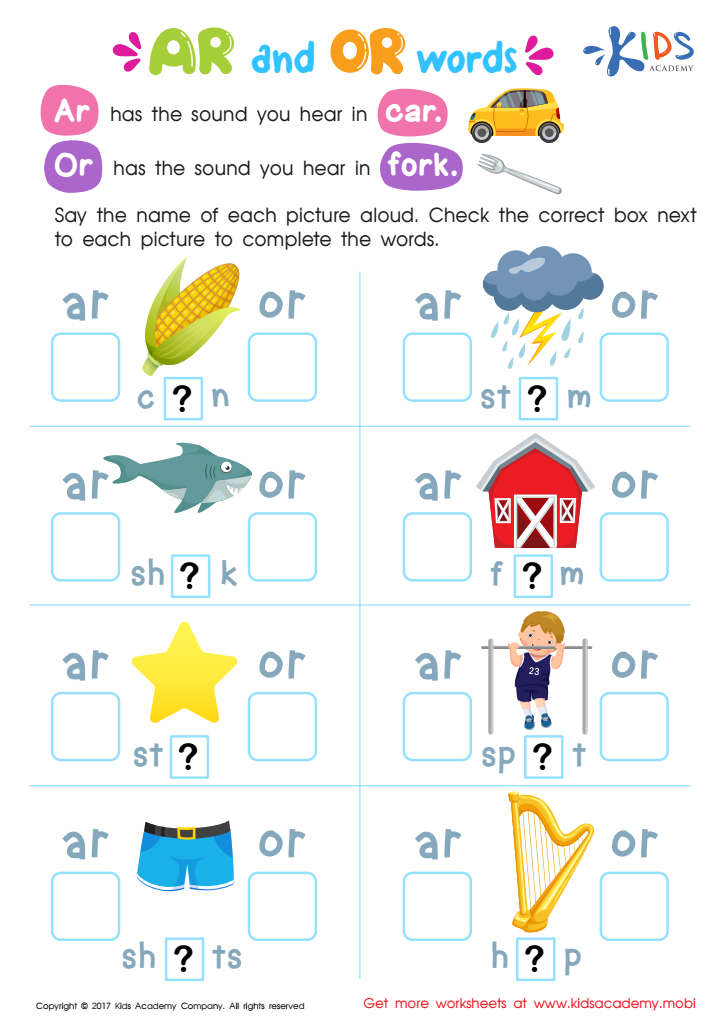
Ar and Or Words Phonics Worksheet
 Assign to My Students
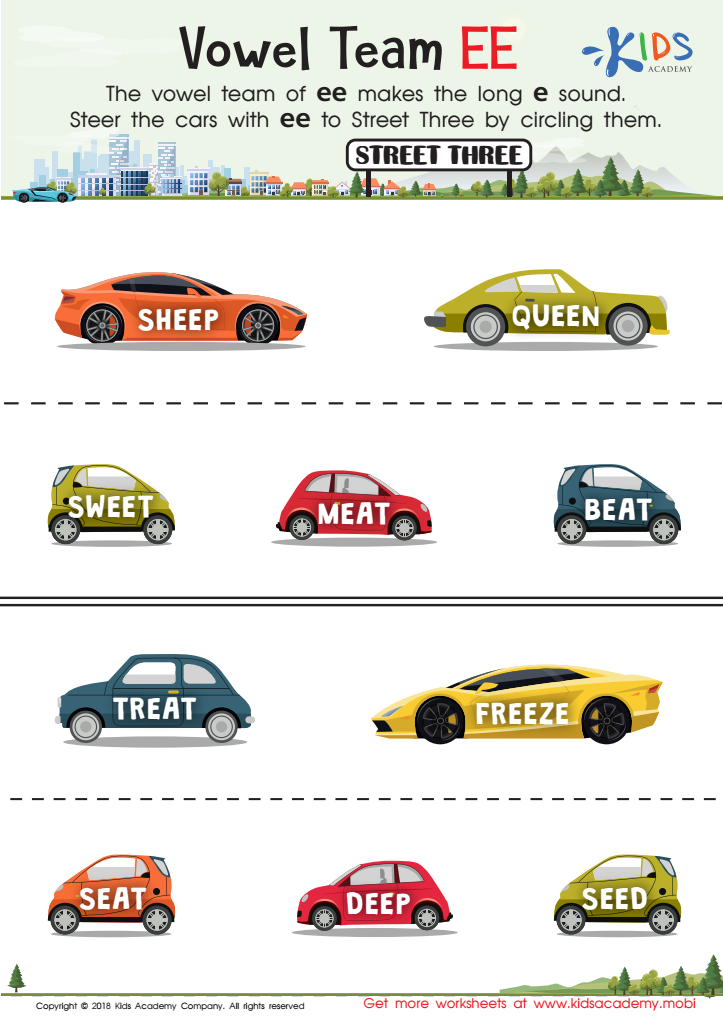
Vowel team ee Worksheet
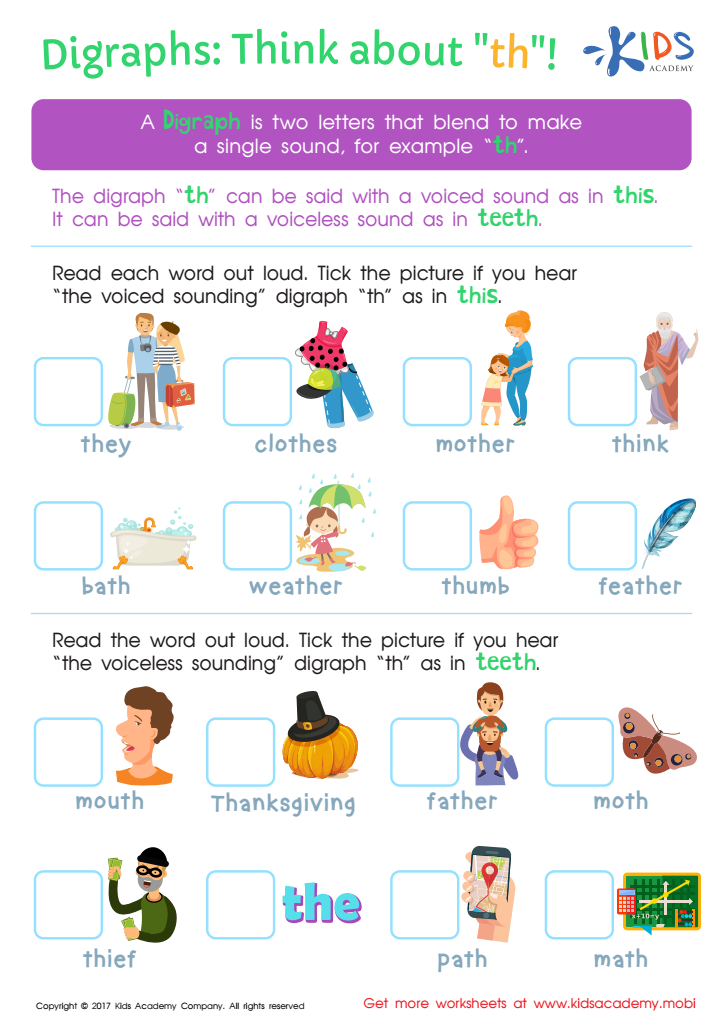
Digraphs: Think About "th" Worksheet
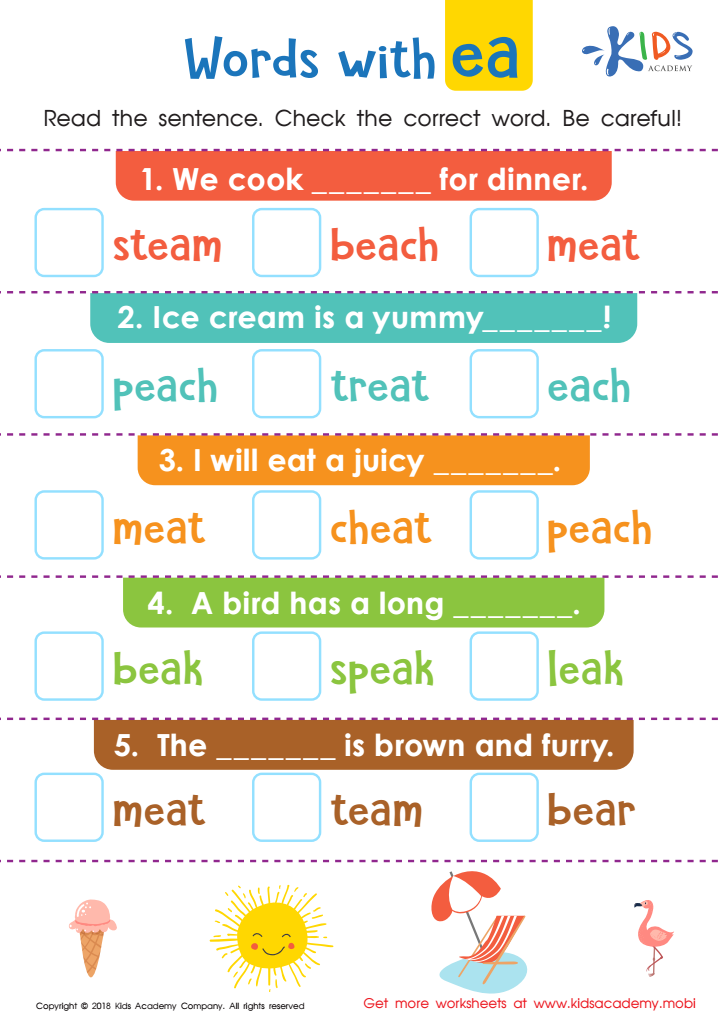
Words with ea Worksheet
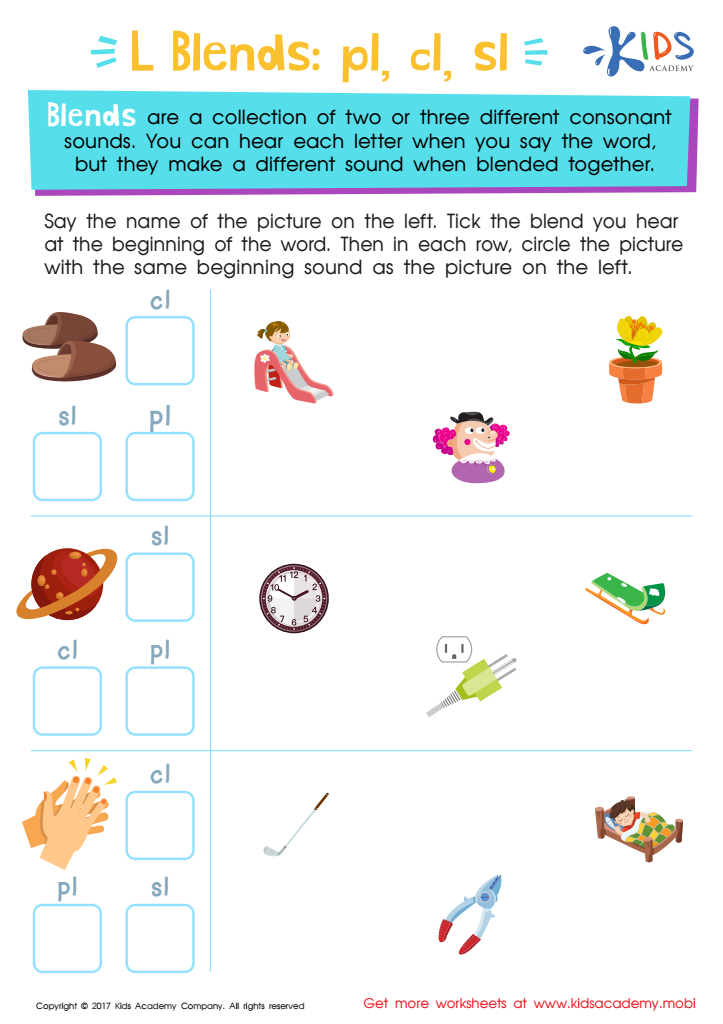
L Blends: "Pl", "Cl" and "Sl" Printable
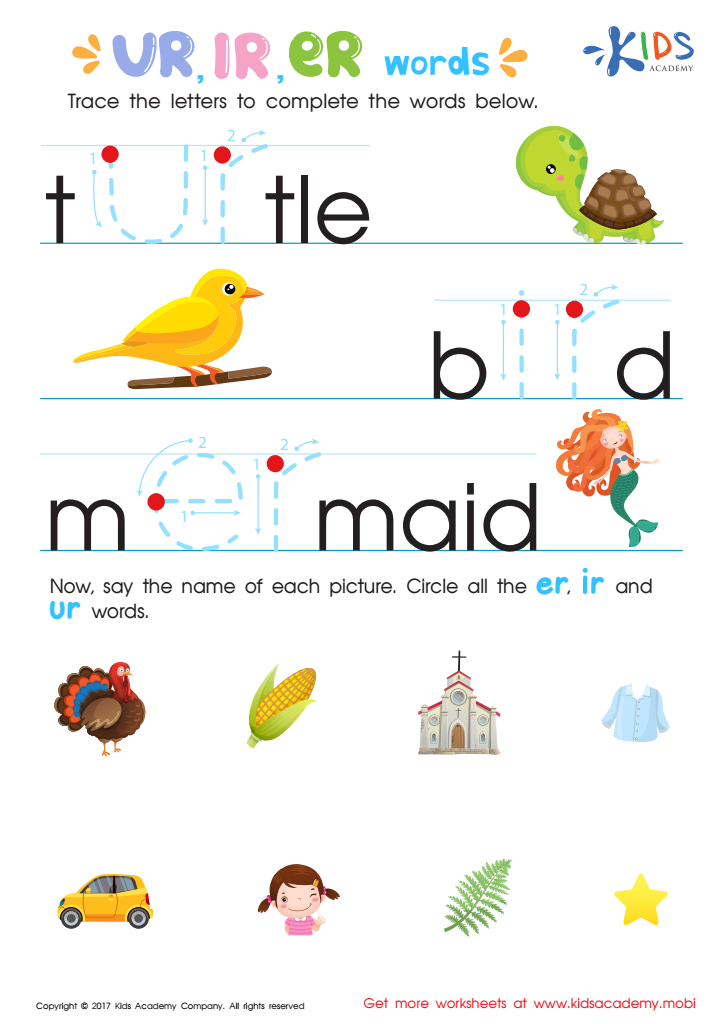
IR UR ER Words Worksheet



Vocabulary enhancement through Normal Two Letter Phonics is crucial for children ages 6-8 as it lays the foundation for literacy skills and overall academic success. During this formative period, children's brains are especially receptive to language acquisition. By focusing on phonics, educators and parents can help children understand the relationship between letters and sounds, which is fundamental for word recognition and pronunciation.
Enhanced vocabulary not only improves reading skills but also boosts comprehension. Children with a rich vocabulary can better grasp content in texts, enabling them to engage more meaningfully with what they read. Additionally, a strong vocabulary builds confidence, encouraging children to participate in discussions, express their thoughts clearly, and develop critical thinking skills.
Incorporating phonics into daily learning activities equips children with the tools needed to decode unfamiliar words, facilitating independent reading and fostering a lifelong love of books. By prioritizing Normal Two Letter Phonics, parents and teachers are not only supporting literacy development but also encouraging curiosity and communication skills that are essential for social and academic interactions. Strong vocabulary skills contribute to better performance in all subjects, ultimately setting children on a path to success in their educational journey.