Visual discrimination skills Normal Upper & Lowercase Letters Worksheets for Ages 6-8
4 filtered results
-
From - To
Enhance your child's visual discrimination skills with our engaging worksheets designed for ages 6-8! These resources focus on identifying and differentiating between normal uppercase and lowercase letters. By participating in fun activities, children will develop essential skills that lay the groundwork for reading and writing. Perfectly structured for young learners, our worksheets promote skill-building through interactive exercises, helping kids recognize letter forms and improve their handwriting. Ideal for both classroom use and at-home learning, these worksheets encourage critical thinking and cognitive development. Give your child a head start in mastering the alphabet with our carefully crafted visual discrimination activities!
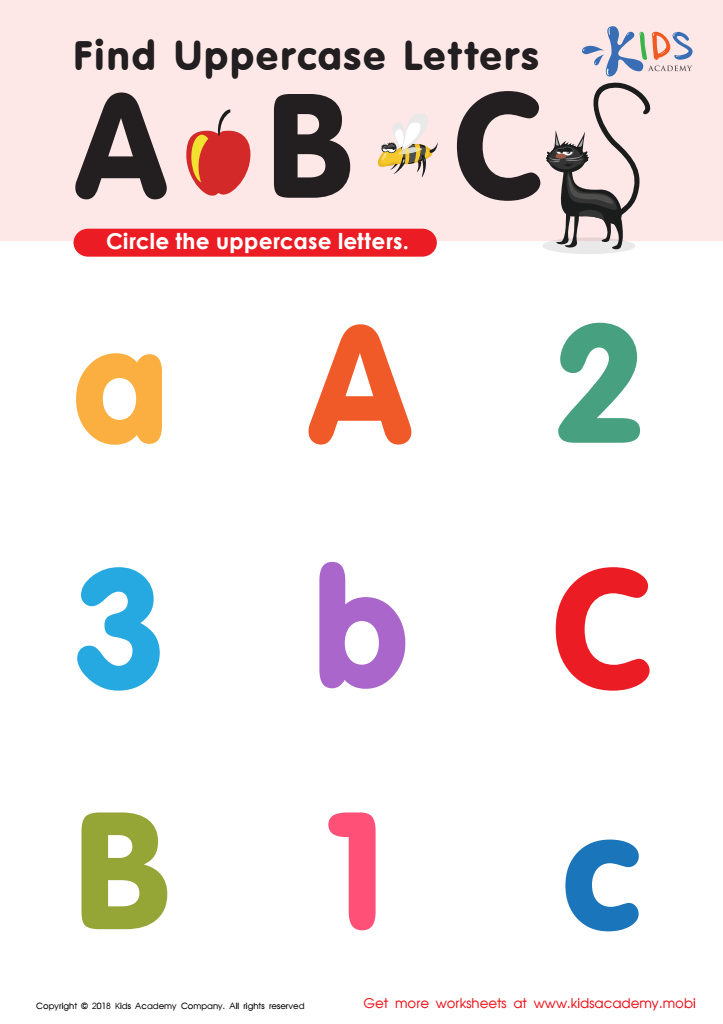
Find Uppercase Letters A, B, and C Worksheet
 Assign to My Students











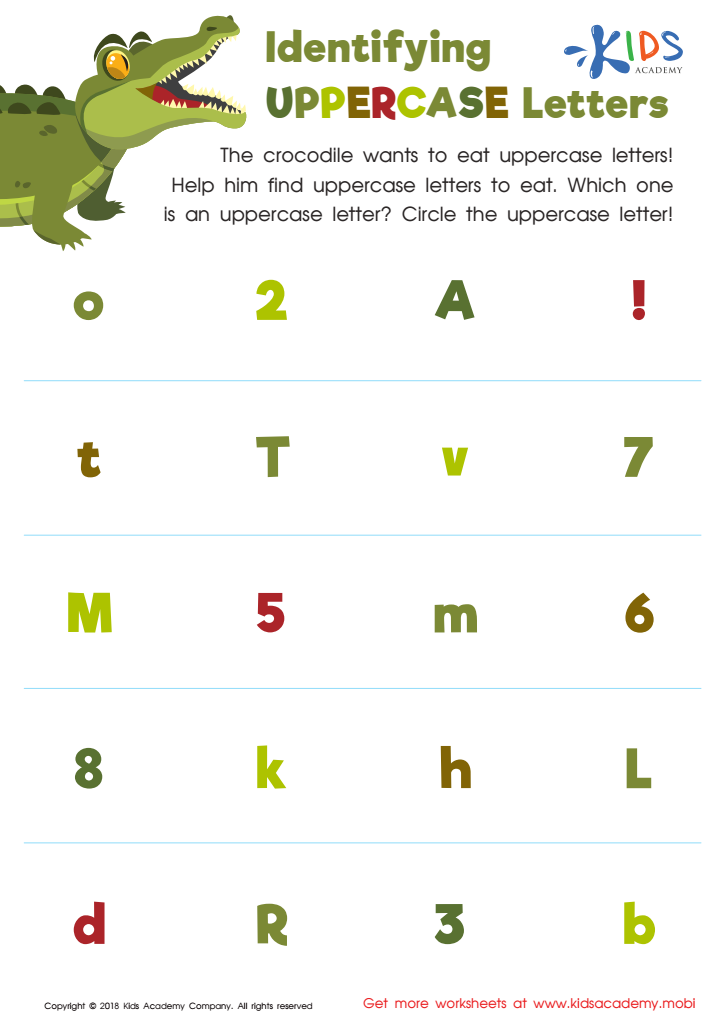
Identifying Uppercase Letters Worksheet

Find lowercase letters a b c Worksheet

Find Lowercase Letters v w x Worksheet






Visual discrimination skills play a pivotal role in the literacy development of children aged 6-8. At this stage, children are mastering reading and writing, and these skills help them distinguish between similar shapes, such as upper and lowercase letters. Strong visual discrimination allows children to differentiate between letters like 'b' and 'd' or 'p' and 'q', which are crucial for accurate reading and writing.
Parents and teachers should prioritize these skills because difficulties in visual discrimination can lead to confusion and frustration for children when learning to read, consequently impacting their self-esteem and motivation. As children encounter text, their ability to quickly and accurately recognize letters supports fluency, comprehension, and overall communication skills.
Supporting visual discrimination through targeted activities, such as letter sorting or matching games, enhances not only literacy but also cognitive development. Engaging children in these practices fosters critical thinking and attention to detail, skills that are vital across subjects. In essence, nurturing visual discrimination fosters confidence and lays a strong foundation for academic success, making it a fundamental priority for educators and parents alike.







