Uppercase identification Normal Uppercase Letters Worksheets for Ages 6-8
5 filtered results
-
From - To
Discover our engaging worksheets designed to help children aged 6-8 master uppercase letter identification. These Normal Uppercase Letters Worksheets make learning fun and interactive, featuring a variety of activities that promote recognition and understanding of uppercase letters. Each worksheet is thoughtfully crafted to enhance critical skills such as fine motor skills and visual discrimination. Your child will enjoy tracing, copying, and coloring uppercase letters while reinforcing their alphabet knowledge. Ideal for home or classroom use, our resources provide an excellent foundation for early literacy. Empower your child's learning journey with our colorful, engaging uppercase letter identification worksheets today!
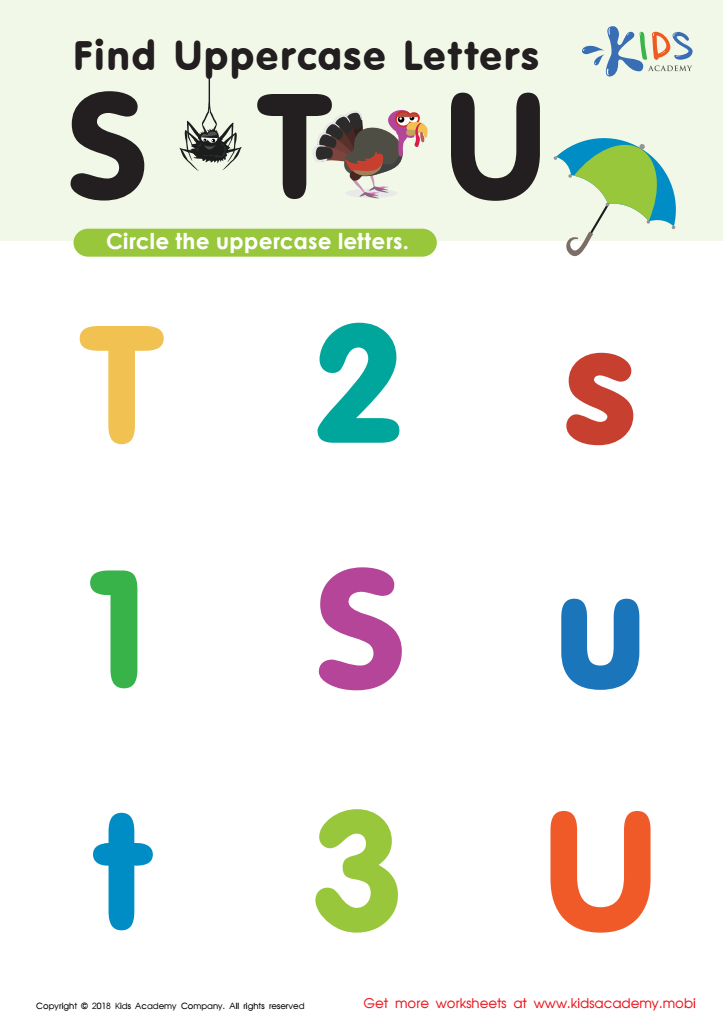
Find Uppercase Letters Worksheet
 Assign to My Students
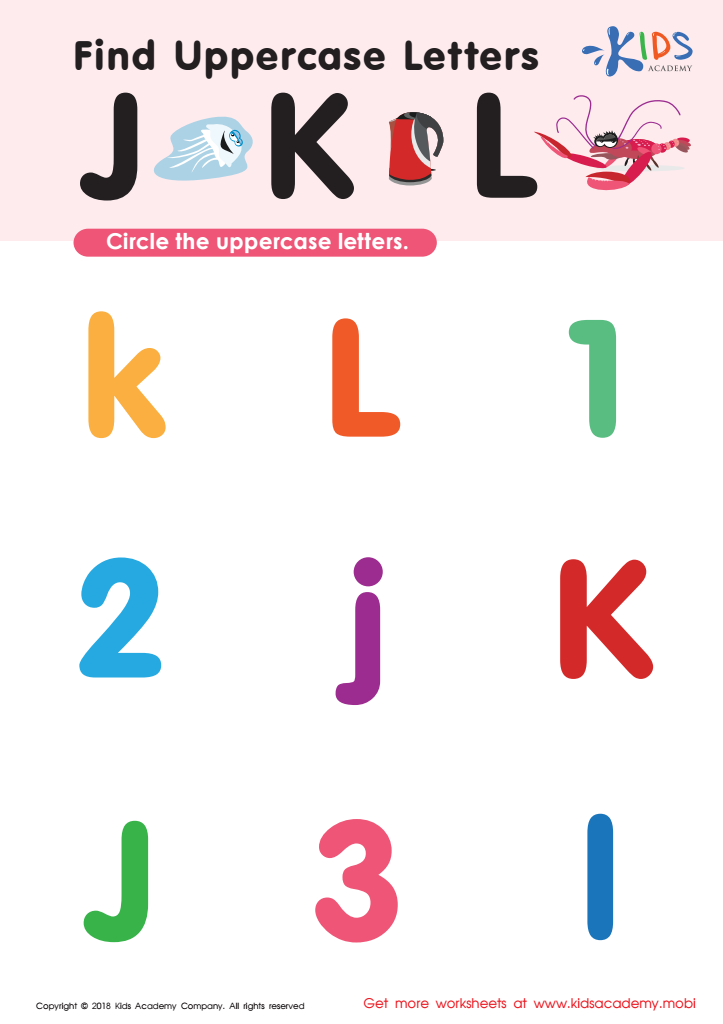
Find Uppercase Letters J, K, and L Worksheet
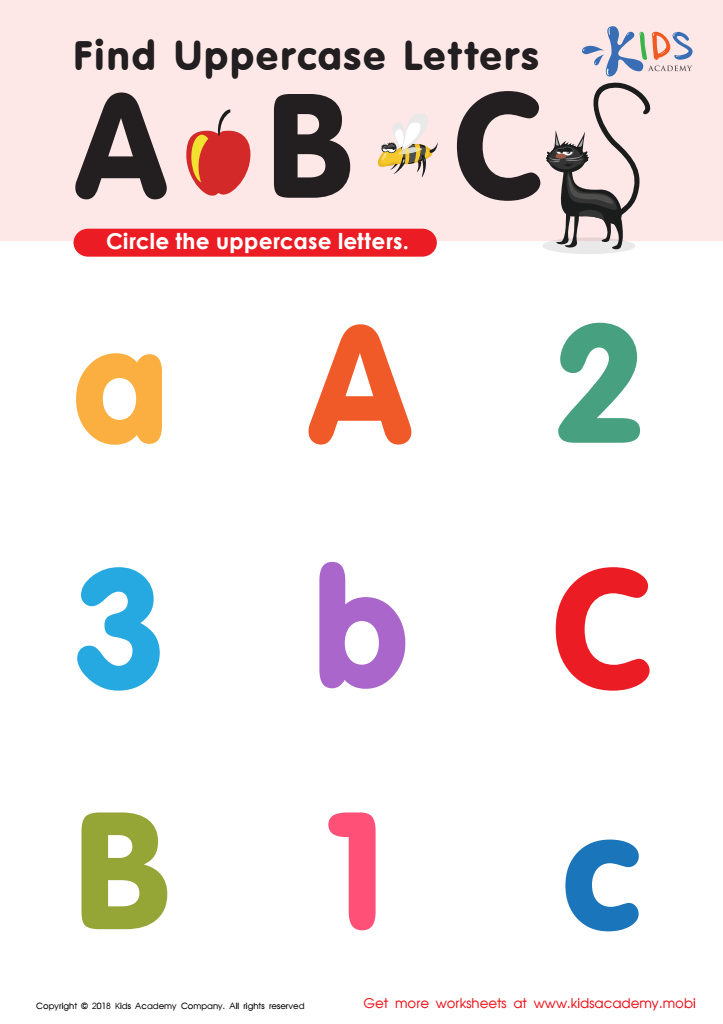
Find Uppercase Letters A, B, and C Worksheet
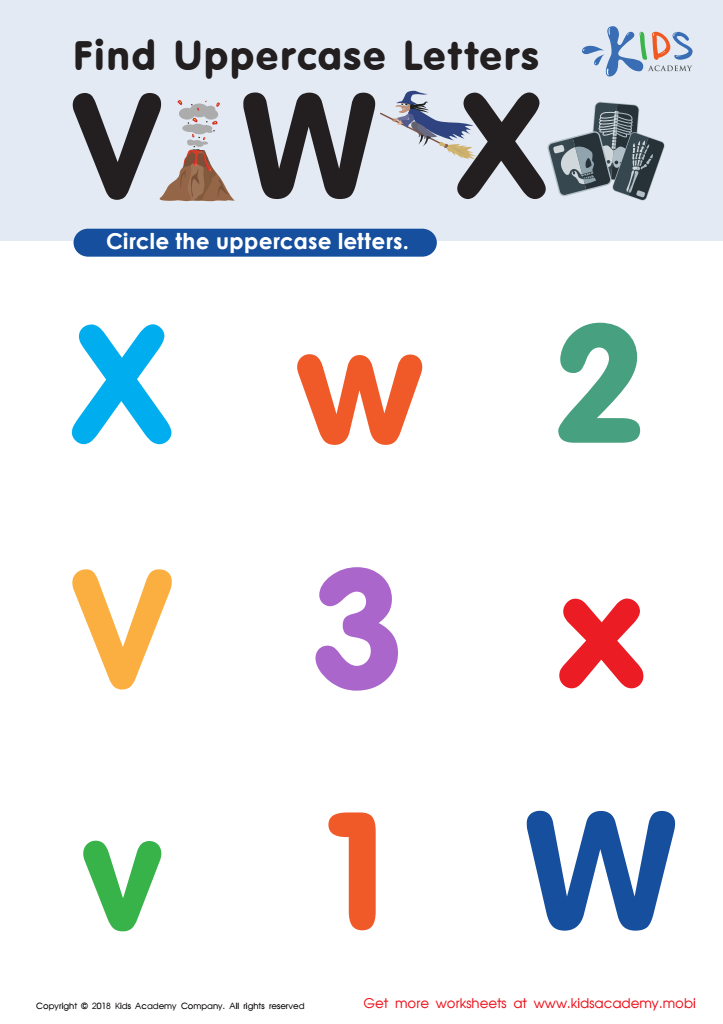
Find Uppercase Letters V, W, X Worksheet
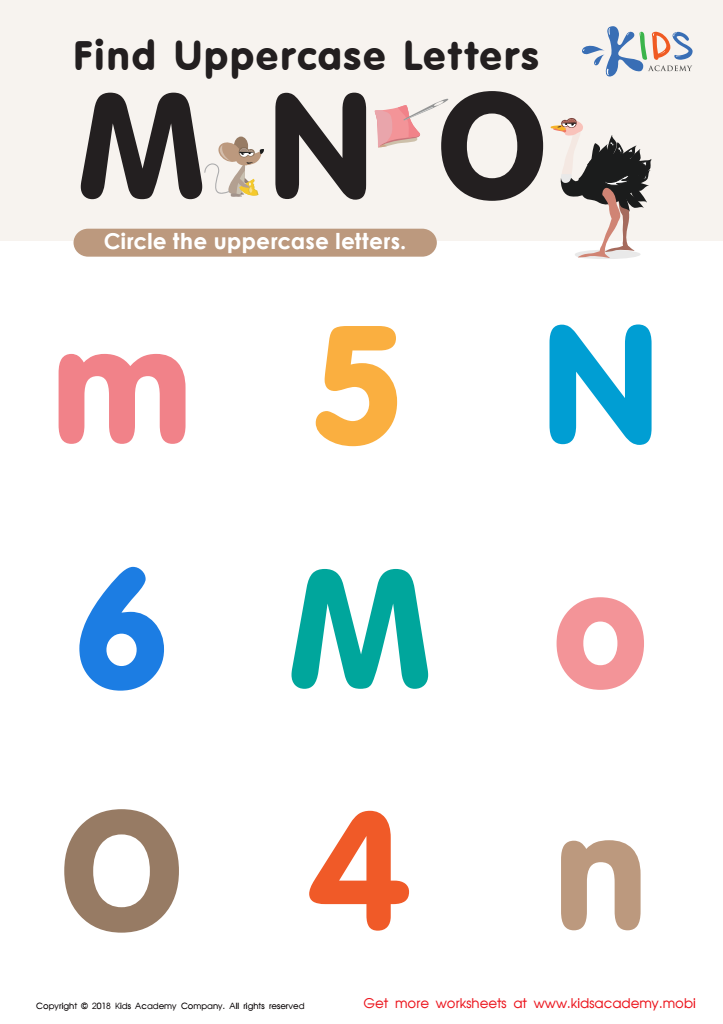
Find Uppercase Letters M, N, and O Worksheet








Identifying uppercase letters is crucial for children aged 6-8 as it plays a key role in their literacy development. At this age, children are transitioning from learning to read to reading to learn, making letter recognition foundational. Uppercase letters are prominent in texts—always present at the beginning of sentences, for proper nouns, and in titles. Mastery in identifying these letters fosters confidence and fluency in reading.
Furthermore, recognizing uppercase letters aids in fostering writing skills. As children learn to form sentences, understanding the correct use of capital letters reinforces grammar conventions, which are essential for clear communication. This foundational knowledge significantly supports their ability to engage with more complex texts as they advance in their education.
Parents and teachers should also care because uppercase letter identification enhances cognitive skills, such as memory and visual discrimination. These skills contribute positively to overall academic growth. As children develop these competencies, they experience a sense of accomplishment and motivation, encouraging further exploration of language and literacy. By prioritizing uppercase letter recognition, parents and teachers equip children with the essential tools needed for lifelong learning and effective communication.