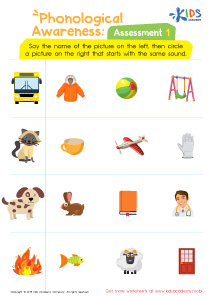
Vocabulary development Normal Vowels Worksheets for Ages 6-8
6 filtered results
-
From - To
Boost your child's vocabulary with our engaging Normal Vowels Worksheets, specifically designed for ages 6-8. These worksheets focus on enhancing phonemic awareness by emphasizing normal vowel sounds. Our interactive exercises encourage young learners to explore vocabulary through fun activities, helping them recognize, read, and spell words effectively. As children work through these worksheets, they will build confidence in their language skills while reinforcing essential literacy foundations. Perfect for at-home learning or classroom use, our resources support both educational standards and children's creativity. Dive into a world of words and enable your child to express themselves effectively with our captivating worksheets!
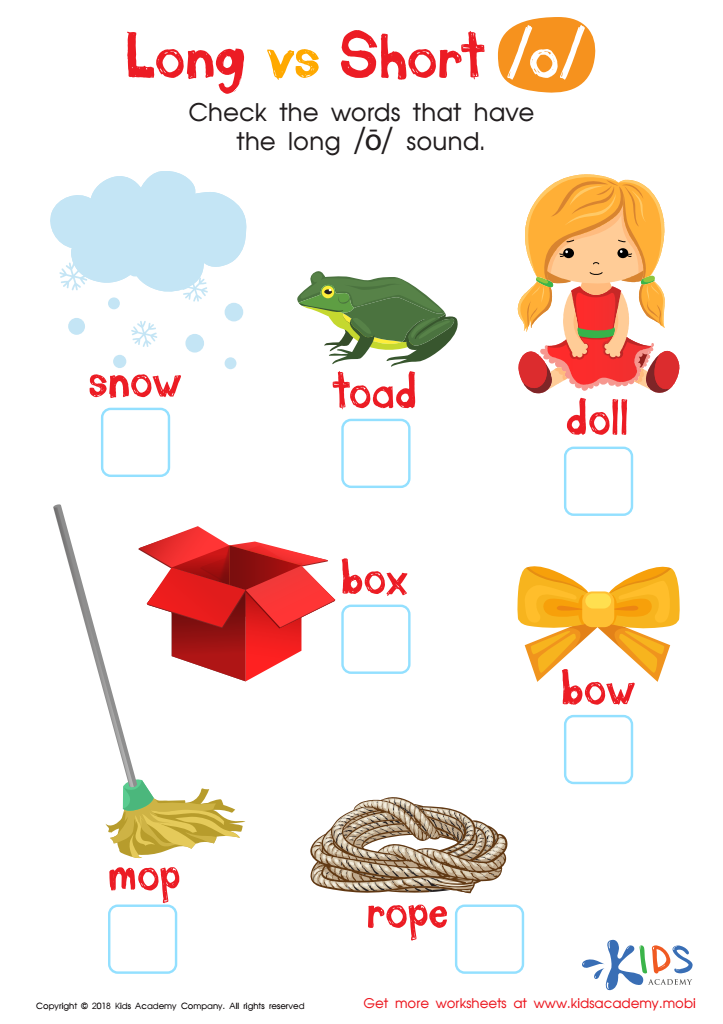
Long vs Short O Reading Worksheet
 Assign to My Students
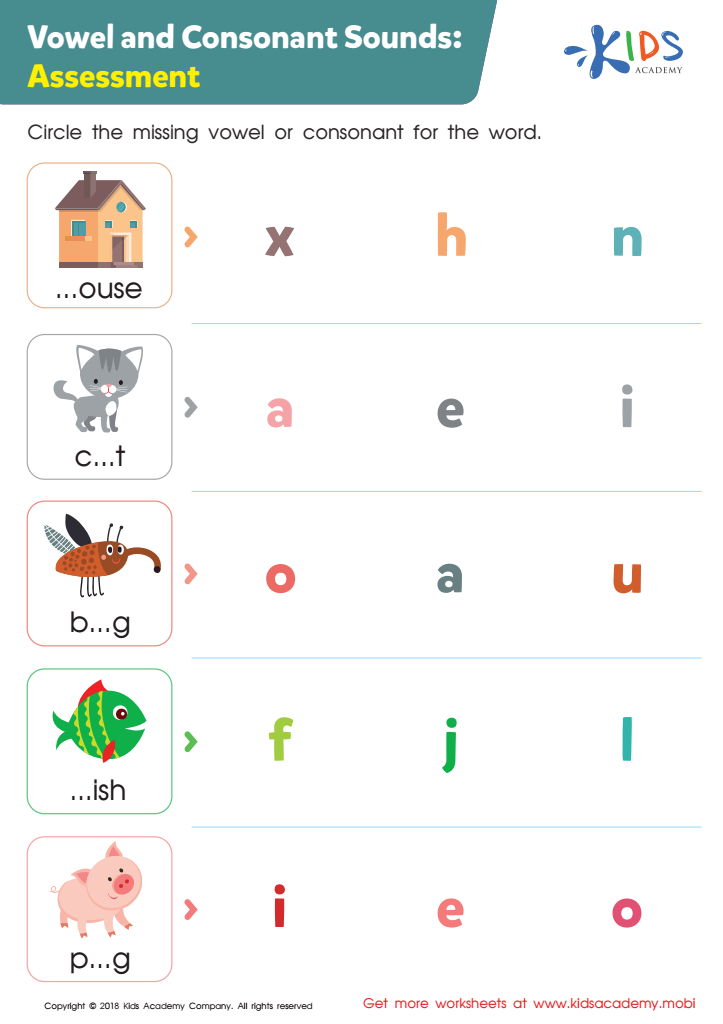
Vowel and Consonant Sounds: Assessment Worksheet
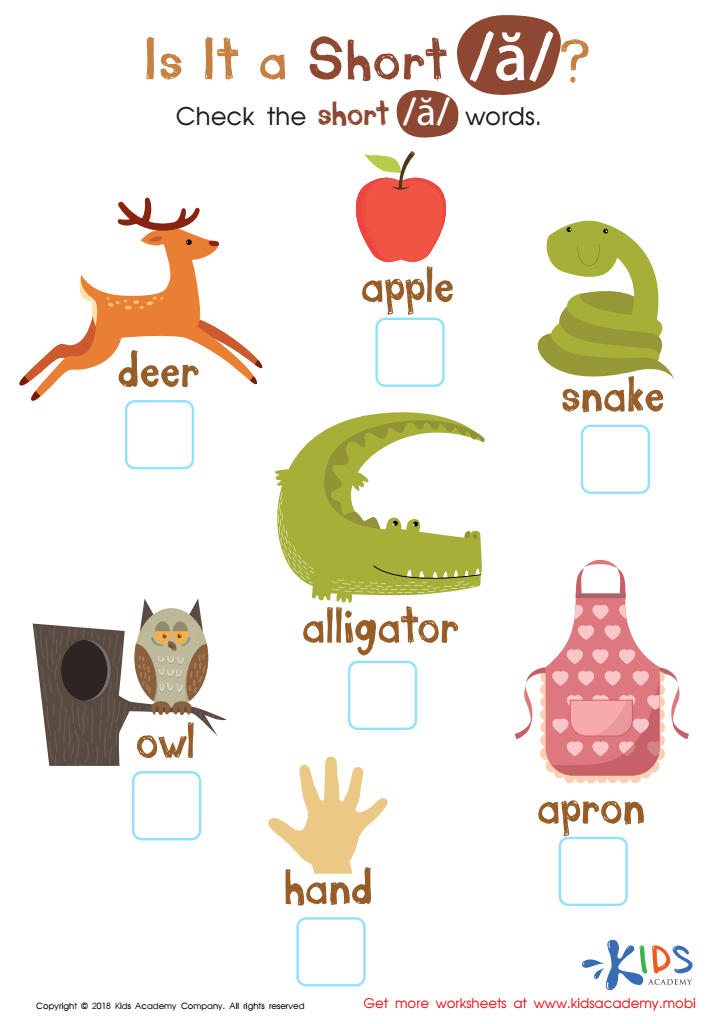
Is It Short A? Reading Worksheet
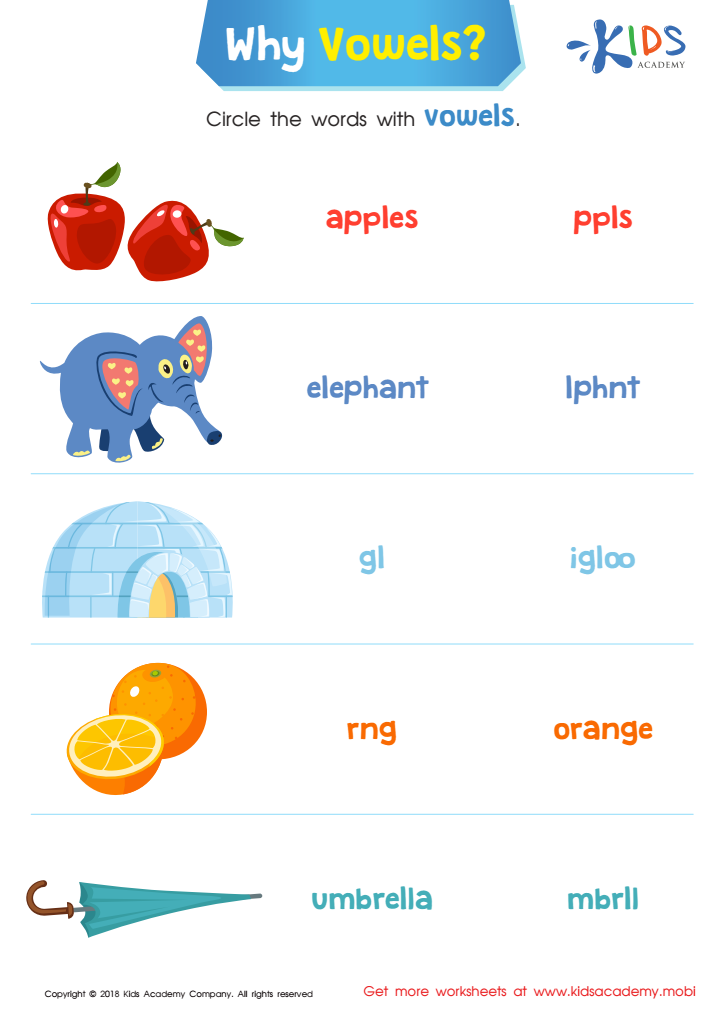
Why Vowels? Reading Worksheet
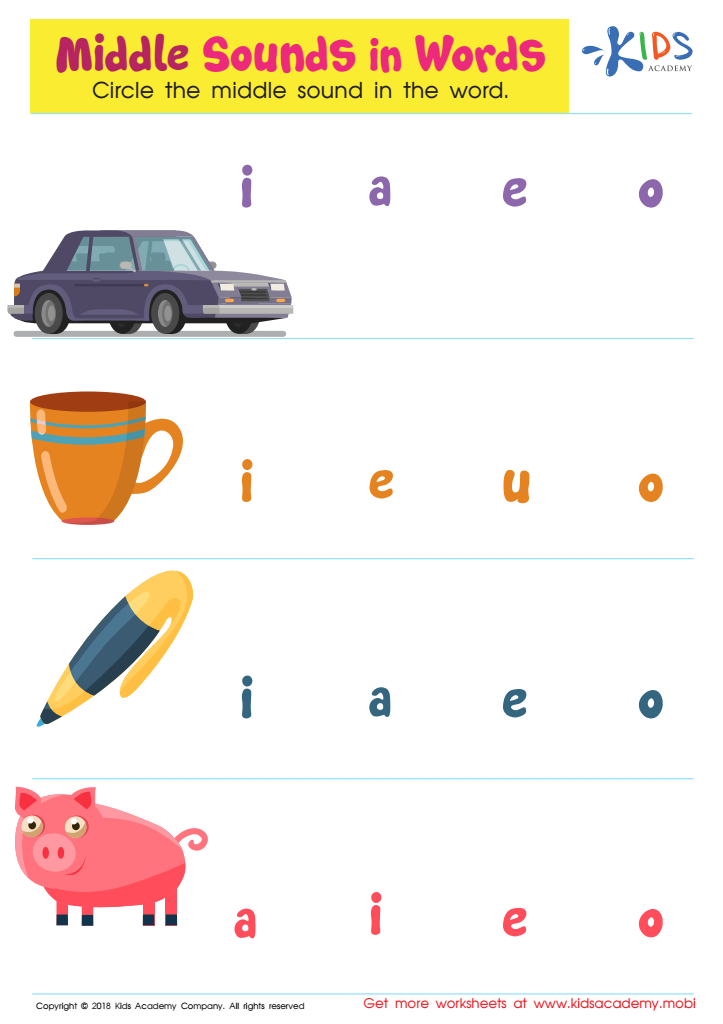
Middle Sounds in Words Worksheet
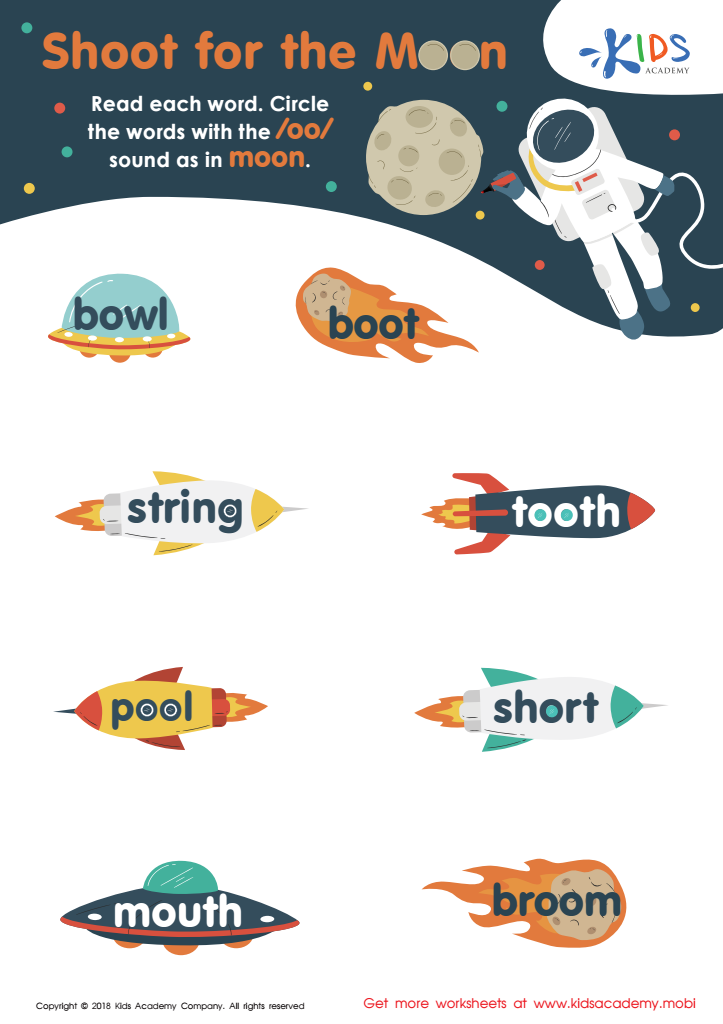
Reading: Shoot for the Moon Worksheet





Vocabulary development is crucial for children aged 6-8, as this stage marks a significant period of language acquisition and communication skills. Normal vowels play a foundational role in building vocabulary. When children understand and use normal vowel sounds accurately, they enhance their reading, writing, and speaking abilities. This understanding helps them decode words more effectively, promoting fluency in reading, which is essential for academic success.
Moreover, a rich vocabulary influences a child's ability to express themselves clearly and understand complex ideas. As they encounter new words, their linguistic comprehension expands, allowing them to engage more meaningfully in conversations and discussions. This is particularly important in social settings where children develop interpersonal skills.
Teachers and parents should also recognize the link between vocabulary and overall cognitive development. A strong vocabulary enhances critical thinking and creativity, allowing children to connect concepts, ask questions, and make informed decisions.
Finally, supporting vocabulary development fosters a love for learning and empowers children to navigate various subjects confidently. Engaging in word games, reading diverse books, and encouraging discussions can significantly contribute to this vital aspect of childhood learning, setting the stage for future educational achievements.