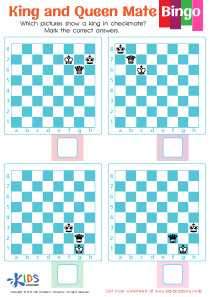
Memory enhancement Normal Chess Worksheets for Ages 6-8
3 filtered results
-
From - To
Boost your child's cognitive skills with our Memory Enhancement Normal Chess Worksheets, specially designed for ages 6-8! At Kids Academy, we believe in the power of chess to strengthen memory, attention, and problem-solving abilities. Our engaging and fun-filled printable chess activities are perfect for young learners, offering a blend of instruction and practice. These worksheets foster essential learning skills and provide an interactive way to develop strategic thinking. Equip your child with the tools they need to excel, all while enjoying the timeless game of chess! Elevate learning at www.kidsacademy.mobi today.
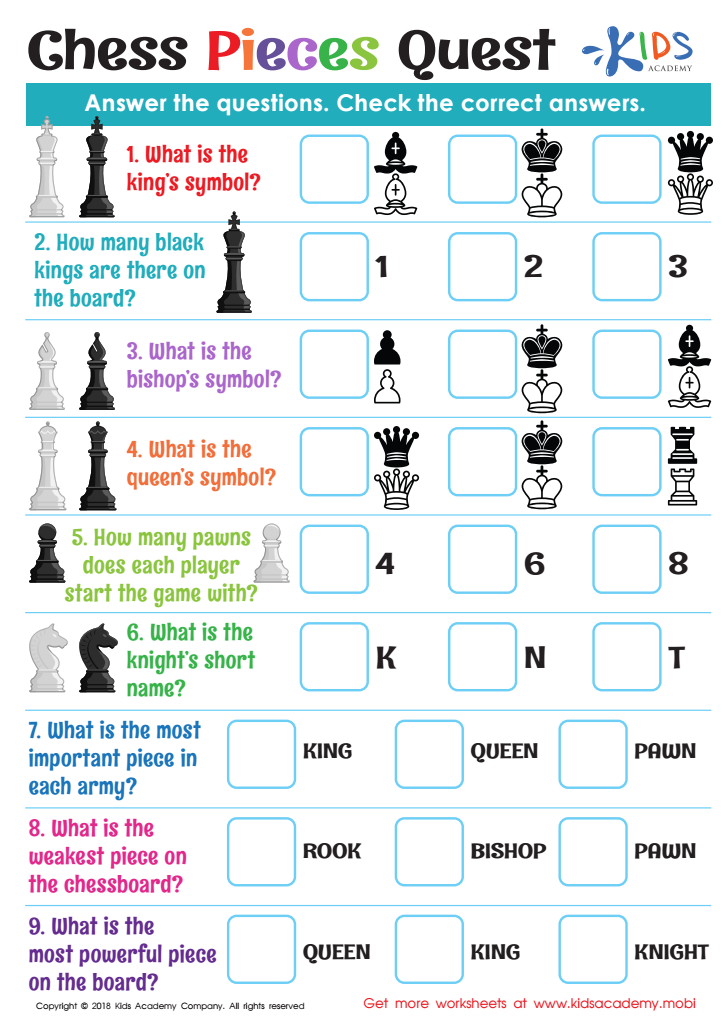
Chess Pieces Quest Worksheet
 Assign to My Students
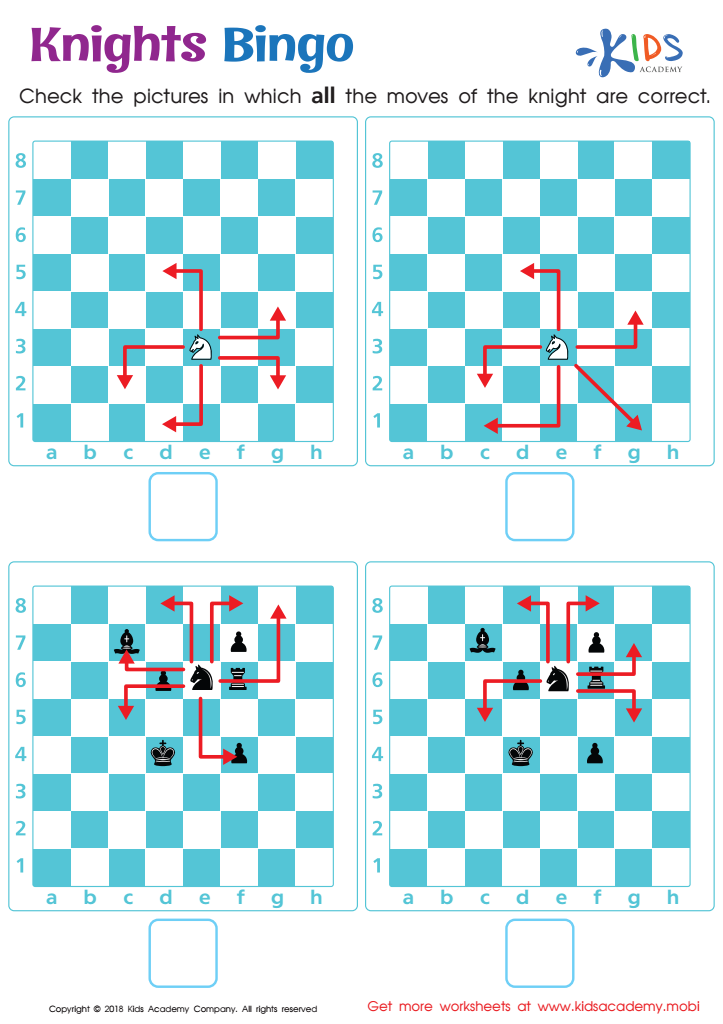
Knights Bingo Worksheet
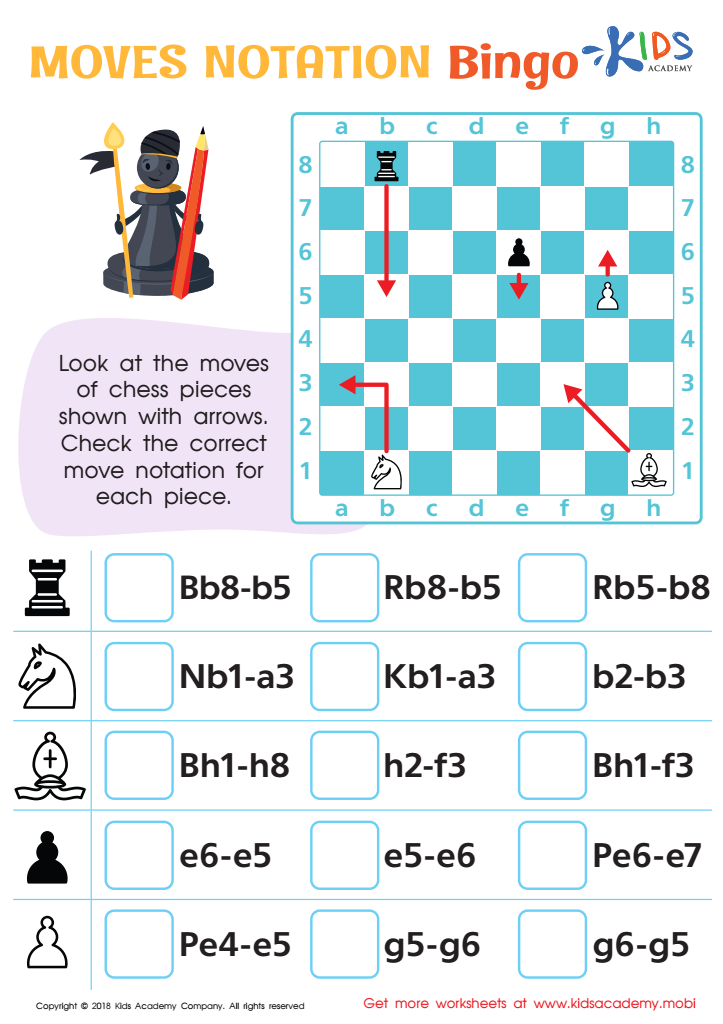
Moves Notation Bingo Worksheet






Memory enhancement through chess at ages 6-8 significantly benefits cognitive development and academic success. At this pivotal stage, children's brains are highly plastic and receptive to new experiences. Chess, as a strategical and mental sport, uniquely stimulates both hemispheres of the brain, fostering critical skills such as concentration, problem-solving, and memory retention.
When children play chess, they must remember the movements of different pieces, foresee several steps ahead, and track the opponent’s strategy—all of which exercises their working memory. Enhanced working memory directly translates to improved performance in school, as it's crucial for tasks such as reading comprehension and solving math problems.
Additionally, chess promotes attention span and patience, essential qualities for learning complex subjects. Since each game presents new challenges, children learn adaptability and creative thinking in spontaneously evolving situations. As they engage with opponents, children also develop social skills like empathy, as they consider other perspectives.
Parents and teachers should value chess's cognitive and emotional benefits, providing a balanced and enriching learning experience beyond standard curricula. This precious brain-boosting activity can set a lifelong foundation for intellectual curiosity and academic proficiency. Introducing chess early ensures children maximize the pivotal brain development window, supporting their overall educational journey.