Analyzing data Normal Worksheets for Ages 6-8
5 filtered results
-
From - To
Introduce young learners to essential data analysis skills with our insightful worksheets, tailored specifically for ages 6-8. These expertly designed worksheets from Kids Academy help children develop their analytical abilities through engaging activities that make learning fun. By interpreting simple graphs, charts, and tables, kids enhance their understanding of data and build a solid foundation for future math and science education. Each worksheet is crafted to be age-appropriate, promoting critical thinking and data comprehension in an enjoyable manner. Ideal for both classroom and home learning, our collection encourages active learning and critical thinking, setting young minds on a path to academic success.
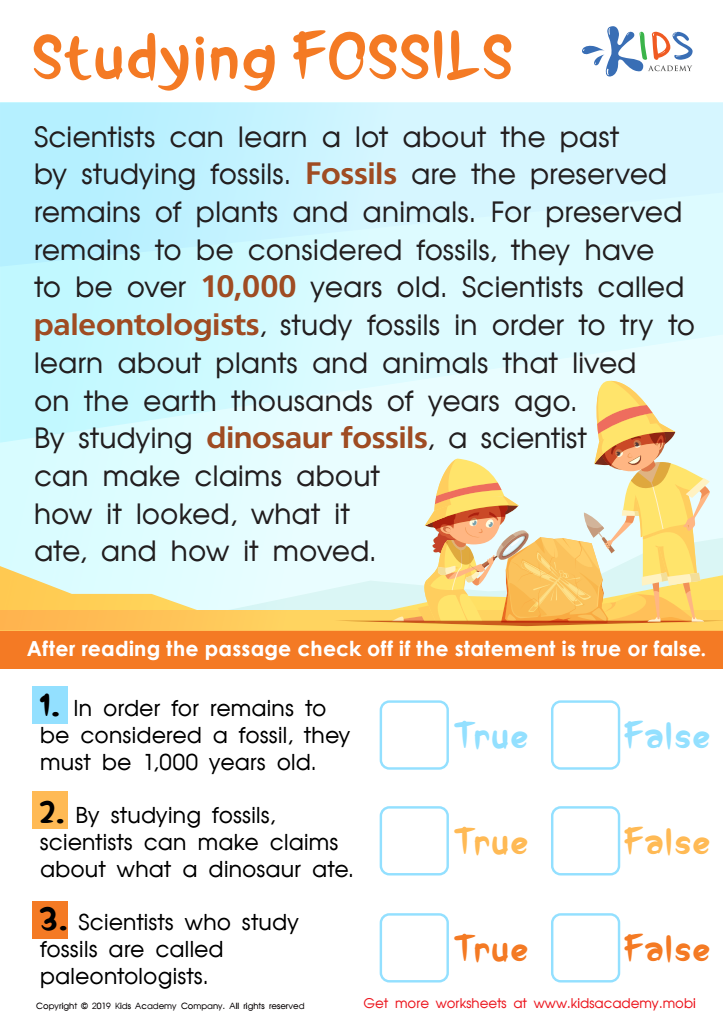
Studying Fossils Worksheet
 Assign to My Students

Water Scarcity Worksheet
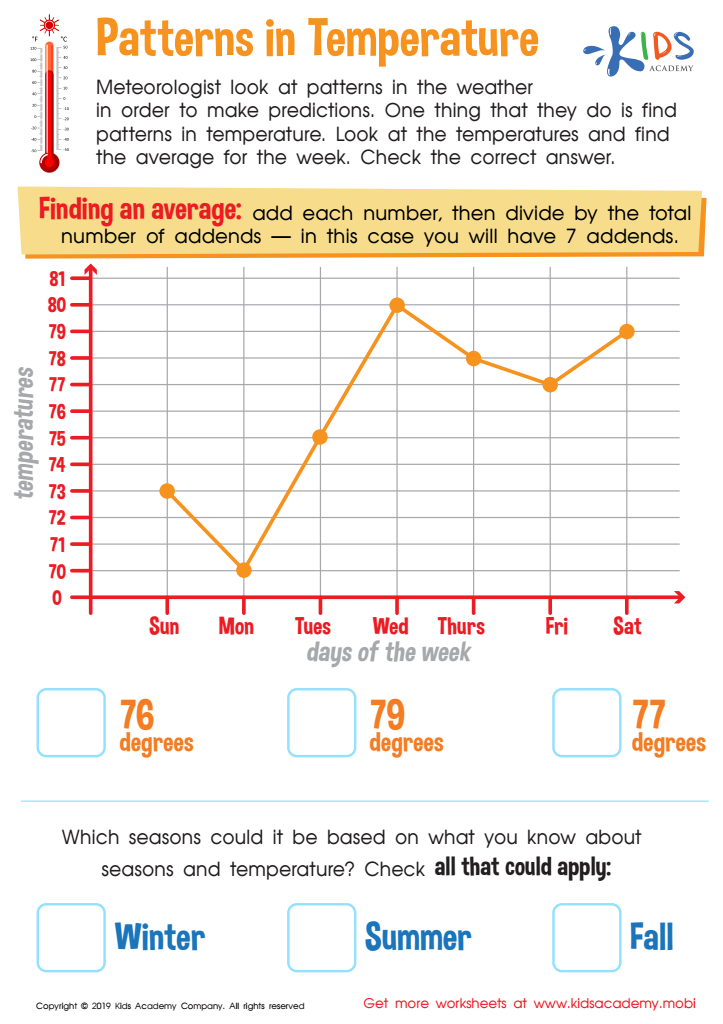
Patterns in Temperature Worksheet
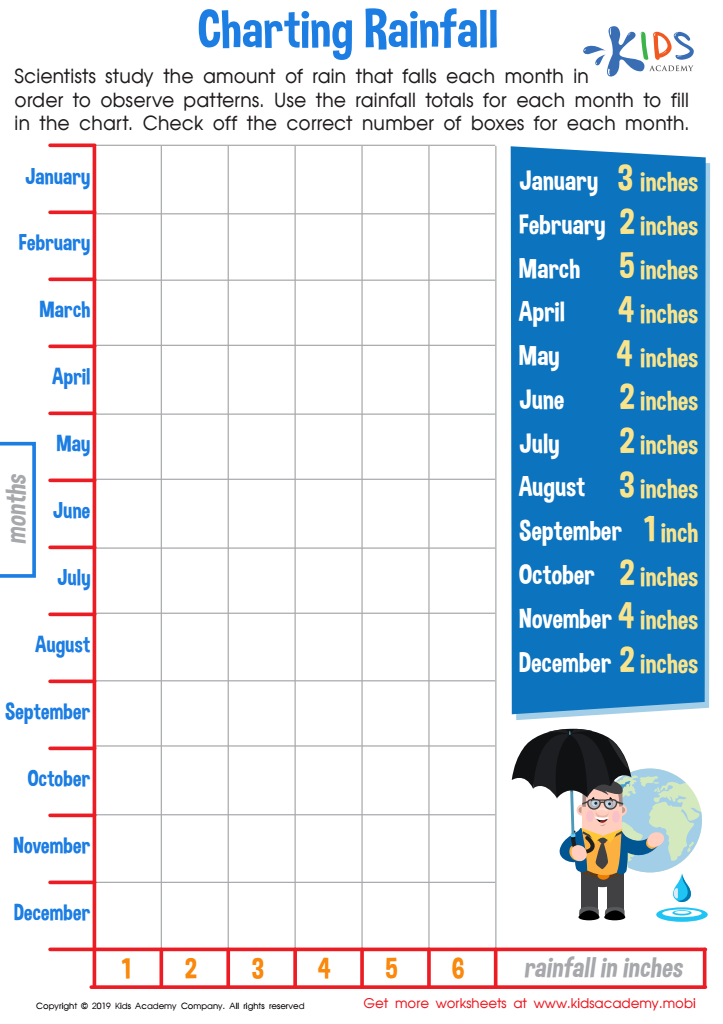
Charting Rainfall Worksheet
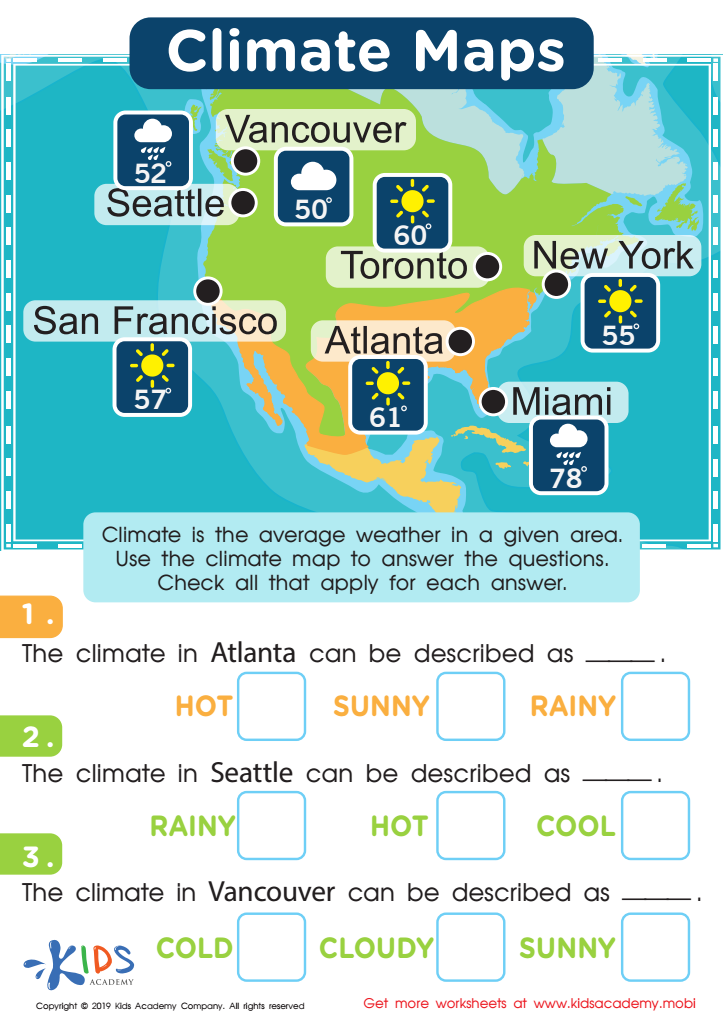
Climate Maps Worksheet








Analyzing data is a foundational skill that can significantly benefit children ages 6-8, making it crucial for parents and teachers to pay close attention to it. At this developmental stage, young minds are highly receptive and curious, providing the perfect opportunity to introduce them to the basics of data analysis in a simplified, enjoyable manner.
Data analysis involves collecting, organizing, and interpreting information—a skillset that enhances critical thinking and problem-solving abilities. By engaging children with simple data analysis activities, like sorting objects by color or creating basic charts, they start to see patterns and make predictions. These experiences build a strong foundation for more complex mathematical concepts and scientific thinking, which are essential in later education stages.
Incorporating data analysis into early education also fosters an inquisitive mindset. Children learn to ask questions like "Why did this happen?" and "What does this information tell us?" This curiosity not only promotes a love for learning but also equips them with the skills needed for future technology-driven jobs where data comprehension is invaluable.
Ultimately, by focusing on data analysis skills from a young age, we shape young learners into analytical thinkers, prepared to face and understand a world increasingly driven by data. Thus, parents and teachers should give due importance to nurturing these skills early on, ensuring well-rounded cognitive development.








