Basic astronomy knowledge Normal Worksheets for Ages 6-8
3 filtered results
-
From - To
Explore the wonders of the universe with our "Basic Astronomy Knowledge Worksheets" designed for children aged 6-8! These engaging and interactive worksheets introduce young learners to fundamental concepts of astronomy, including planets, stars, and the solar system. Each worksheet is crafted to stimulate curiosity and enhance critical thinking skills, making learning fun and accessible. Perfect for classroom use or at-home learning, these resources help reinforce vocabulary and comprehension through activities such as matching, coloring, and sorting. Ignite your child's passion for space and discovery with our carefully curated worksheets, creating a foundation for future astronomical exploration!
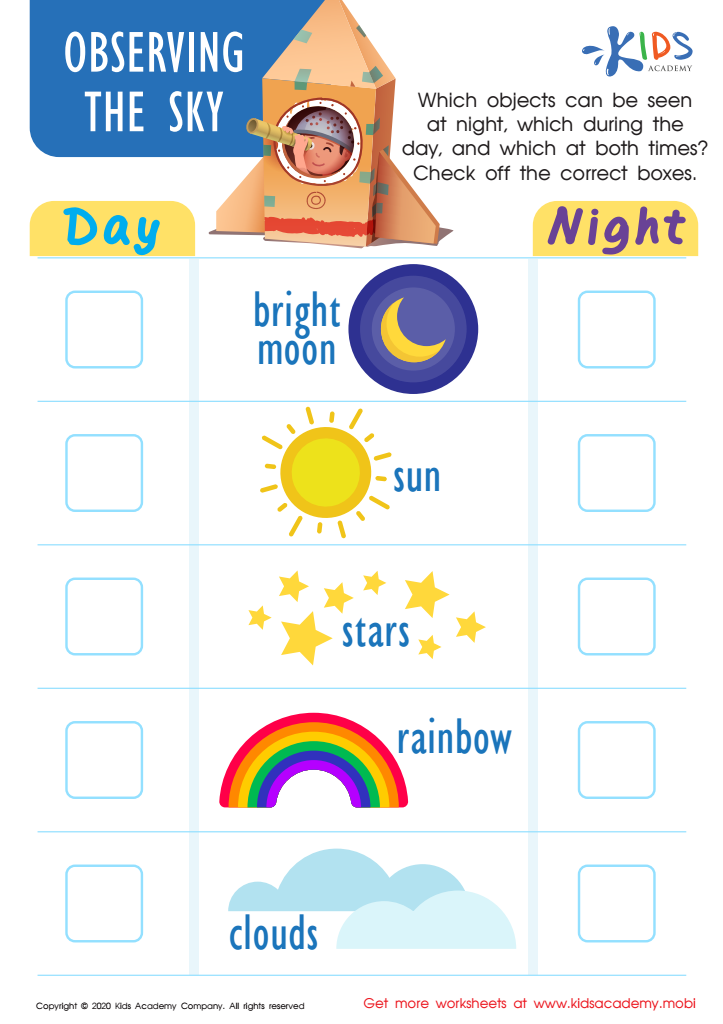
Observing the Sky Worksheet
 Assign to My Students
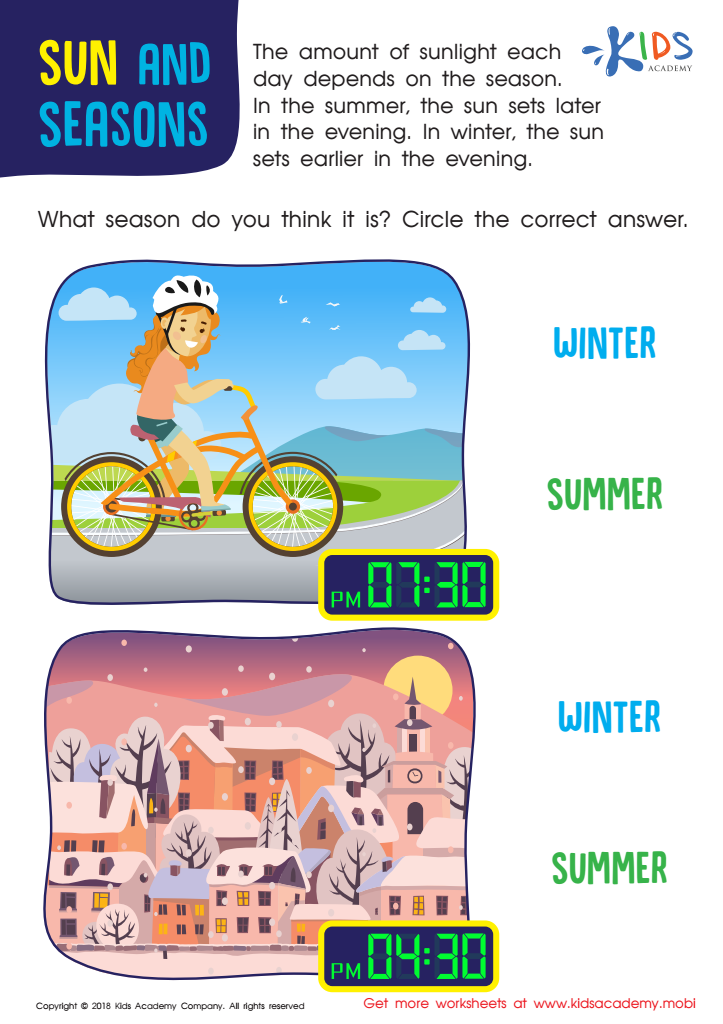
Sun and Seasons Worksheet
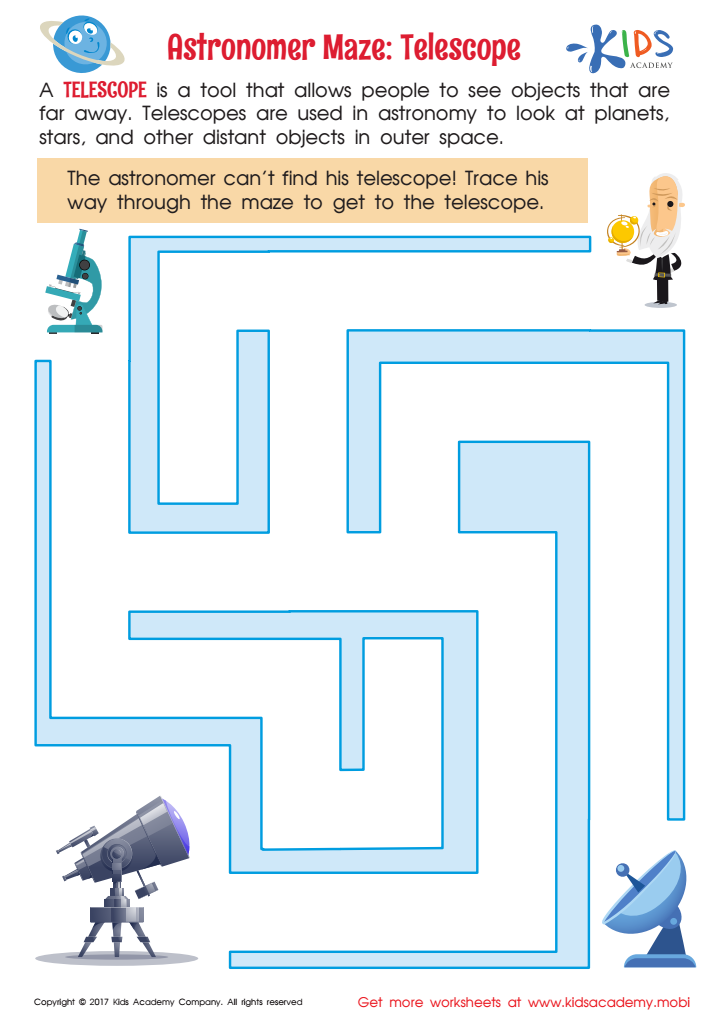
Astronomer Maze: Telescope Worksheet








Basic astronomy knowledge is important for children ages 6-8 for several reasons. First, it sparks curiosity about the universe and encourages exploration. At this age, children are naturally inquisitive, and learning about celestial bodies such as the sun, moon, and stars can foster a sense of wonder and inspire a lifelong interest in science.
Second, understanding basic astronomy concepts supports cognitive development. Learning about the planets, the night sky, and the changing seasons helps children grasp important scientific principles, such as gravity, rotation, and revolution. These concepts lay the groundwork for more advanced science topics in the future.
Moreover, basic astronomy aids in developing essential skills such as observation and critical thinking. When children stargaze or observe celestial events, they practice making predictions, comparing observations, and drawing conclusions.
Lastly, astronomy can also offer a wonderful opportunity for bonding moments between parents and children or teachers and students, as they share experiences like watching meteor showers or building a model solar system. Overall, basic astronomy knowledge not only educates children about the world beyond Earth, but also nurtures curiosity, cognitive skills, and meaningful connections. This makes it a valuable aspect of early childhood and primary education.








