Categorizing animals Normal Worksheets for Ages 6-8
3 filtered results
-
From - To
Explore our engaging Categorizing Animals Normal Worksheets for children aged 6-8! These specially designed worksheets help young learners develop essential skills by classifying animals into various groups based on characteristics, habitats, and diets. With appealing illustrations, intuitive layouts, and age-appropriate challenges, these activities spark curiosity and improve critical thinking. Ideal for classroom or home use, our worksheets encourage interactive learning while enhancing observation and categorization abilities. Perfect for supporting early science education, these resources are easy to print and integrate into daily lessons. Enhance your child's learning journey with fun, informative, and visually stimulating worksheets that make categorizing animals an exciting adventure!
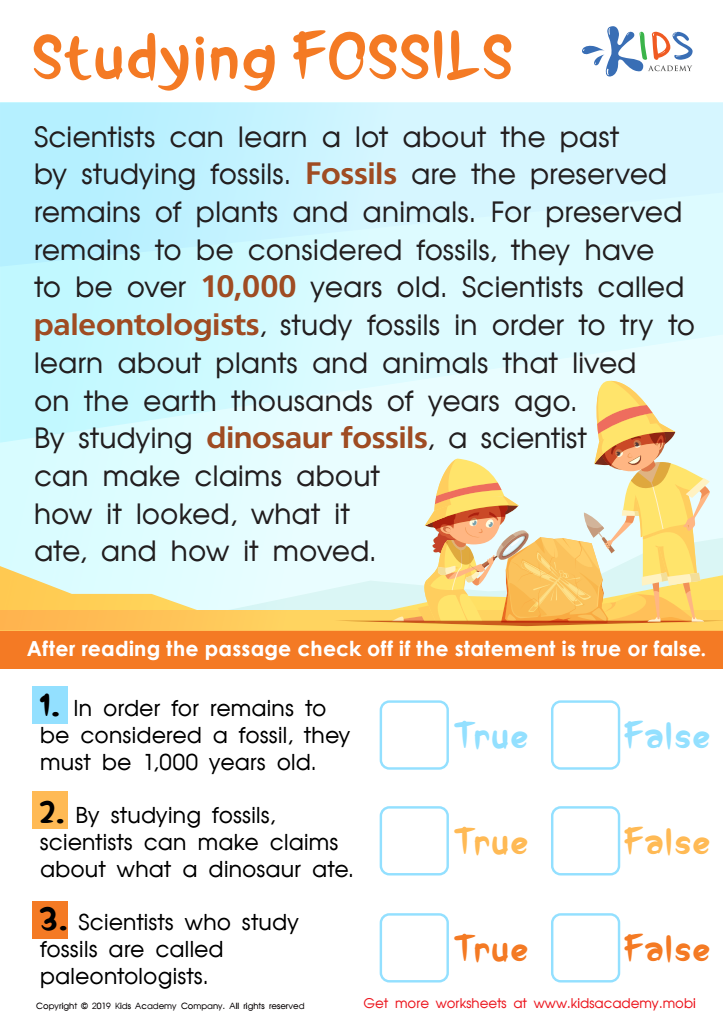
Studying Fossils Worksheet
 Assign to My Students
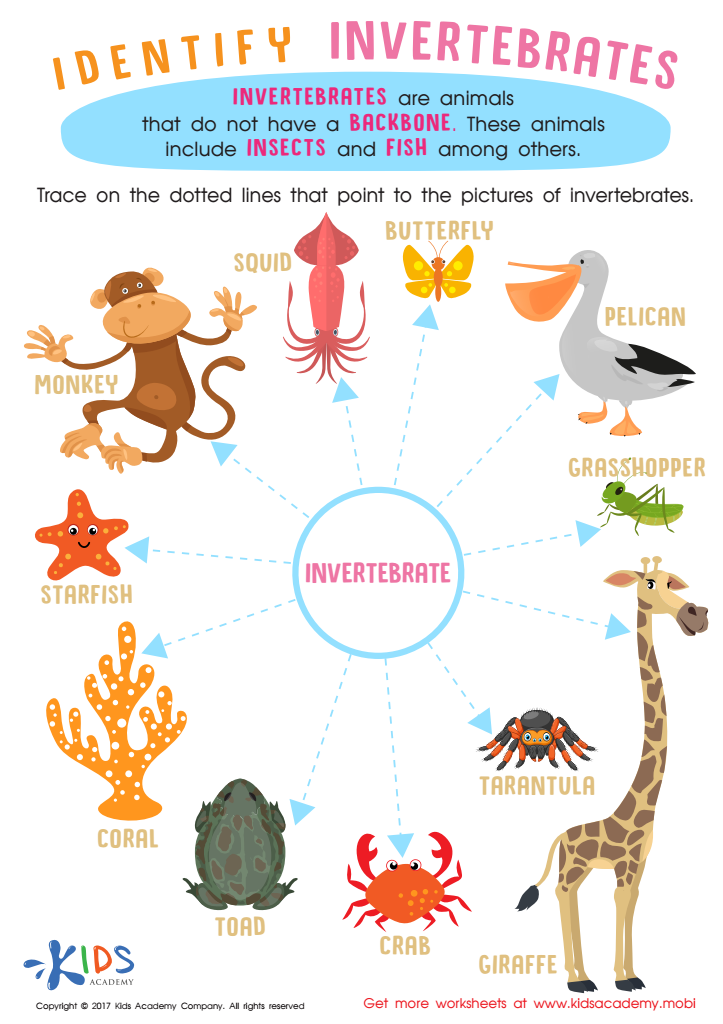
Invertebrates Worksheet for Grade 3
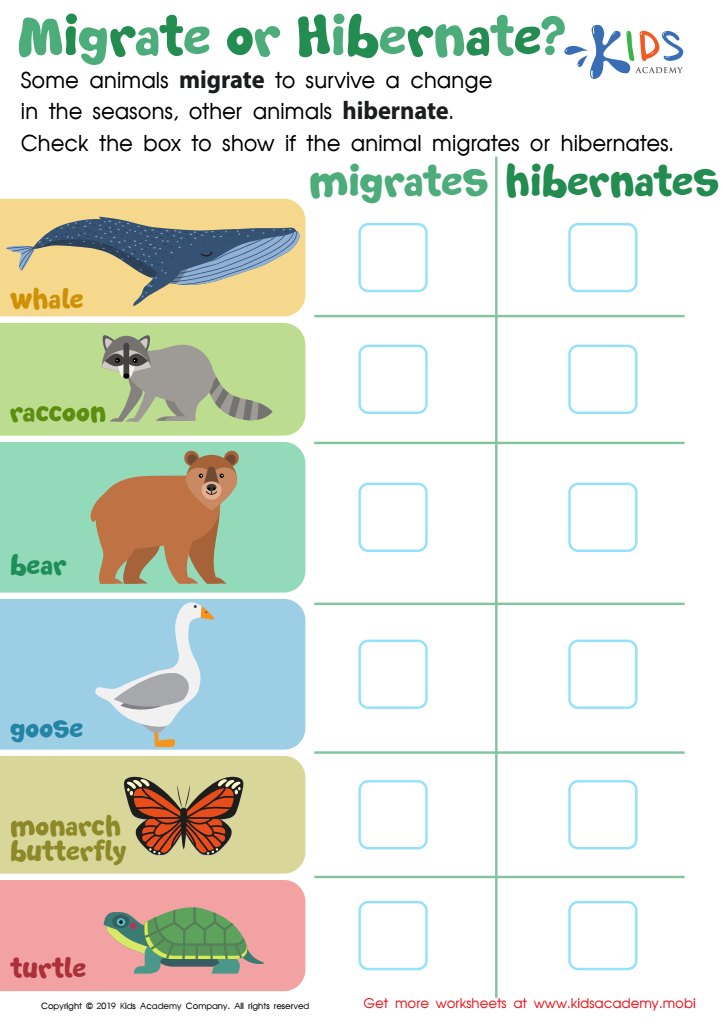
Migrate or Hibernate? Worksheet






.jpg)
Categorizing animals is essential for young learners aged 6-8 as it fosters critical thinking, enhances vocabulary, and develops organizational skills. At this age, children are naturally curious about the world around them, and understanding animal classifications—such as mammals, birds, reptiles, and amphibians—helps them make sense of their environment.
When parents and teachers guide children in categorizing animals, they encourage inquiry and exploration. This activity not only introduces scientific concepts but also promotes discussions about habitats, behaviors, and the relationships between different species. It encourages children to ask questions, make connections, and understand complexities in nature, which is foundational for later scientific learning.
Additionally, categorization enhances language skills by expanding children’s vocabulary as they learn specific terms related to animals and their traits. Engaging in classification activities can also strengthen math skills, as children may use charts or graphs to organize their findings.
Overall, caring about animal categorization helps equip young learners with knowledge, analytical skills, and a deep appreciation for biodiversity, laying a strong foundation for both their academic future and their role as informed global citizens.








