Knowledge application Normal Worksheets for Ages 6-8
6 filtered results
-
From - To
Kids Academy offers an engaging collection of "Knowledge Application" worksheets designed specifically for children ages 6-8. These worksheets provide an excellent way for young learners to apply what they’ve learned in real-world scenarios. From math problems and reading comprehension to science facts, these printable activities cover various subjects, enhancing their critical thinking and problem-solving skills. Crafted by education experts, each worksheet is fun and engaging, ensuring a positive learning experience that will bolster your child’s knowledge and self-confidence. Support your child's journey of discovery and learning with our expertly designed "Knowledge Application" worksheets today!
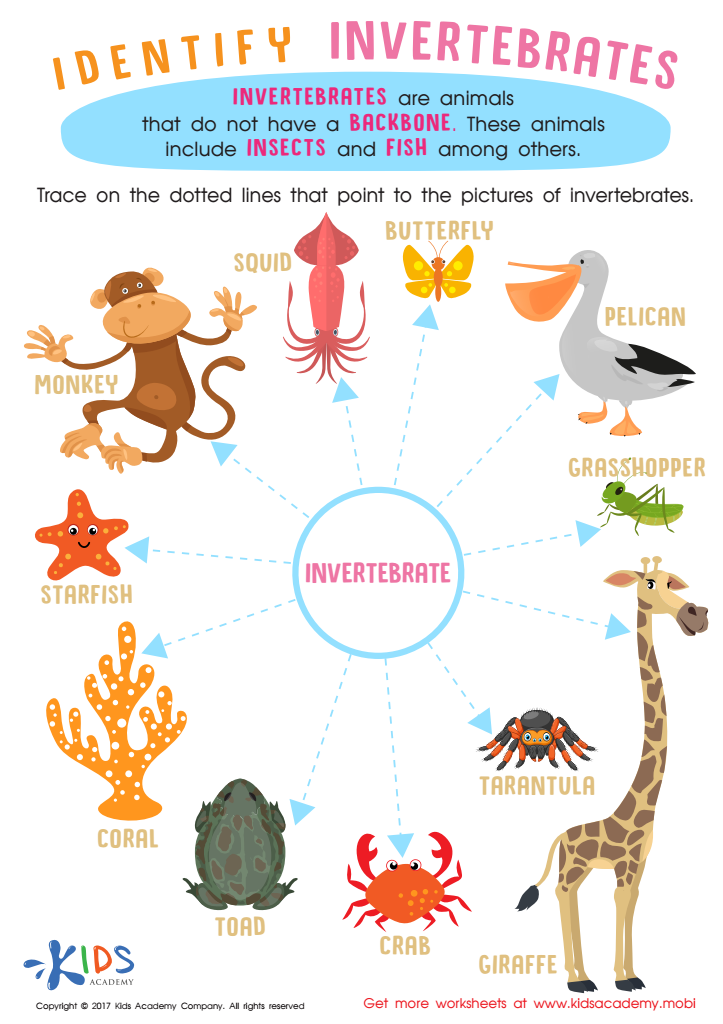
Invertebrates Worksheet for Grade 3
 Assign to My Students
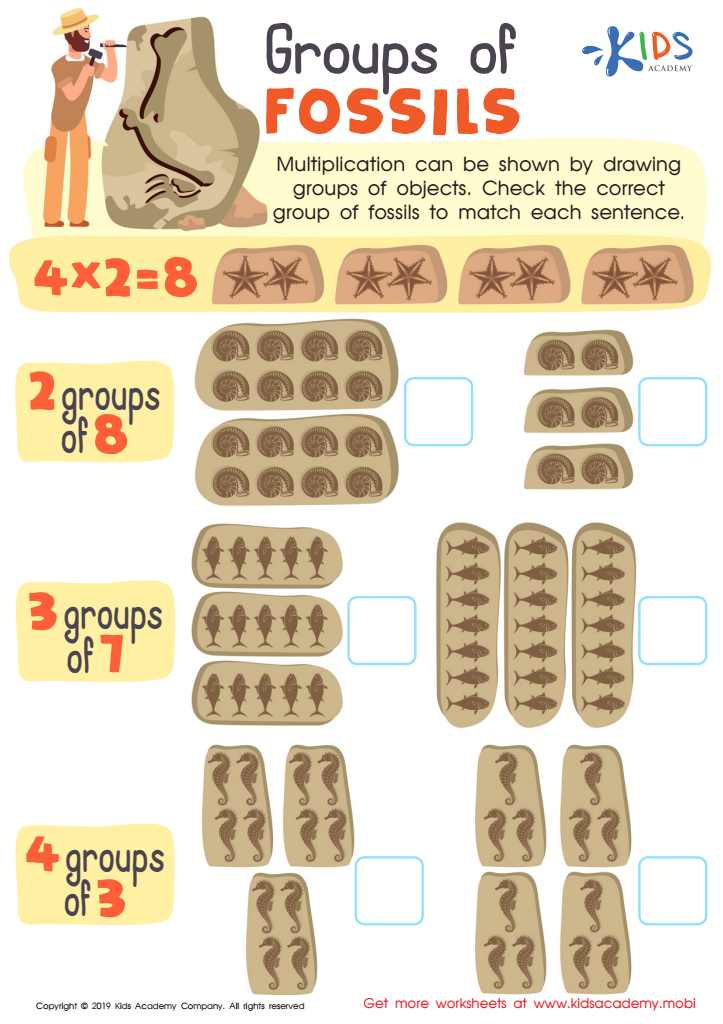
Groups of Fossils Worksheet
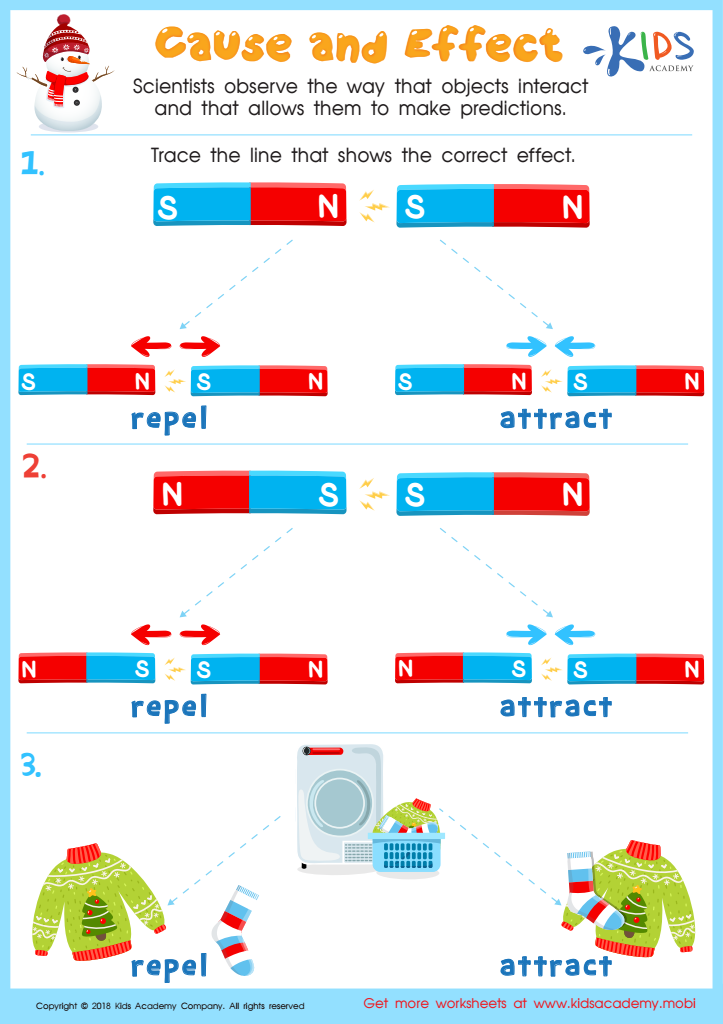
Repel and Attract Magnet Worksheet
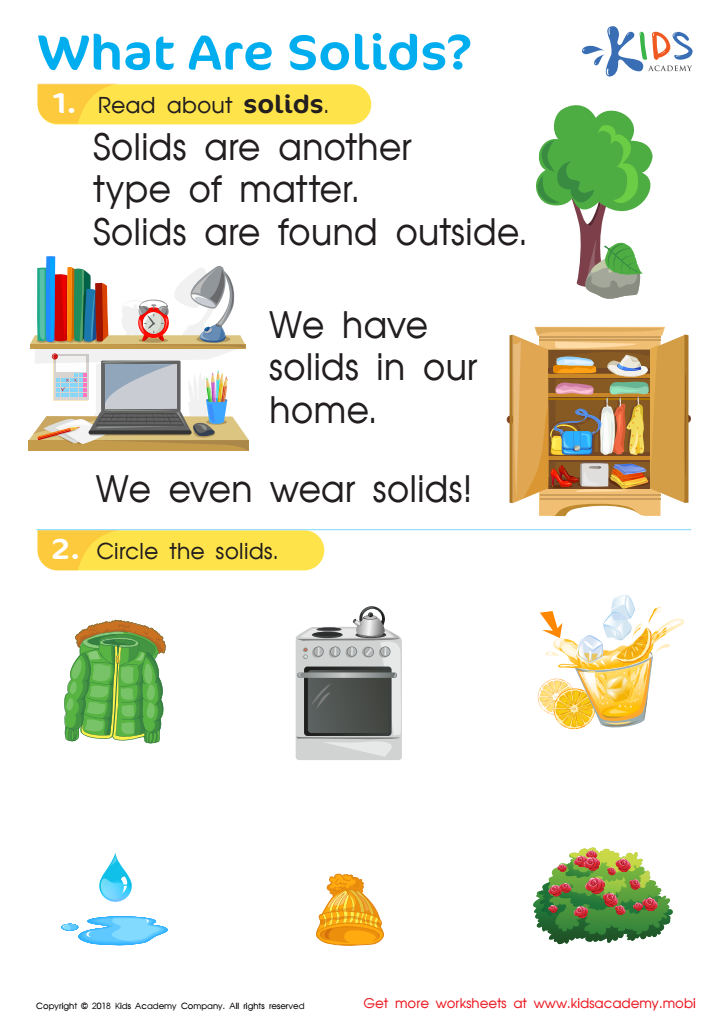
What Are Solids? Worksheet
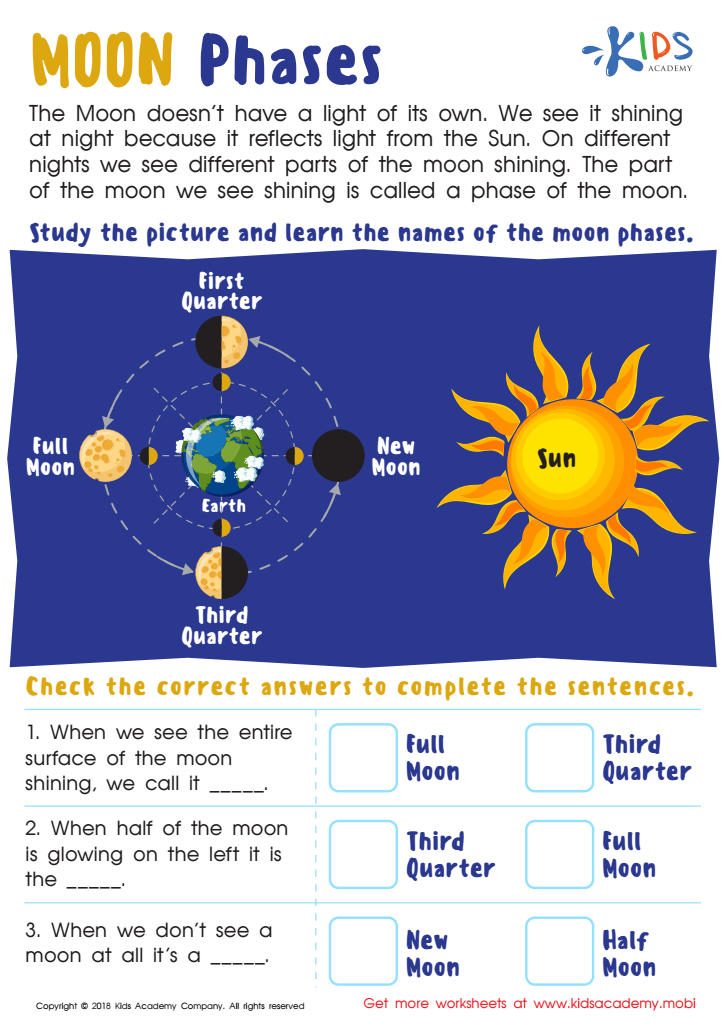
Moon Phases Worksheet
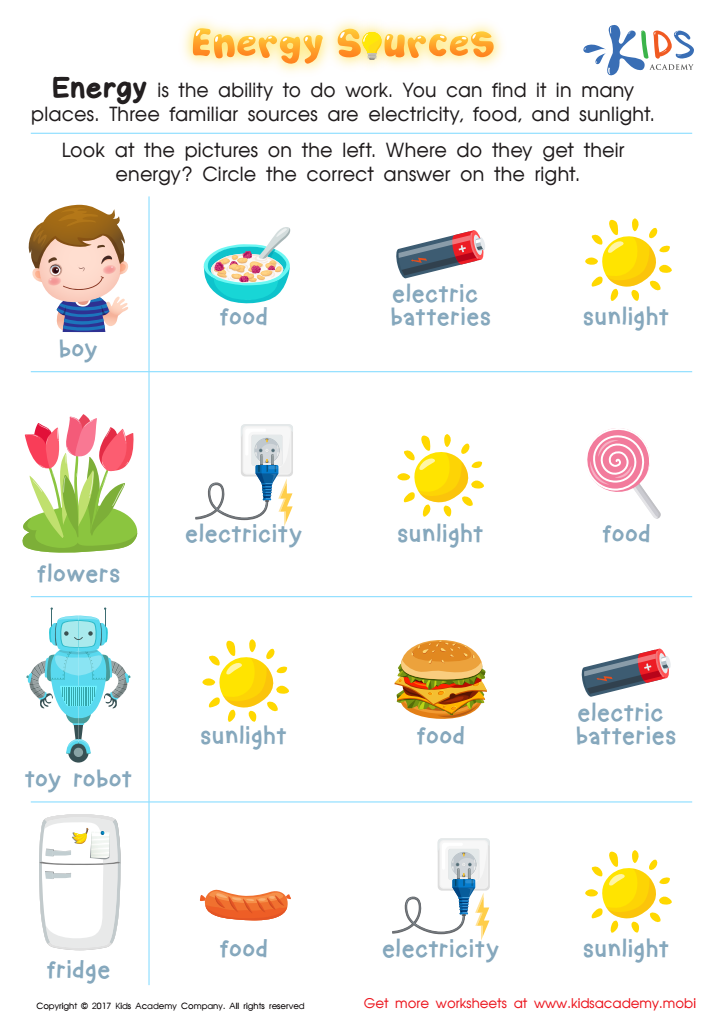
Energy Sources Printable






Parents and teachers should care about the application of knowledge for children aged 6-8 because it lays a crucial foundation for lifelong learning and problem-solving skills. At this developmental stage, kids are transitioning from concrete to more abstract thinking. Fostering the ability to apply knowledge helps them to see the relevance and interconnectedness of what they are learning. For example, applying math skills to real-world problems, such as measuring ingredients while cooking, reinforces their understanding and boosts their confidence.
Moreover, engaging young minds in practical applications nurtures curiosity and motivation. When children see how their education impacts their everyday lives, they are more likely to stay interested and engaged. This positive attitude toward learning can also encourage a growth mindset, helping them to persevere through challenges and view mistakes as learning opportunities.
Lastly, for teachers and parents, facilitating knowledge application provides insights into a child’s comprehension levels and learning styles. This information is invaluable for tailoring instruction to meet individual needs, ensuring that every child can thrive academically and socially. Therefore, a focus on applying knowledge is not just about academic success; it’s about equipping children with the tools they need to navigate life.
By encouraging these practices, we nurture well-rounded, inquisitive, and resilient individuals.








