Multiplication practice Normal Worksheets for Ages 6-8 - Page 2
30 filtered results
-
From - To
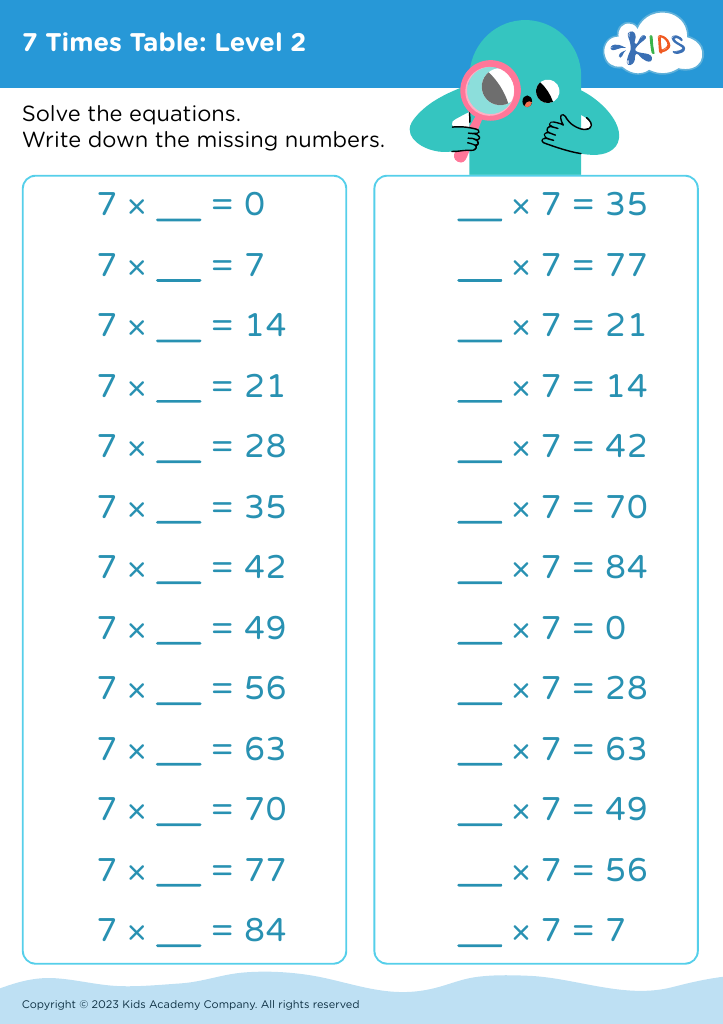
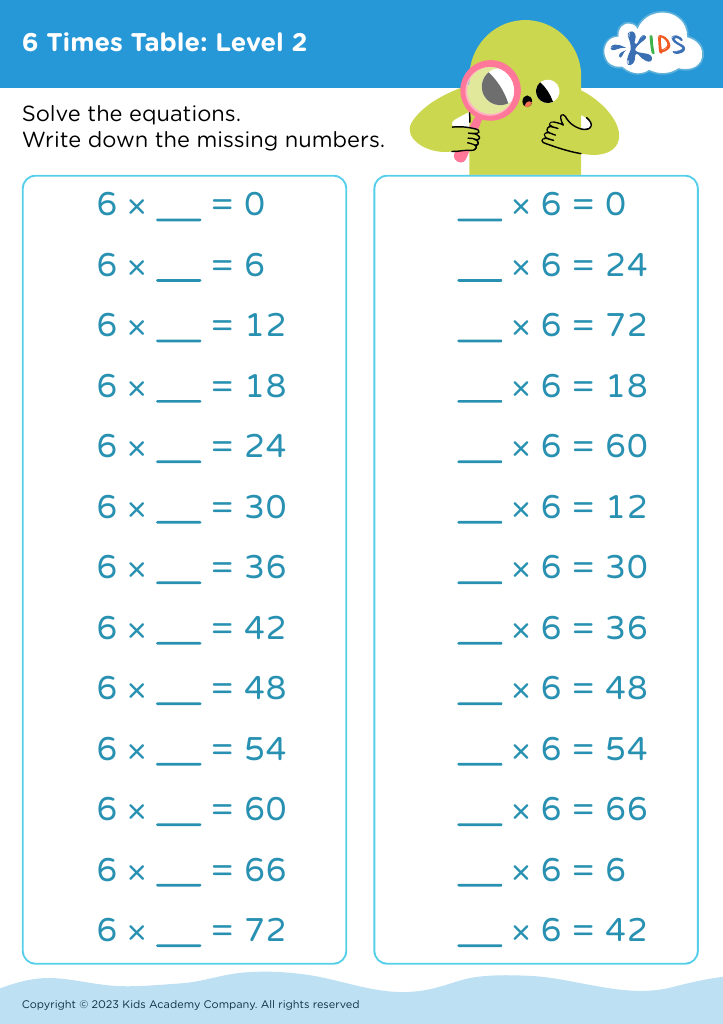
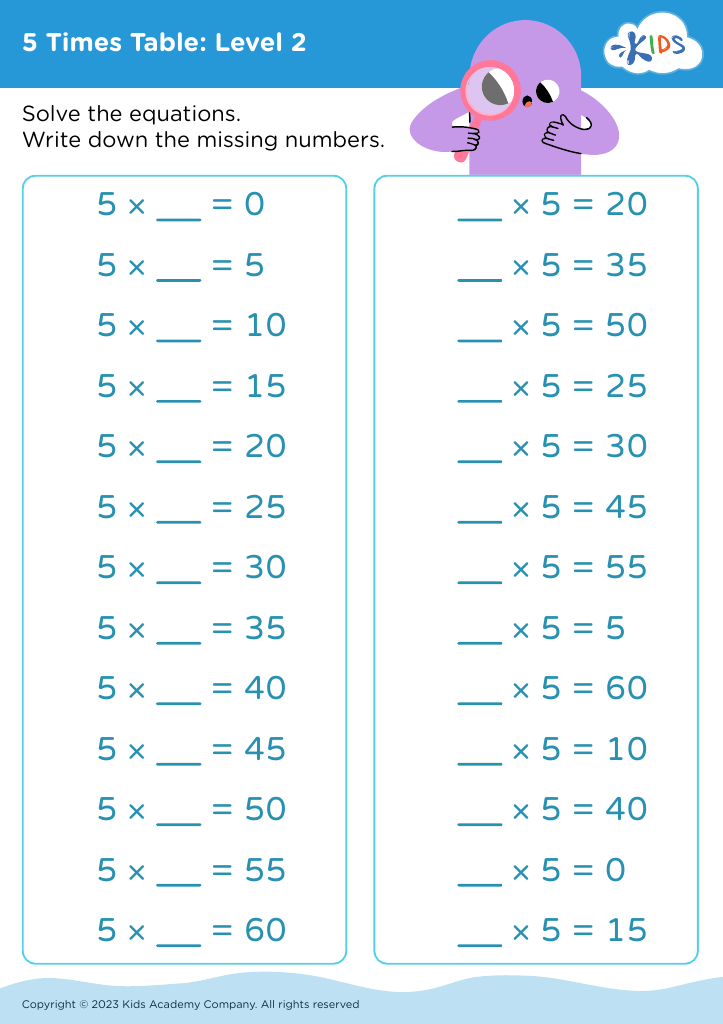
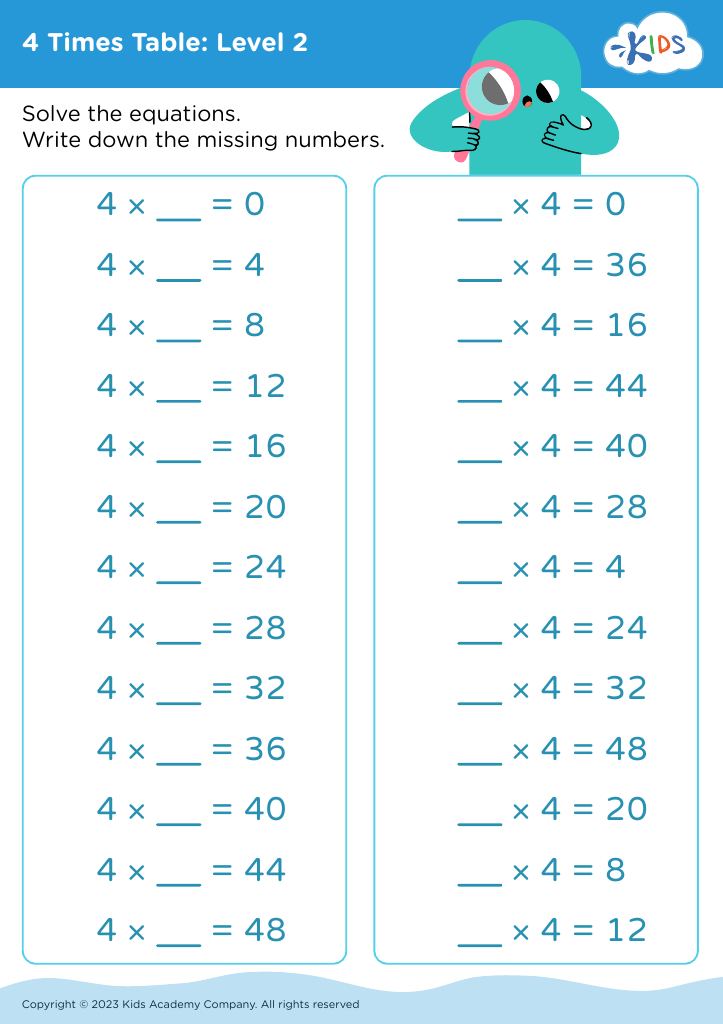
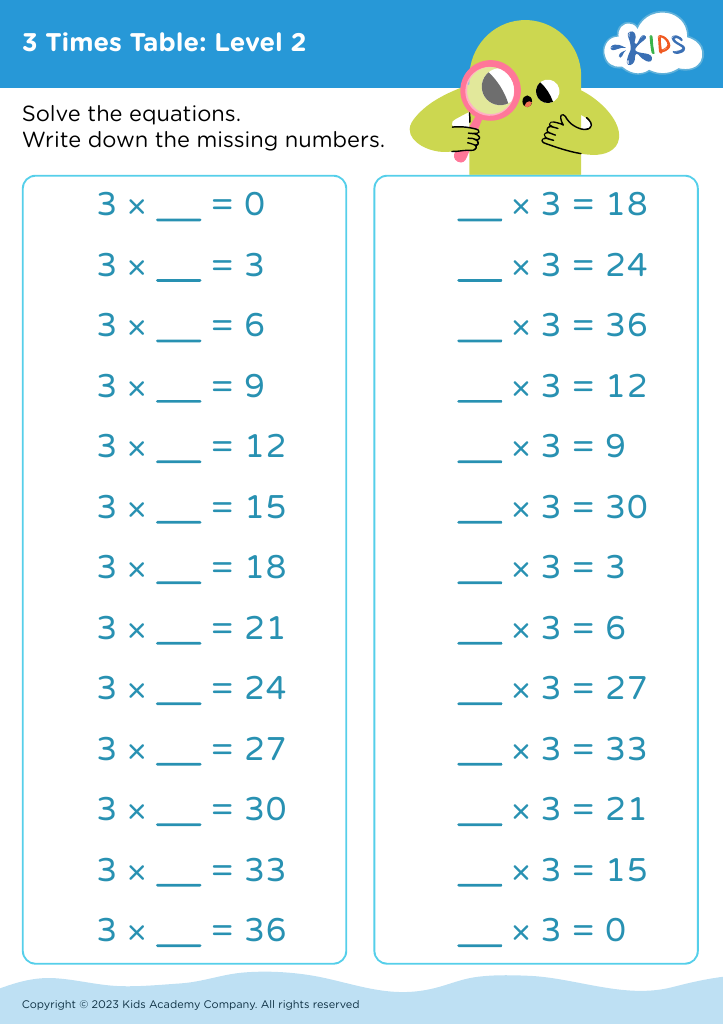
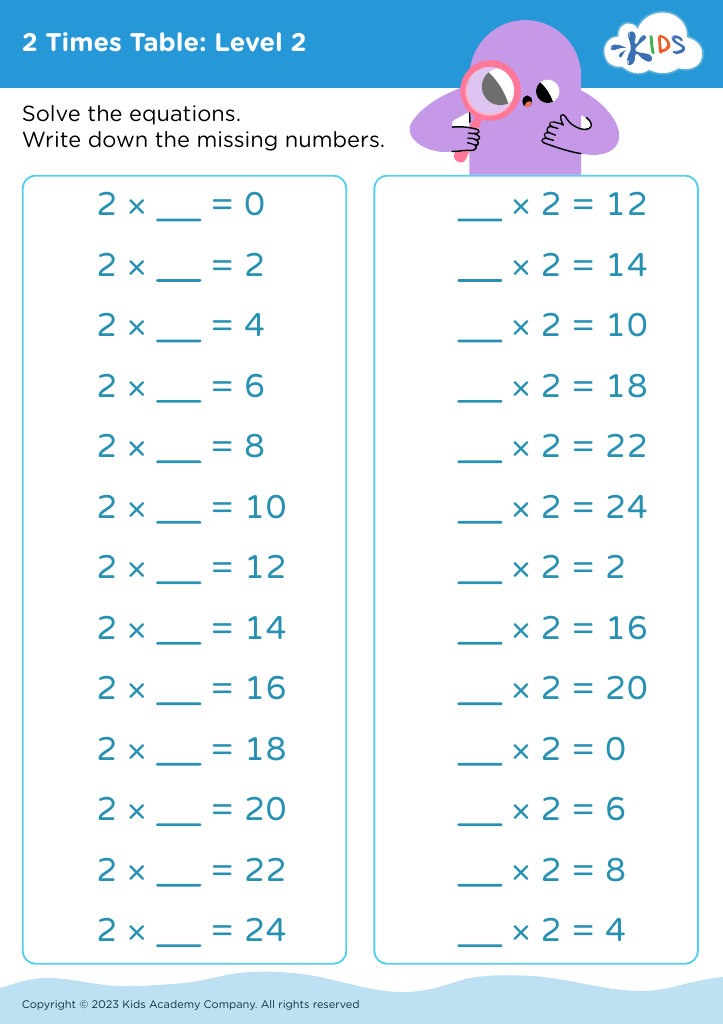







Multiplication practice is crucial for children aged 6-8, laying the essential foundation for their mathematical understanding and problem-solving skills. At this developmental stage, children are transitioning from basic arithmetic (addition and subtraction) to more complex mathematical concepts, making it vital to master multiplication.
First, multiplication is a key component of the curriculum, often serving as the gateway to more advanced math topics like division, fractions, and algebra. Learning multiplication facts helps students develop confidence in their math abilities, which is essential for their overall academic performance.
Moreover, practicing these skills enhances mental math abilities, fostering quicker calculation and a better grasp of number relationships. This foundational knowledge not only supports their current learning but also prepares them for future educational endeavors in STEM fields.
Engaging in multiplication practice can also promote a child's critical thinking and persistence. It encourages a growth mindset, where children learn to seek solutions and overcome challenges. Ultimately, when parents and teachers prioritize multiplication skills, they equip children with the tools they need to succeed academically, enhance their future opportunities, and nurture a lifelong appreciation for mathematics.








