Nutrition knowledge Normal Worksheets for Ages 6-8
3 filtered results
-
From - To
Explore our "Nutrition Knowledge Normal Worksheets" designed specifically for children ages 6-8. These engaging worksheets help young learners understand the basics of nutrition, including food groups, healthy eating habits, and the importance of balanced diets. With fun activities, colorful visuals, and thought-provoking questions, children will develop essential skills while grasping fundamental nutritional concepts in a playful manner. Perfect for parents, teachers, and educators seeking to foster healthy habits early, these worksheets serve as an ideal resource for interactive learning at home or in the classroom. Equip your children with the knowledge they need to make healthy food choices for a better future!
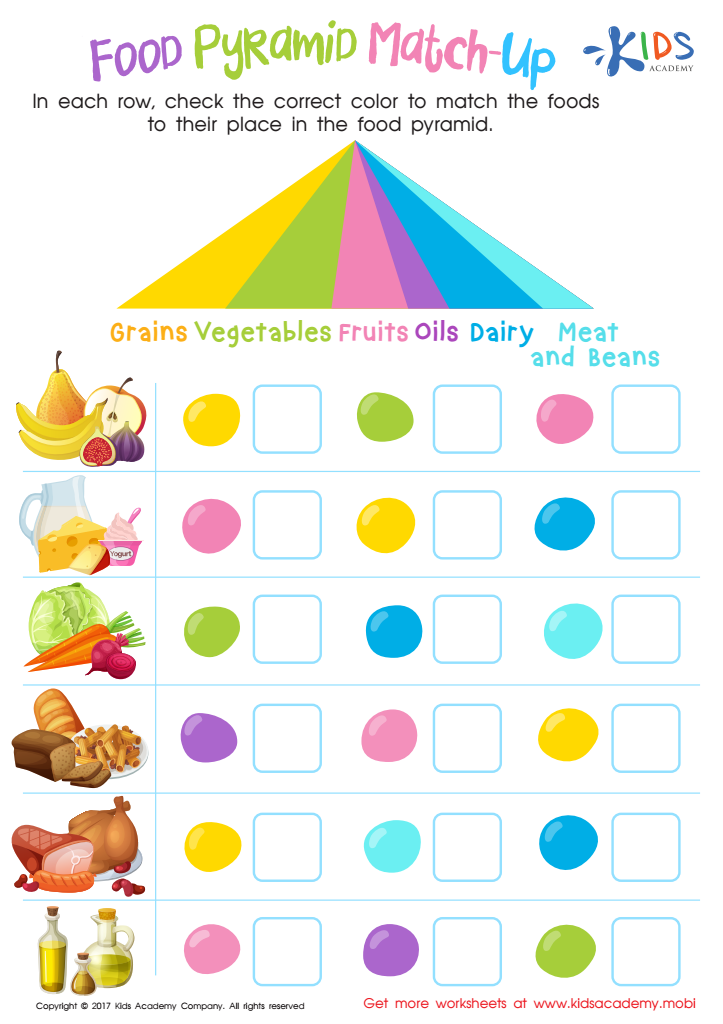
Health Food Worksheet
 Assign to My Students
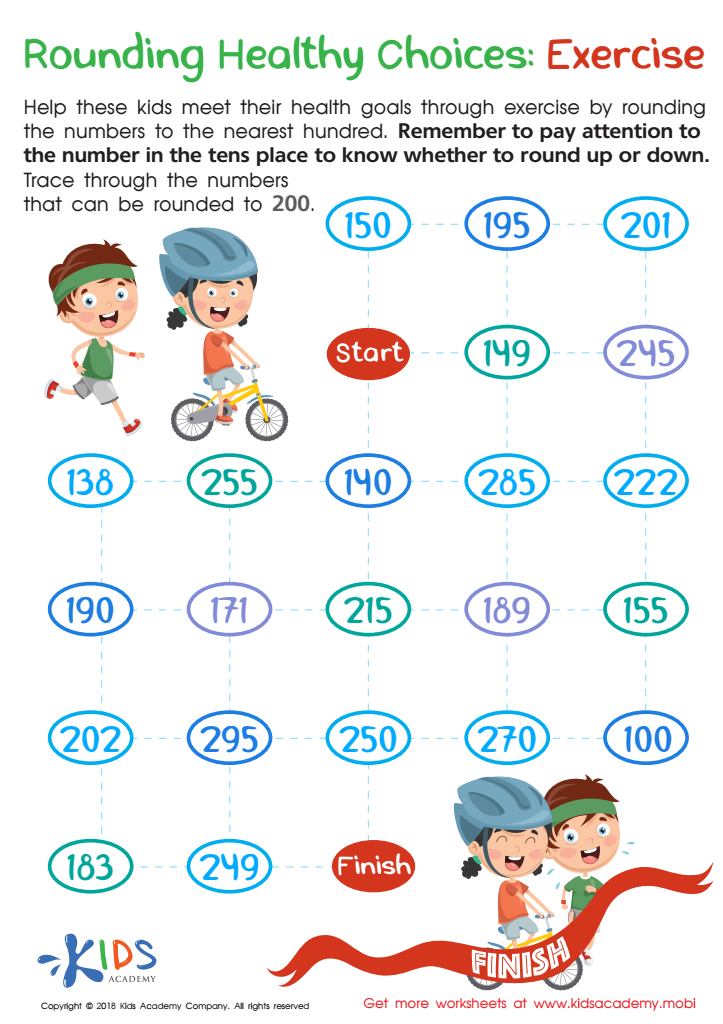
Rounding Healthy Choices Exercise Worksheet
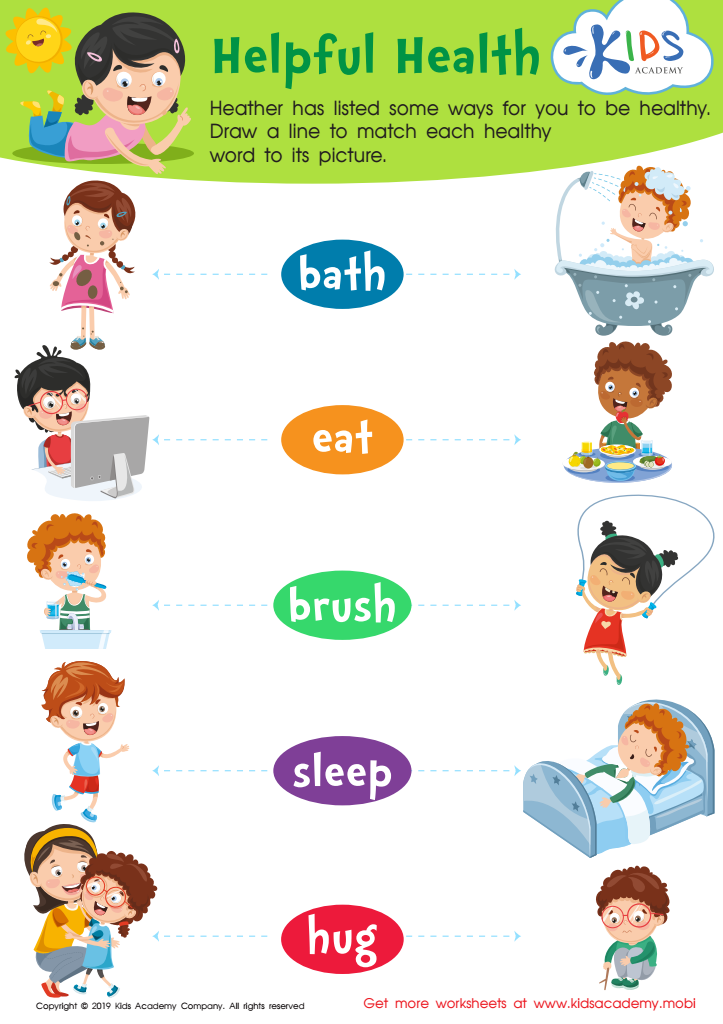
Helpful Health Worksheet








Nutrition knowledge is essential for children aged 6-8, an age when they are highly impressionable and developing lifelong habits. Parents and teachers should care because proper nutrition directly impacts a child's physical growth, cognitive development, and emotional well-being. Children are more focused, energetic, and ready to learn when they consume a balanced diet rich in essential nutrients.
Additionally, nutrition education empowers children to make healthier food choices. By understanding the importance of different food groups, portion sizes, and the effects of sugars and fats, children can develop critical thinking skills regarding their diets. This knowledge can help prevent obesity and chronic diseases, creating healthier generations for the future.
Collaborating with parents to reinforce nutritional lessons can build a supportive environment. Awareness of nutrition can also lead to enhanced family meals, fostering stronger relationships and communication among family members.
Moreover, teachers equipped with nutrition knowledge can create engaging classroom experiences that inspire children to explore healthy foods through hands-on activities like cooking or gardening. Ultimately, investing in nutrition education for young children paves the way for healthier lifestyles, improved academic performance, and overall well-being, benefiting both individuals and communities in the long run.








