Recognizing number patterns Normal Worksheets for Ages 6-8
4 filtered results
-
From - To
Unlock the joys of math with our "Recognizing Number Patterns Normal Worksheets for Ages 6-8." Designed specifically for young learners, these worksheets gradually introduce kids to identifying and understanding patterns in numbers. Perfect for kids in grades 1 and 2, the engaging activities help forge critical thinking and problem-solving skills through fun, repetitive exercises. Each worksheet encourages children to observe, predict, and extend numerical patterns, empowering them with a solid math foundation. Colorful, interactive, and crafted to captivate, these tools ensure learning is both educational and enjoyable. Spark a love for math with our expertly designed resources.
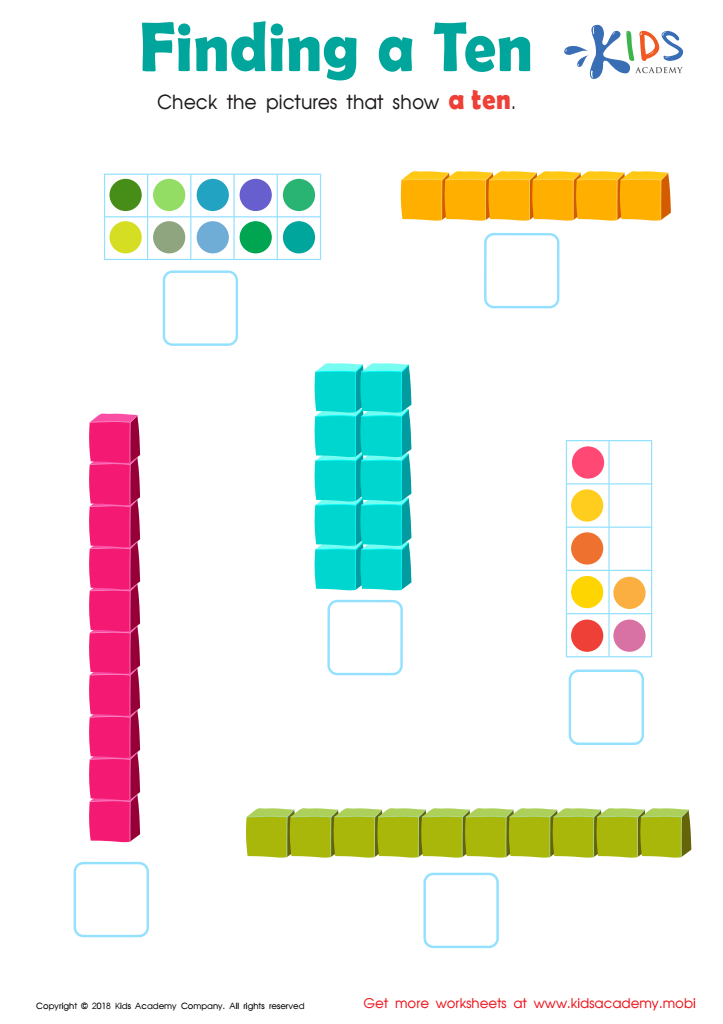
Finding a Ten Worksheet
 Assign to My Students
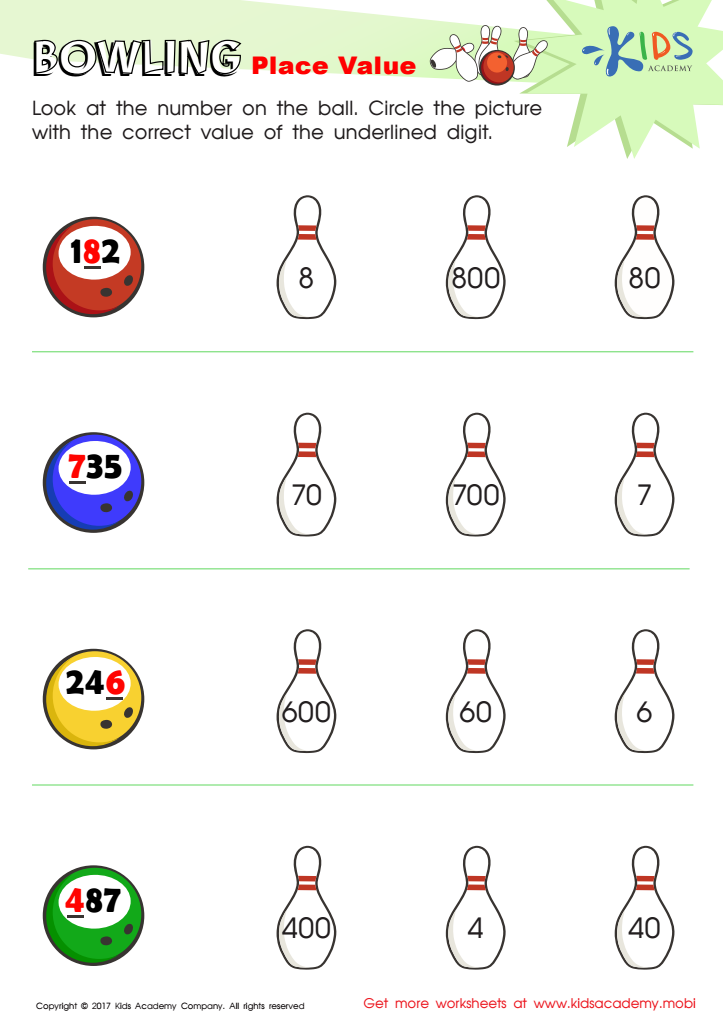
Place Value Worksheet
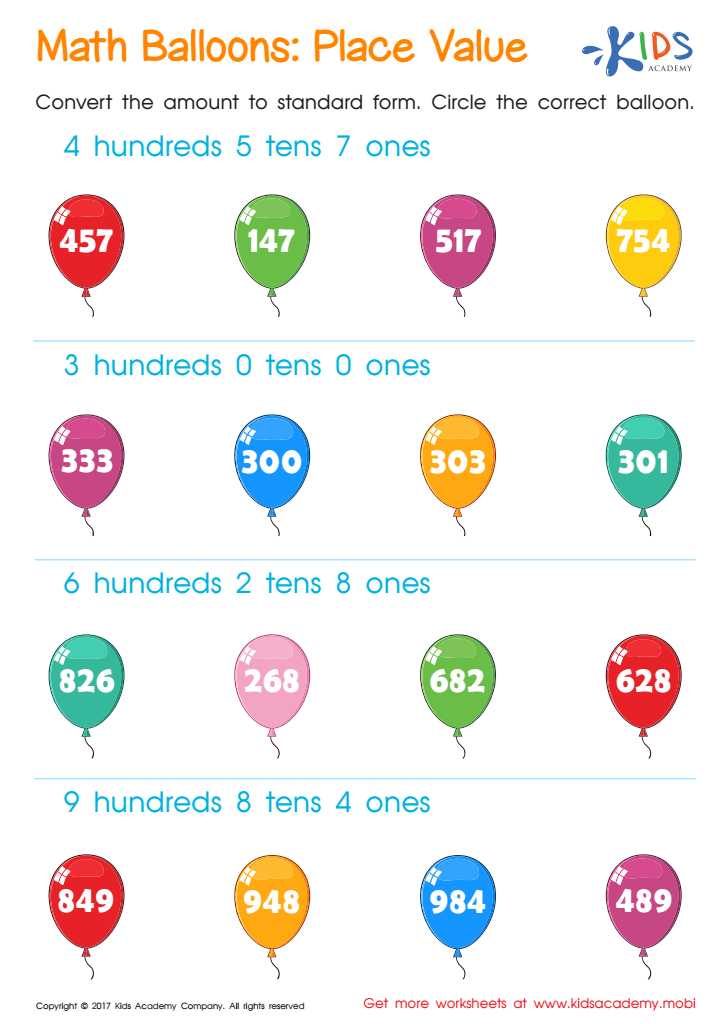
Place Value Printable Worksheet
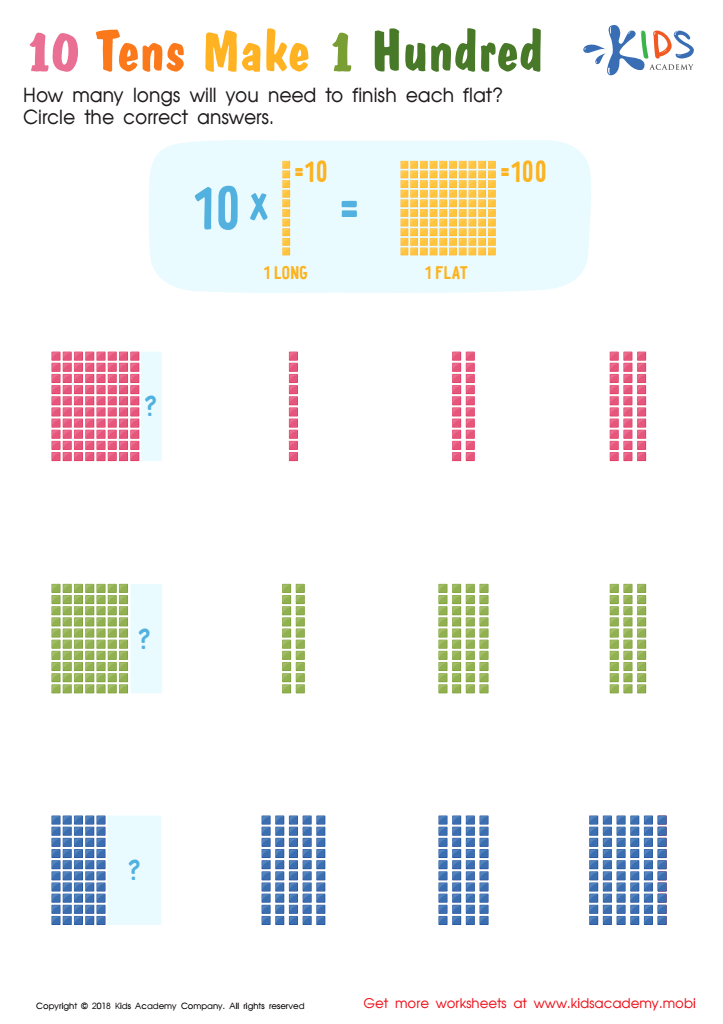
10 Tens Make 1 Hundred Worksheet







Recognizing number patterns is a fundamental skill for children aged 6-8 as it lays the foundation for mathematical thinking and problem-solving abilities. At this developmental stage, children are beginning to understand basic operations like addition and subtraction and are ready to explore more complex concepts. By engaging with number patterns, such as odd and even numbers, skip counting, or simple sequences, children enhance their numerical fluency and gain insight into how numbers relate to one another.
For parents and teachers, fostering this skill is crucial because it helps children develop logical thinking and the ability to predict and make connections. These cognitive abilities are not only vital for higher-level math but also for everyday decision-making and problem-solving. For instance, recognizing a pattern can simplify tasks like counting money, telling time, and understanding the order of events.
Moreover, early mastery of number patterns contributes to a child's confidence in dealing with math, reducing anxiety and building a positive attitude towards the subject. Engaging activities like games, interactive exercises, and real-life examples make learning enjoyable, further promoting an interest in mathematics.
In summary, attention to number pattern recognition equips children with essential skills that support their overall academic growth and everyday functional abilities, making it a critical focus for educators and parents.








