Spatial understanding Normal Worksheets for Ages 6-8
3 filtered results
-
From - To
Discover our engaging Spatial Understanding Worksheets designed specifically for children ages 6-8! These interactive worksheets help develop critical spatial reasoning skills, essential for math, science, and everyday problem-solving. Your child will explore concepts like directionality, mapping, and shapes through fun activities and exercises. Our materials are visually appealing and cater to different learning styles, ensuring every child can thrive in their spatial development. Perfect for supplemental practice at home or classroom use, these worksheets provide a strong foundation for future learning. Download now to support your child's educational journey and promote their cognitive growth in an enjoyable way!
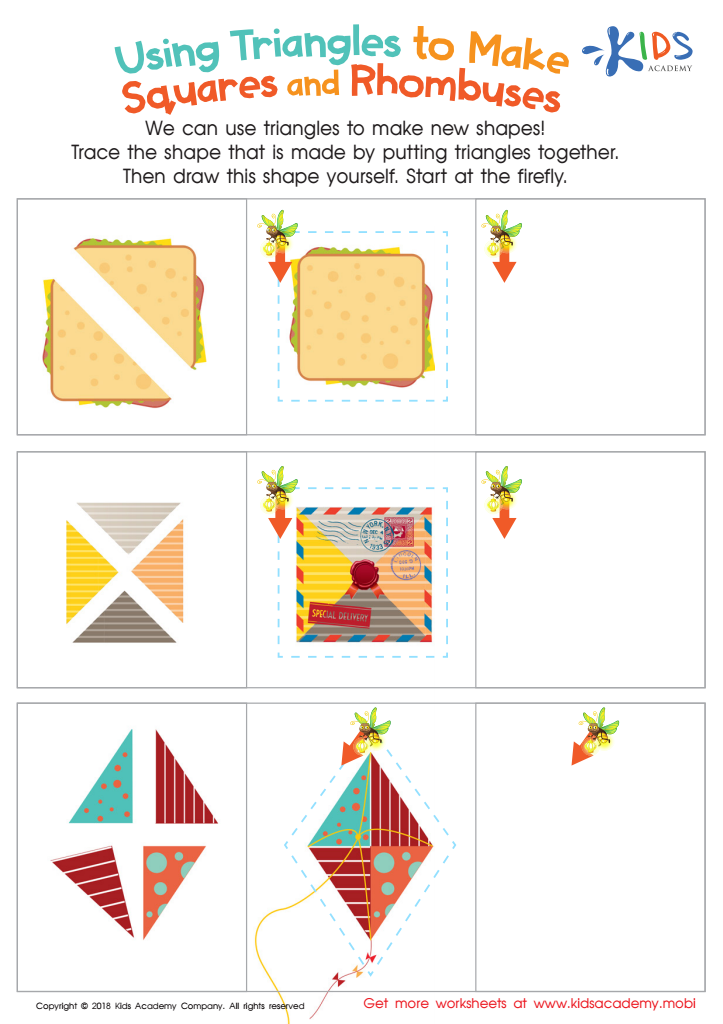
Using Triangles to Make Squares and Rhombuses Worksheet
 Assign to My Students
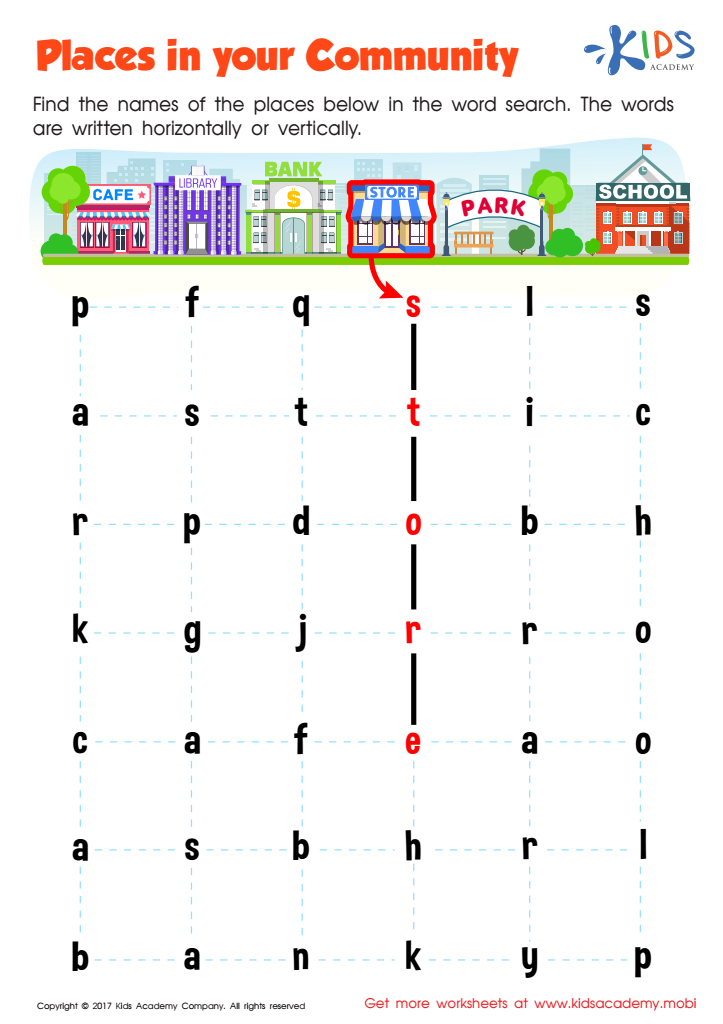
Places in Your Community Worksheet
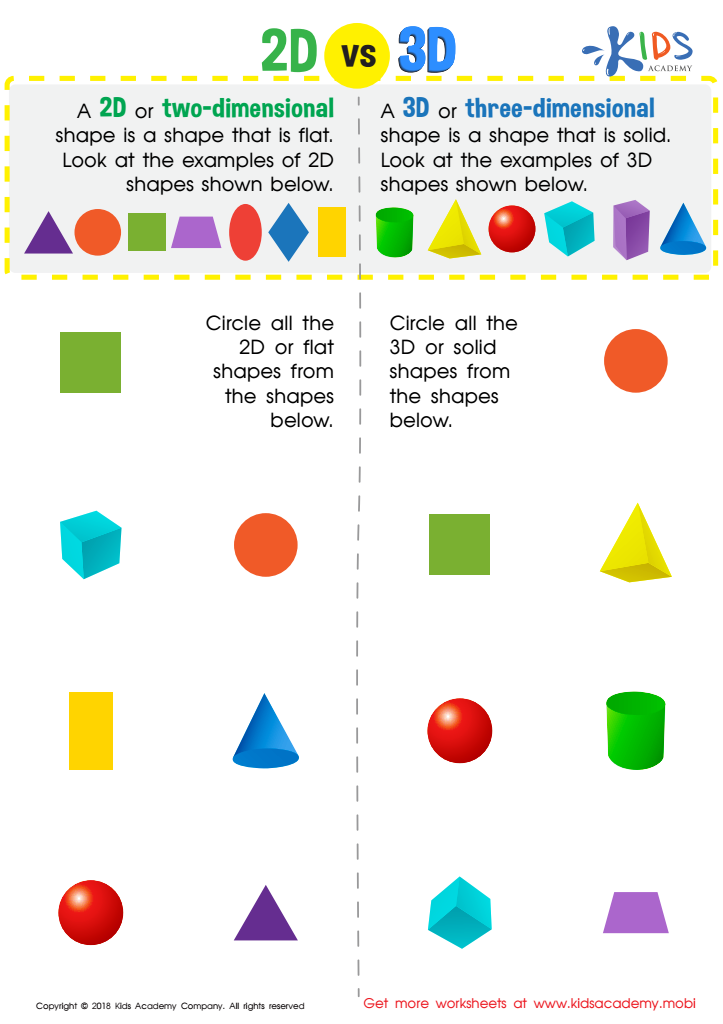
2D vs 3D Shapes Worksheet








Spatial understanding in children aged 6-8 is crucial for their overall cognitive development and success in various academic areas. During these formative years, children begin to develop essential skills that enable them to navigate their environment and make sense of the world around them. It involves recognizing shapes, understanding spatial relationships, and appreciating dimensions, all of which lay the foundation for future learning in mathematics, science, and even the arts.
Parents and teachers should care about fostering spatial understanding because it directly influences not only mathematical skills, such as geometry and measurement but also enhances problem-solving abilities and critical thinking. Children with strong spatial skills can better visualize concepts, manipulate objects mentally, and comprehend abstract ideas, which can aid their learning in more complex subjects later on.
Engaging children in activities that promote spatial reasoning, like puzzles, building blocks, and map reading, can be both fun and beneficial. Moreover, strong spatial awareness has been linked to success in STEM-related fields, providing long-term academic and career advantages. By prioritizing spatial understanding during early education, parents and teachers can empower children with skills necessary for lifelong learning and adaptability in an increasingly complex world.








