Understanding adjectives Normal Worksheets for Ages 6-8
5 filtered results
-
From - To
Explore our engaging "Understanding Adjectives Normal Worksheets" designed specifically for children ages 6-8. These worksheets aim to enhance vocabulary and comprehension skills by introducing young learners to the world of adjectives. Through a variety of fun activities, including fill-in-the-blank exercises and matching games, students will learn to identify and use descriptive words effectively. Our materials are crafted to promote creative expression and critical thinking, making learning enjoyable and interactive. Perfect for home or classroom use, these worksheets support early literacy development while instilling a love for language. Begin your adventure in understanding adjectives today!
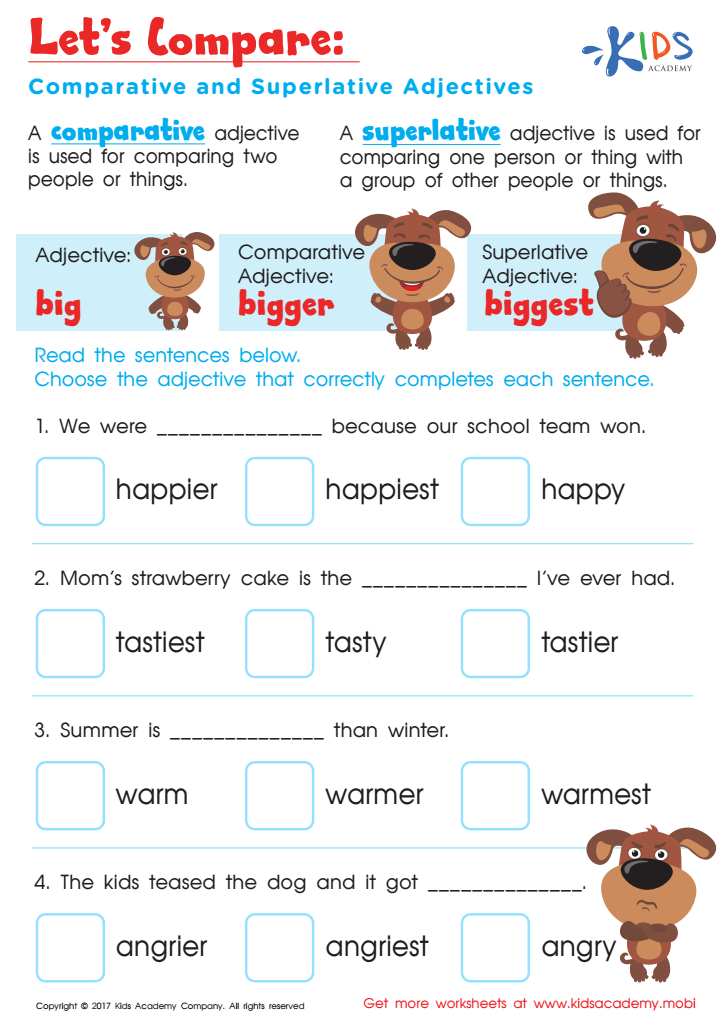
Comparative and Superlative Worksheet
 Assign to My Students
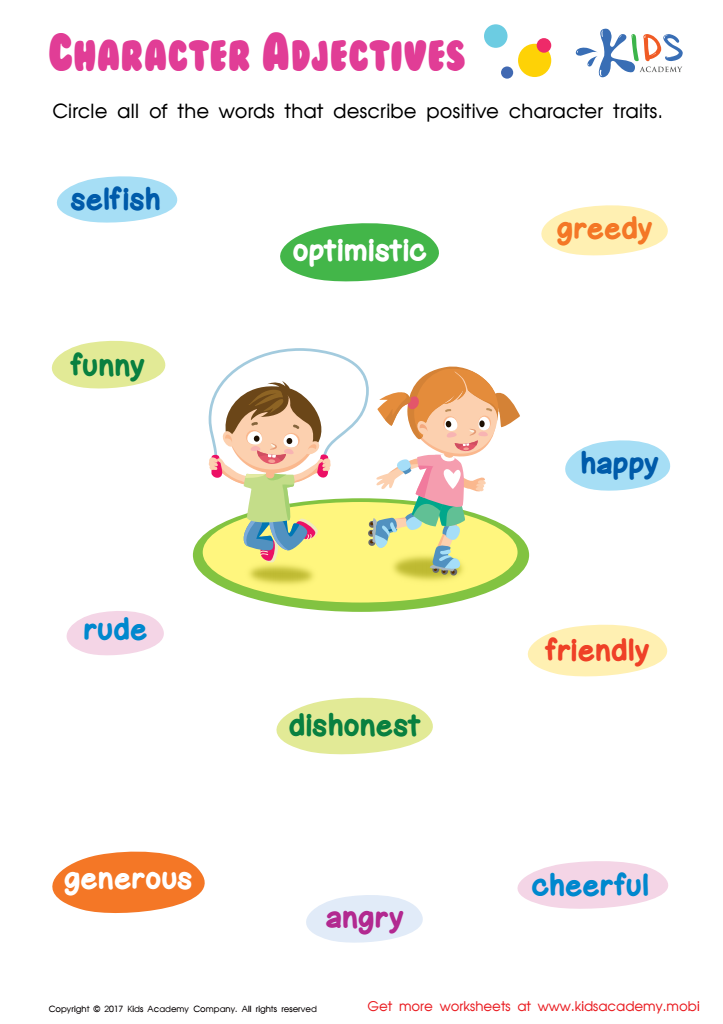
Character Adjectives Worksheet
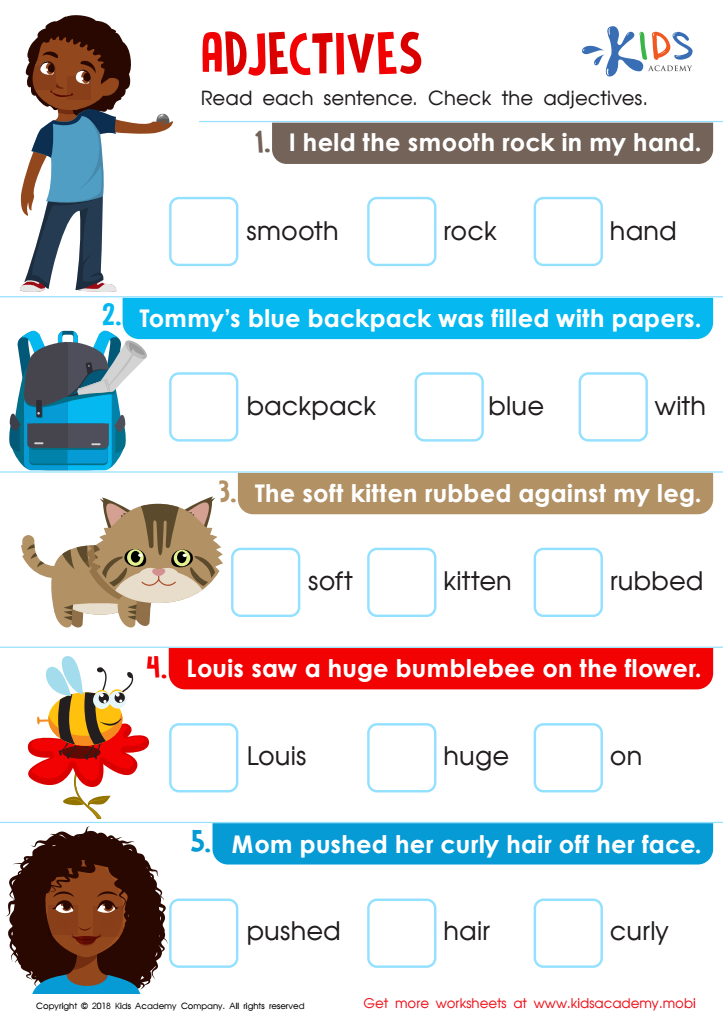
Adjectives Worksheet
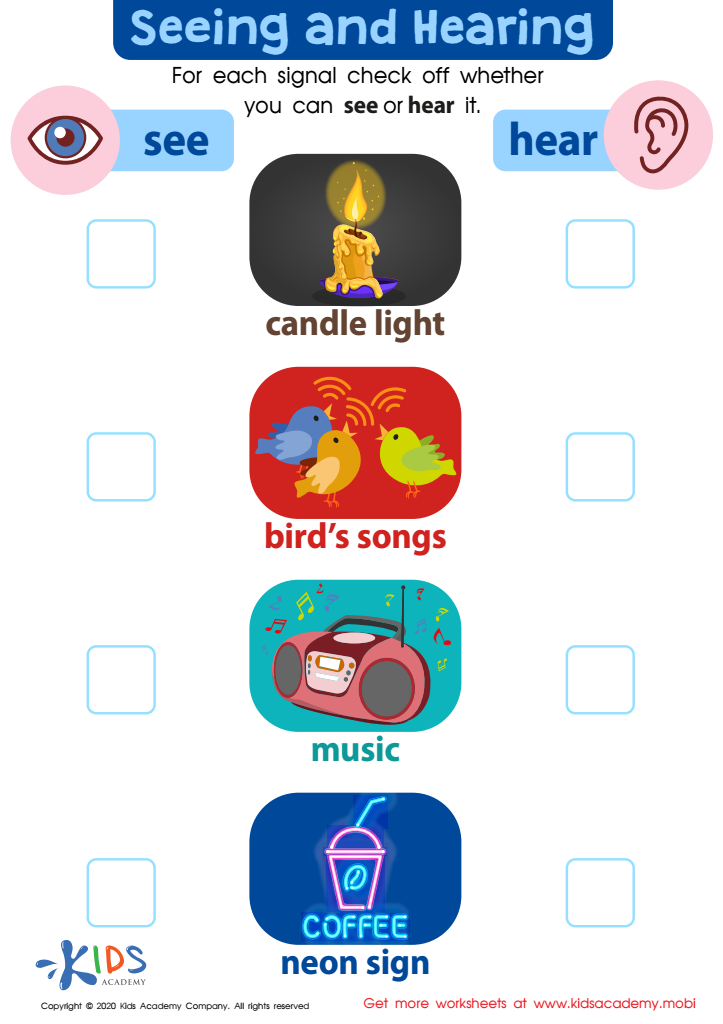
Seeing and Hearing Worksheet
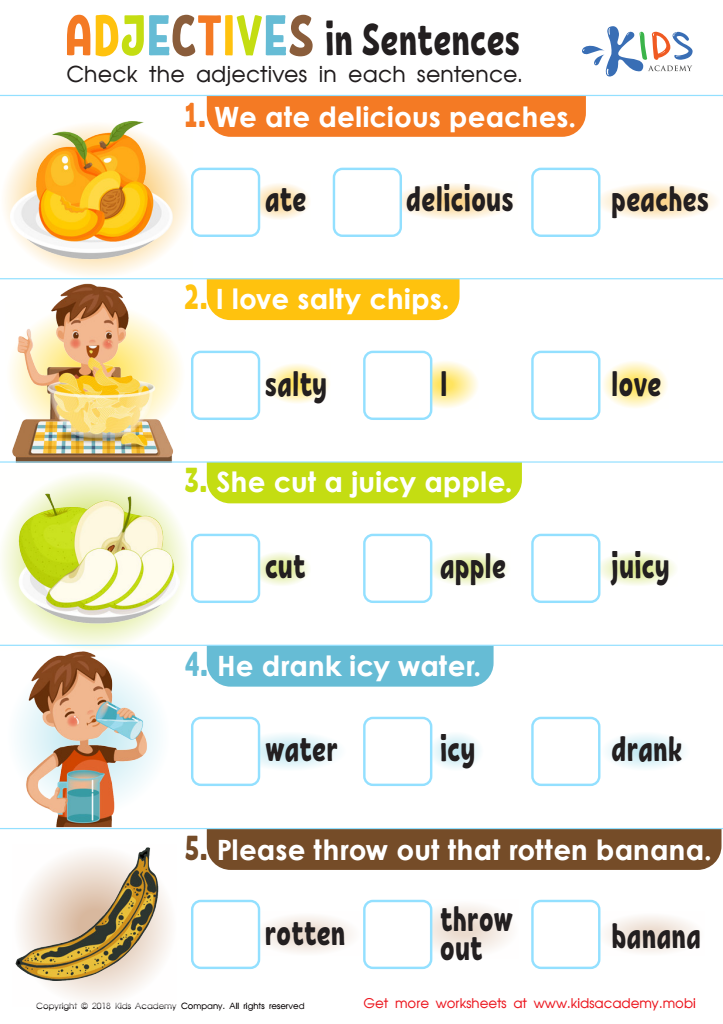
Adjectives in Sentences Worksheet







Understanding adjectives is crucial for children aged 6-8 as it forms the foundation of effective communication and enhances their language development. Adjectives are descriptive words that enrich children's speech and writing by helping them specify and clarify their observations. For instance, saying "the apple is green" rather than just "the apple" provides valuable information and makes the conversation more engaging.
At this developmental stage, children are learning to express their thoughts and emotions. Adjectives play a vital role in this process, allowing children to articulate feelings, depict their surroundings, and narrate stories with greater detail. This promotes creativity and critical thinking as they choose the right adjectives to convey their ideas.
Moreover, a strong grasp of adjectives aids in reading comprehension. As children learn to identify and use adjectives, they become more skilled at understanding descriptive language in texts, leading to improved interpretation and enjoyment of literature.
Teachers and parents can enhance vocabulary through fun activities, games, and reading exercises that incorporate adjectives. By nurturing this aspect of language learning, they help children develop valuable communication skills, boost confidence in self-expression, and facilitate academic success in the years to come.








