
Understanding times tables Normal Multiplication Worksheets for Ages 6-8
3 filtered results
Difficulty Level
Grade
Age
-
From - To
Subject
Activity
Standards
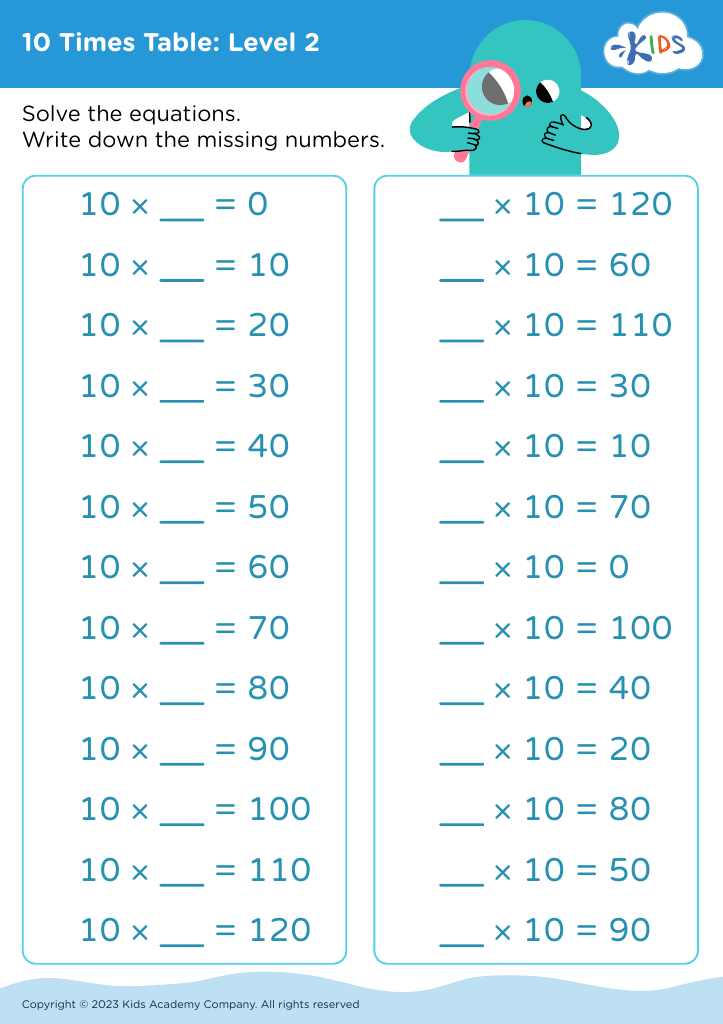
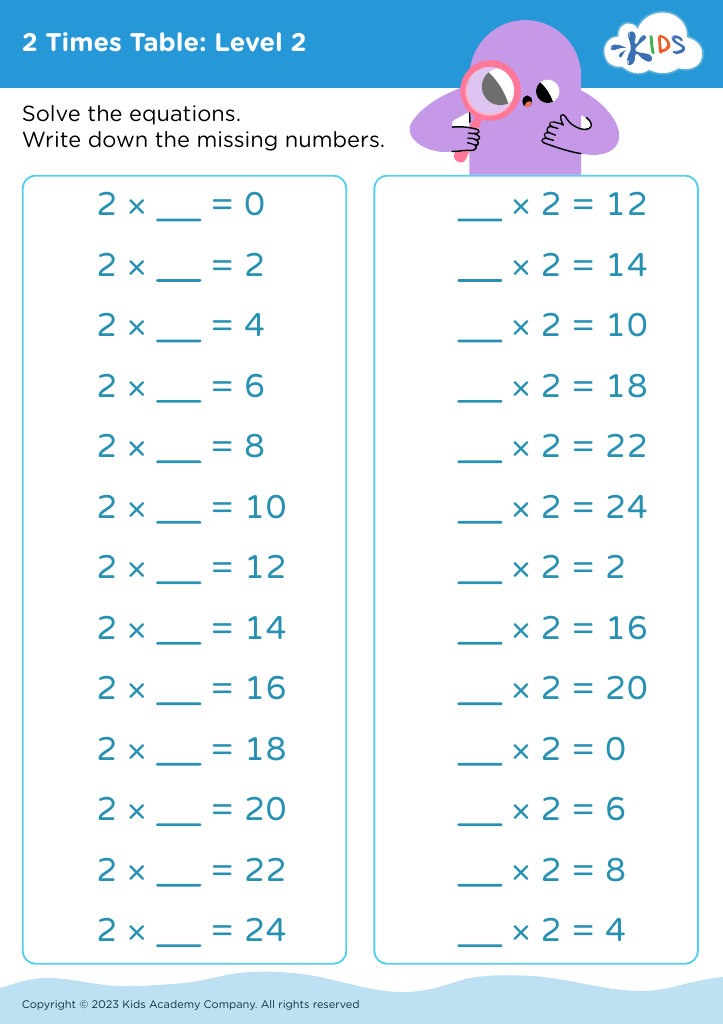
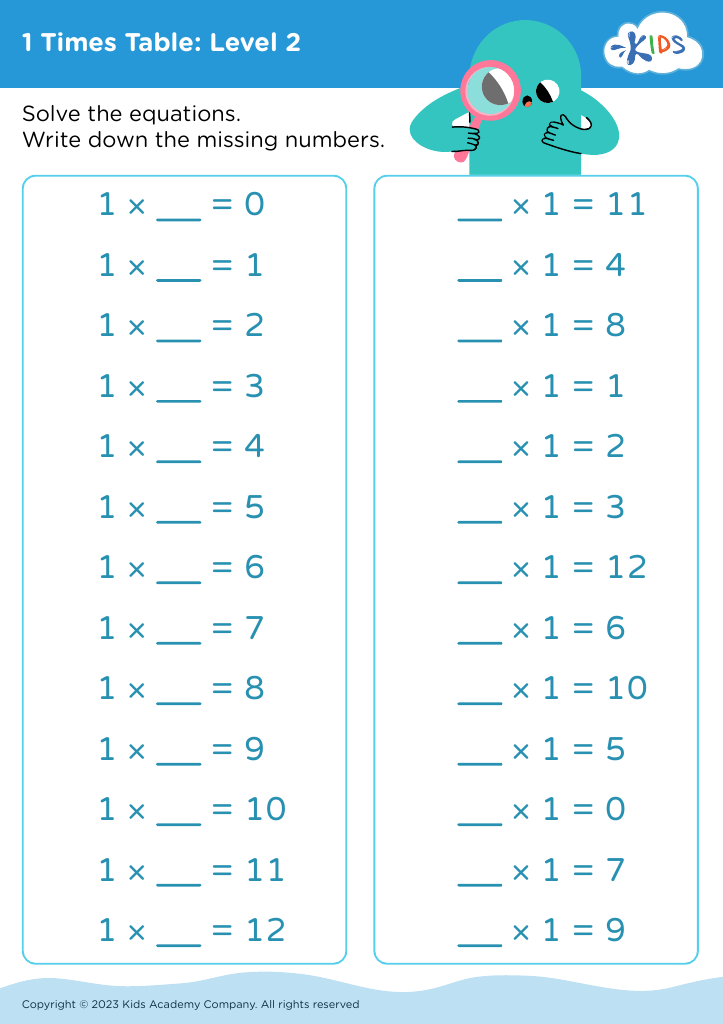
Unlock your child’s potential in mathematics with our "Understanding Times Tables Normal Multiplication Worksheets," specially designed for ages 6-8. These engaging worksheets introduce multiplication concepts through fun visuals and interactive exercises, helping young learners master times tables effectively. Kids will build a strong numeracy foundation while improving their problem-solving skills. Our age-appropriate activities cater to different learning styles, ensuring that every child grasps these essential math concepts with confidence. Parents and educators can easily track progress as children learn and practice multiplication in a supportive and enjoyable environment. Start your child’s multiplication journey today with these essential worksheets!
Favorites
With answer key
Interactive
Join Kids Academy for Free
Who is primarily going to use this learning content?








Understanding times tables and basic multiplication is crucial for children aged 6-8 as it forms a foundation for their future mathematical learning. This age group is at a pivotal stage in their cognitive development, where abstract concepts begin to take root. Mastery of times tables enhances their ability to perform basic operations, which is essential not just for arithmetic but for understanding more complex mathematical concepts later on.
Parents and teachers should care about this development because proficiency in multiplication boosts a child’s confidence and academic self-esteem. When children can easily recall their times tables, they are more likely to participate in mathematical discussions and classroom activities, promoting a positive learning environment.
Additionally, early mathematical skills are linked to improved problem-solving abilities and critical thinking. As children progress in their education, these foundational skills contribute significantly to their ability to tackle subjects such as science, economics, and even coding, which often rely on mathematical principles.
Moreover, fostering a strong grasp of multiplication sets the stage for standardized testing and overall academic success. By encouraging young learners to engage with times tables, parents and teachers lay the groundwork for lifelong learning and problem-solving skills.








