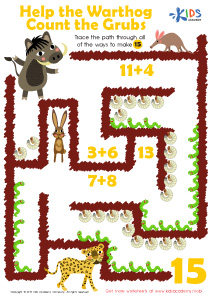
Mathematical reasoning Normal Subtraction Worksheets for Ages 6-8
4 filtered results
-
From - To
Discover our engaging Mathematical Reasoning Normal Subtraction Worksheets designed for children aged 6-8. These worksheets foster critical thinking and problem-solving skills while reinforcing essential subtraction concepts. Tailored for early learners, each activity encourages students to explore subtraction in real-world contexts, promoting a deeper understanding of numbers and relationships. The worksheets feature various problem types, from simple subtraction tasks to challenging word problems, making learning both fun and educational. Perfect for home or classroom use, these resources help build a strong mathematical foundation and boost confidence as young learners navigate subtraction concepts with ease. Enhance your child’s math journey today!
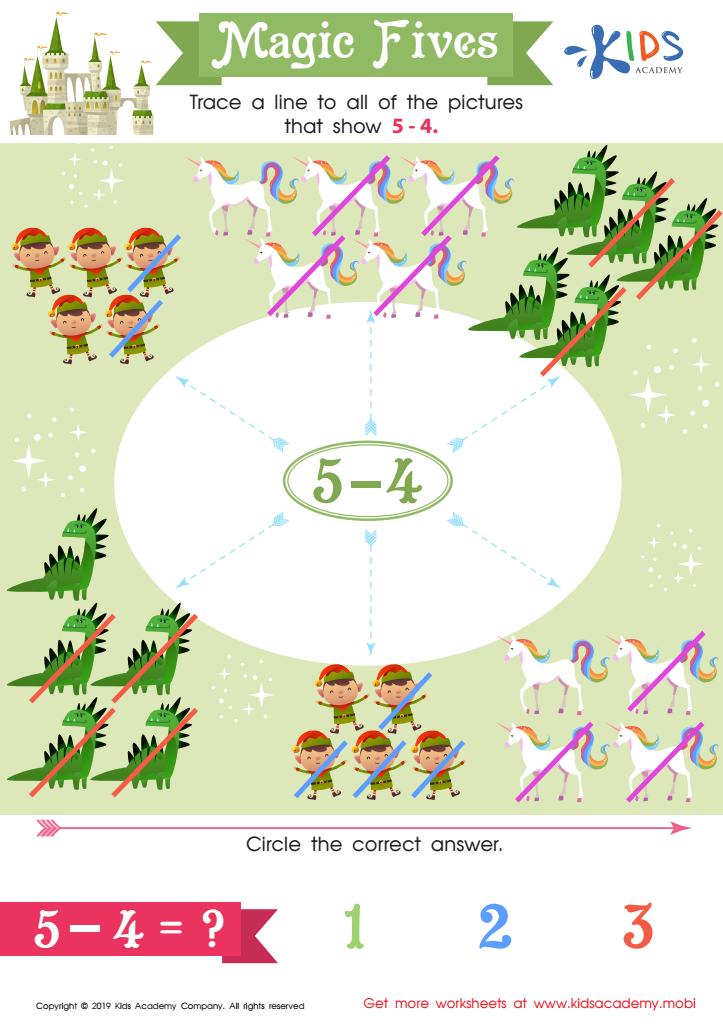
Magic Fives Worksheet
 Assign to My Students
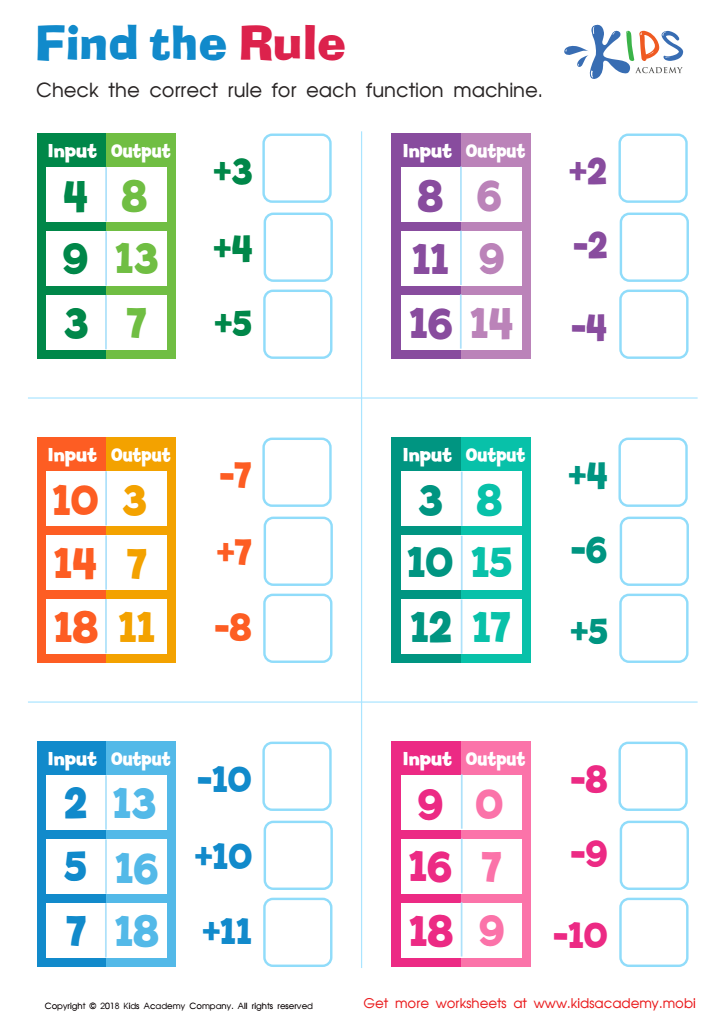
Find the Rule Worksheet
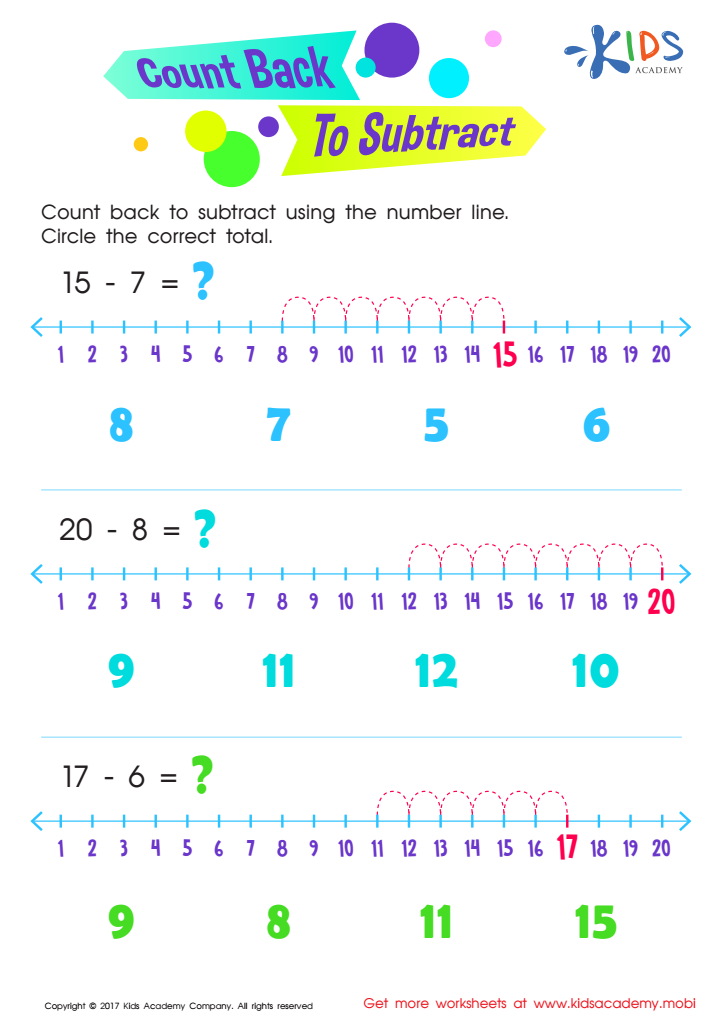
Count Back to Subtract Substraction Worksheet
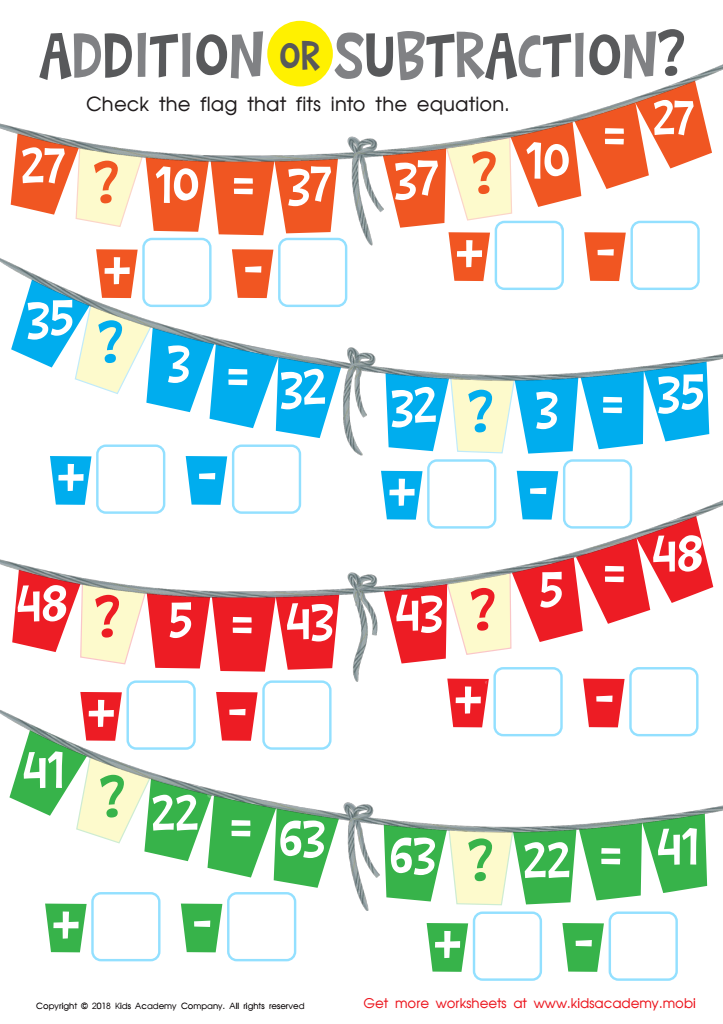
Addition or Subtraction? Worksheet



.jpg)




Mathematical reasoning, particularly in the context of normal subtraction for children aged 6-8, is crucial for several reasons. First, this age is a foundational period for developing numeracy skills. Gaining a solid grasp of subtraction not only aids in completing basic arithmetic but also builds a conceptual understanding of how numbers interact. By focusing on reasoning behind subtraction, students learn to approach problems systematically, enhancing critical thinking abilities.
Furthermore, mathematical reasoning fosters confidence in children. As they learn to express their thought processes and justify their answers, they become more engaged and motivated in their learning journey. This self-assuredness extends beyond mathematics, encouraging a positive attitude towards problem-solving in various subjects.
Moreover, subtraction forms the basis for more complex mathematical concepts as they progress in education. Understanding the reasoning behind it equips students with tools to tackle addition, multiplication, and division, as well as real-world applications involving budgeting, measurements, and more.
For parents and teachers, nurturing mathematical reasoning in young learners is essential for instilling lifelong skills. Encouraging curiosity and reasoning will create resilient learners who can navigate not only academic challenges but also everyday situations confidently and competently.