Understanding times tables Normal Times Tables Worksheets for Ages 6-8
3 filtered results
-
From - To
Unlock the mysteries of multiplication with our "Understanding Times Tables" normal worksheets, specially designed for children aged 6-8. These engaging and age-appropriate resources help young learners grasp the fundamentals of times tables through interactive activities and clear explanations. Each worksheet encourages practice and reinforces skills essential for building a strong mathematical foundation. With a focus on understanding concepts rather than rote memorization, children will develop confidence in their math abilities. Our thoughtfully crafted materials are perfect for home or classroom use, making learning fun and effective. Dive into the world of multiplication and watch your child thrive!
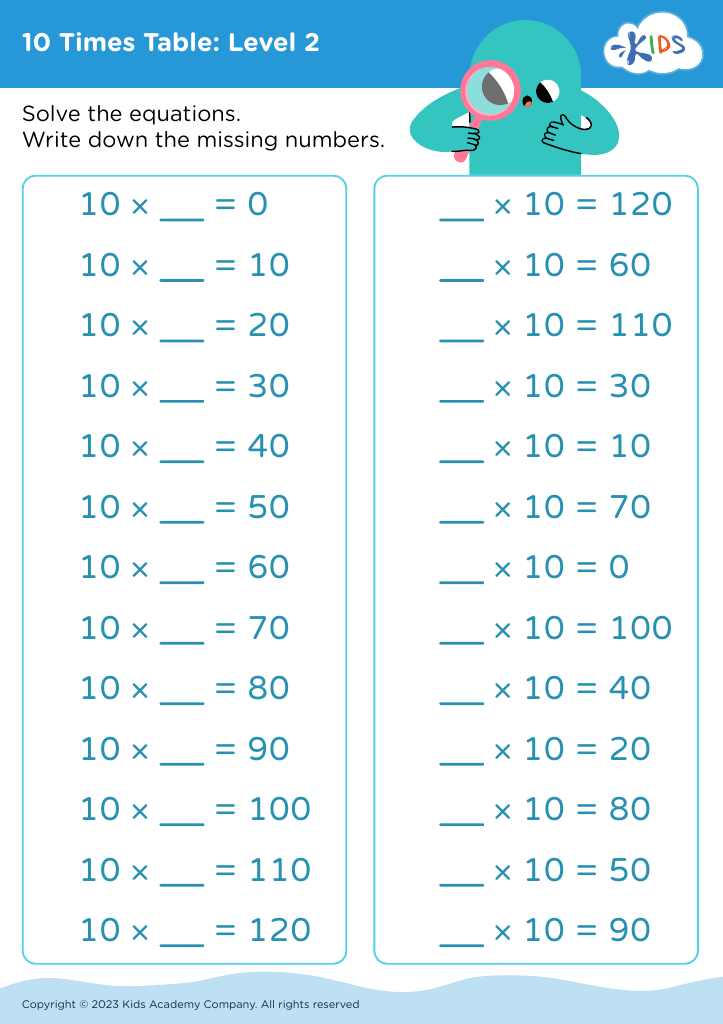
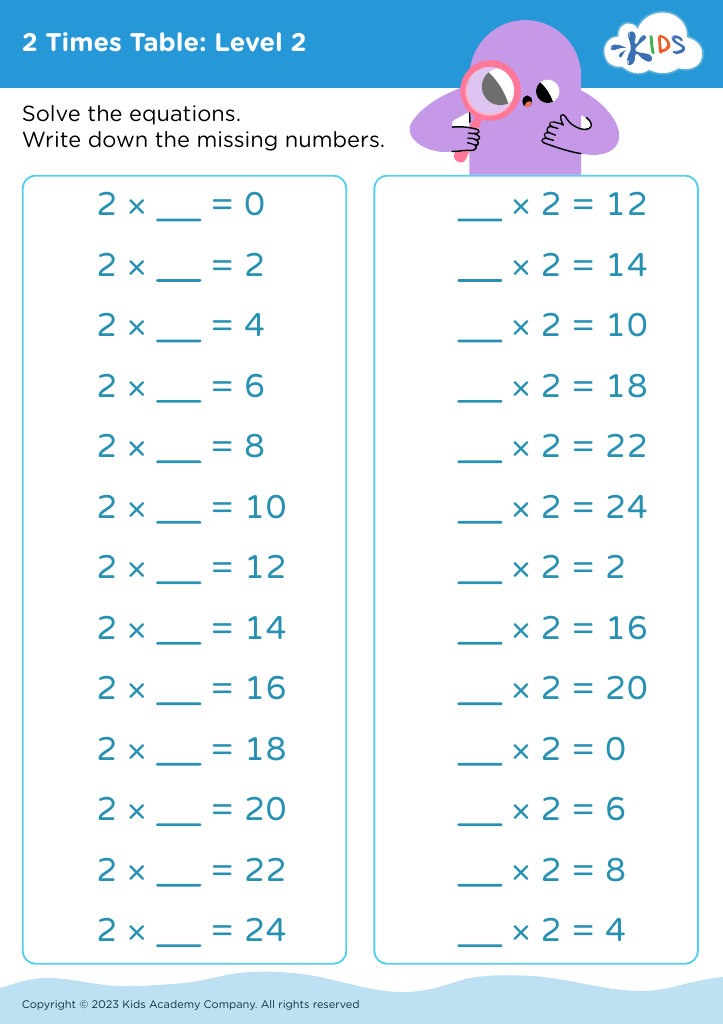
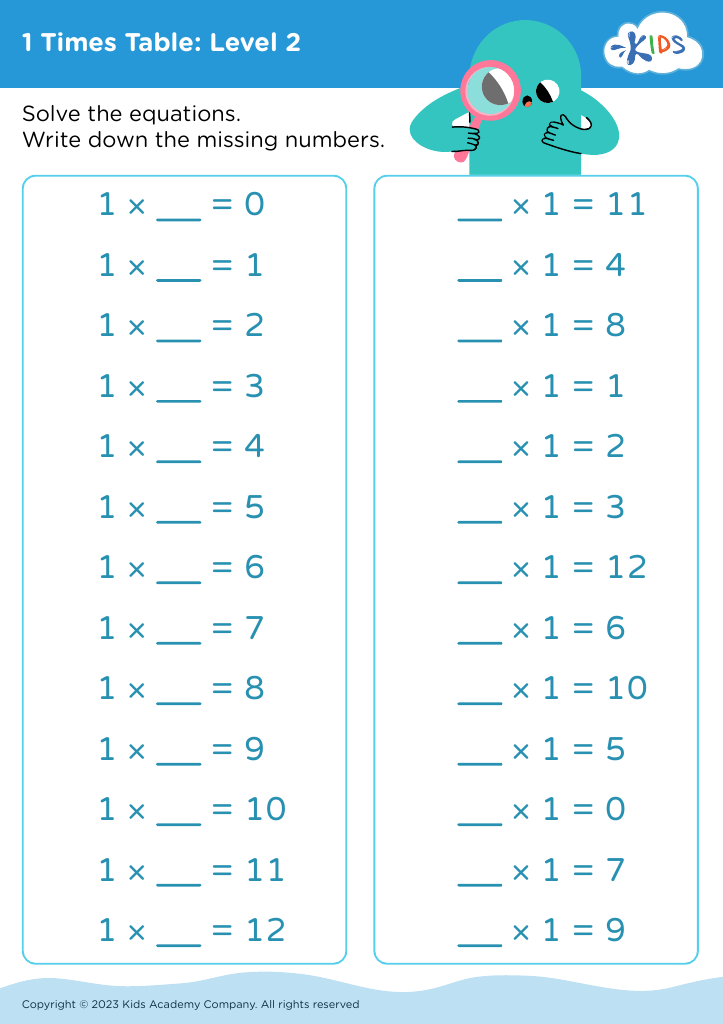





Understanding times tables is crucial for children aged 6-8, as it lays a solid foundation for their mathematical skills. At this stage of development, children are transitioning from simple arithmetic to more complex mathematical concepts. Mastering times tables helps them perform multiplication quickly and accurately, which is essential for everyday math, problem-solving, and higher-level math as they progress in their education.
Moreover, and parents should be concerned with this vital aspect of math learning since multiplication is not just about numbers; it involves patterns and relationships that enhance logical reasoning. Grasping these concepts early aids in building self-confidence in math, making children more willing to tackle challenging problems in the future.
In addition, times tables are often critical for success in subjects that use math, such as science, economics, and technology. Quickly recalling multiplication facts helps students with higher math skills, like division, fractions, and geometry.
Furthermore, establishing a solid grounding in multiplication can foster a positive attitude towards math. It can decrease anxiety and build resilience, empowering children to tackle challenges head-on. Therefore, teachers and parents should prioritize teaching and reinforcing times tables to ensure children have the skills necessary for academic success.








