Spelling practice Normal Building Vocabulary Worksheets for Ages 6-8 - Page 2
28 filtered results
-
From - To
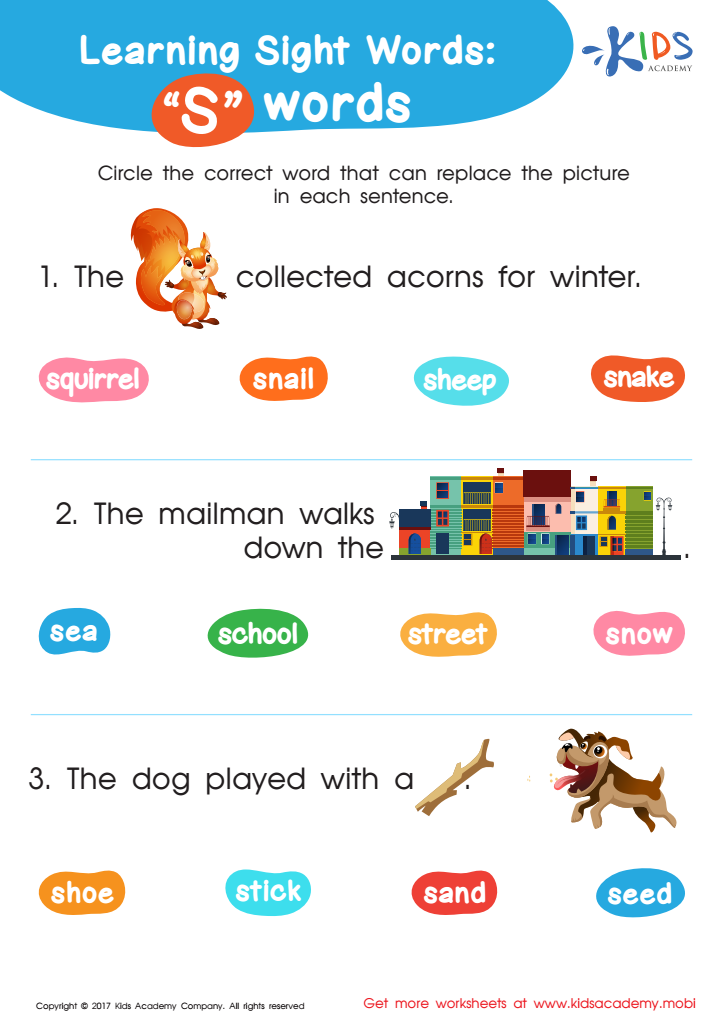
S Words Sight Words Worksheet
 Assign to My Students











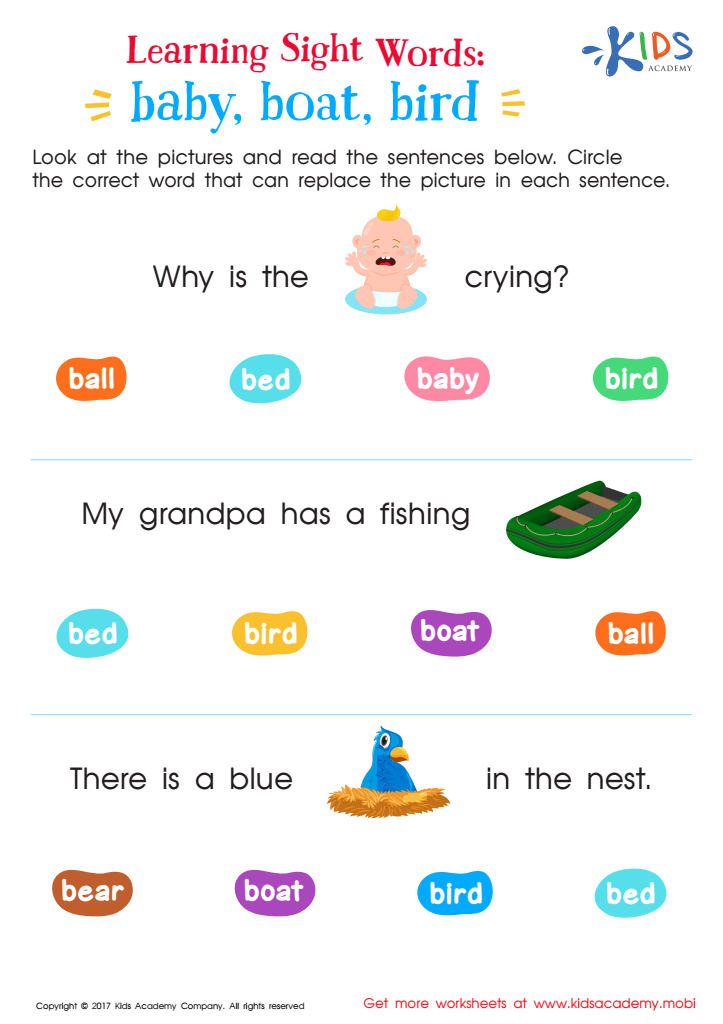
Baby, Boat, Bird Worksheet Sight Words Worksheet
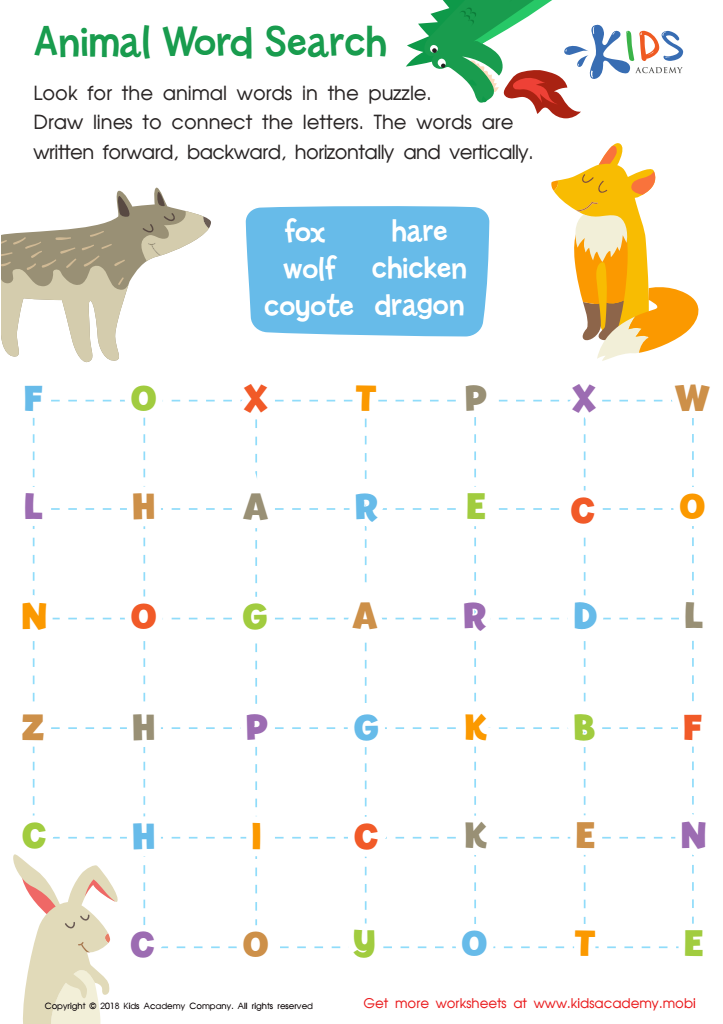
Animal Word Search Worksheet
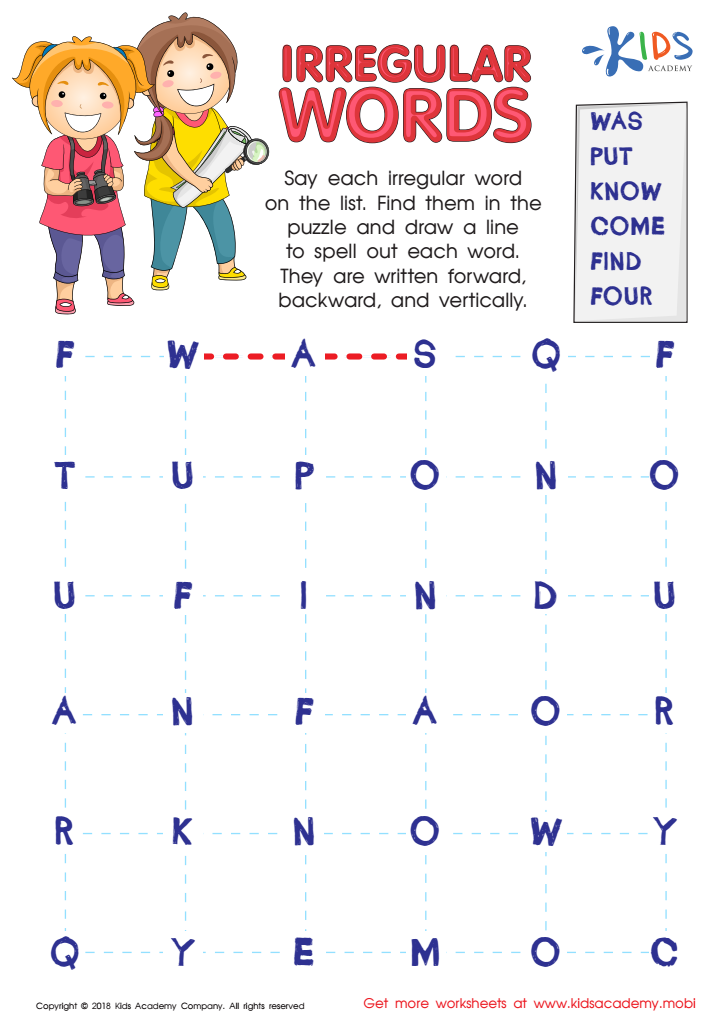
Irregular Words Worksheet








Spelling practice and vocabulary building are crucial for children aged 6-8 as they lay the foundation for effective communication and literacy skills. First, an expanding vocabulary enhances reading and writing abilities; children learn to express their thoughts more clearly and creatively. Engaging in spelling activities aids phonemic awareness, helping children understand how sounds and letters interact, which is vital for decoding new words.
Secondly, improved spelling and vocabulary can boost children's confidence in their academic abilities. As they master new words, they become more motivated to participate in discussions and writing tasks, fostering a love for learning. Strong spelling skills also lead to better grades; children can demonstrate their knowledge more effectively when they can convey their ideas without being hindered by spelling errors.
Moreover, building vocabulary and spelling skills aids in cognitive development. Activities such as word games and storytelling encourage critical thinking and problem-solving. By investing time in spelling practice and vocabulary building, parents and teachers are not only enhancing students' language skills but also preparing them for future academic success and effective participation in society. Therefore, incorporating these practices into daily routines is essential for cultivating successful, confident, and articulate learners.








