Verb identification Normal Building Vocabulary Worksheets for Ages 6-8
3 filtered results
-
From - To
Boost your child’s language skills with our Verb Identification Normal Building Vocabulary Worksheets, specially designed for ages 6-8. These engaging worksheets guide young learners in recognizing and using verbs effectively, strengthening their language foundation. With a variety of activities, including matching verbs to pictures and fill-in-the-blank exercises, children will develop a deeper understanding of action words in a fun and interactive manner. Ideal for both home and classroom use, our worksheets promote independent learning while enhancing vocabulary and reading comprehension. Start nurturing your child's verbal skills today and watch them thrive with confidence in their language abilities!
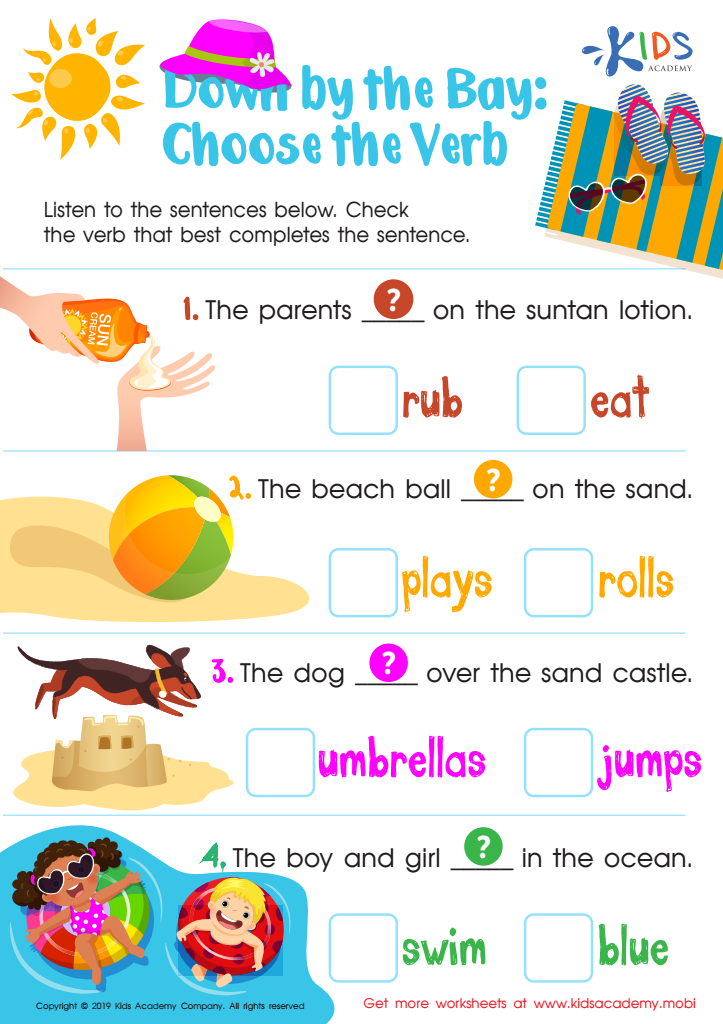
Down by the Bay: Choose the Verb Worksheet
 Assign to My Students











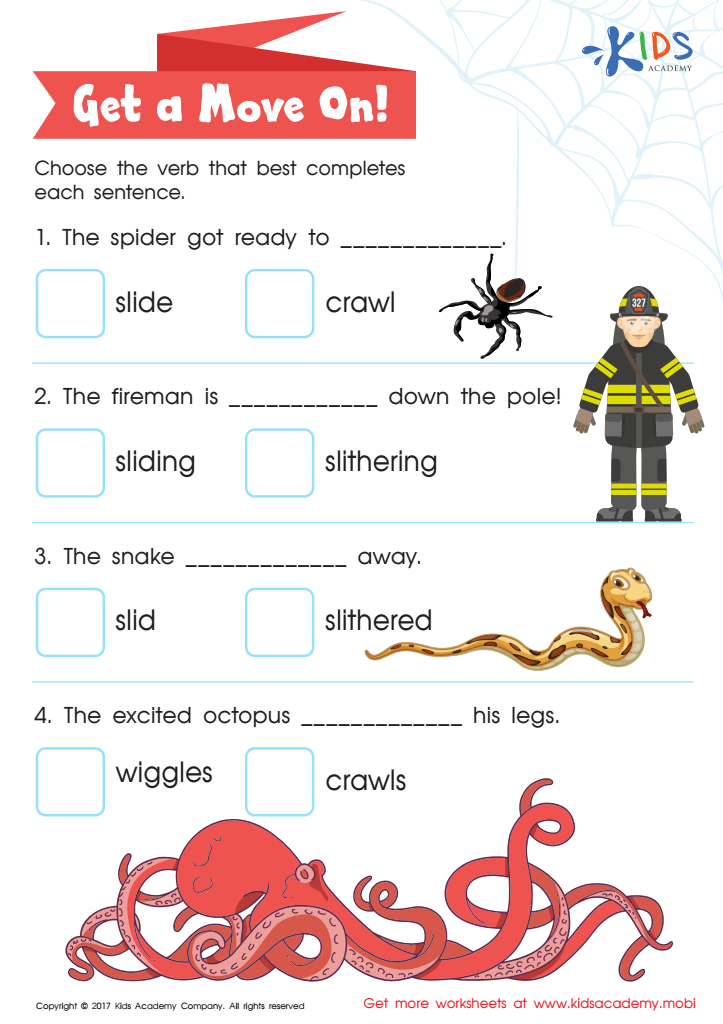
Verb Worksheet
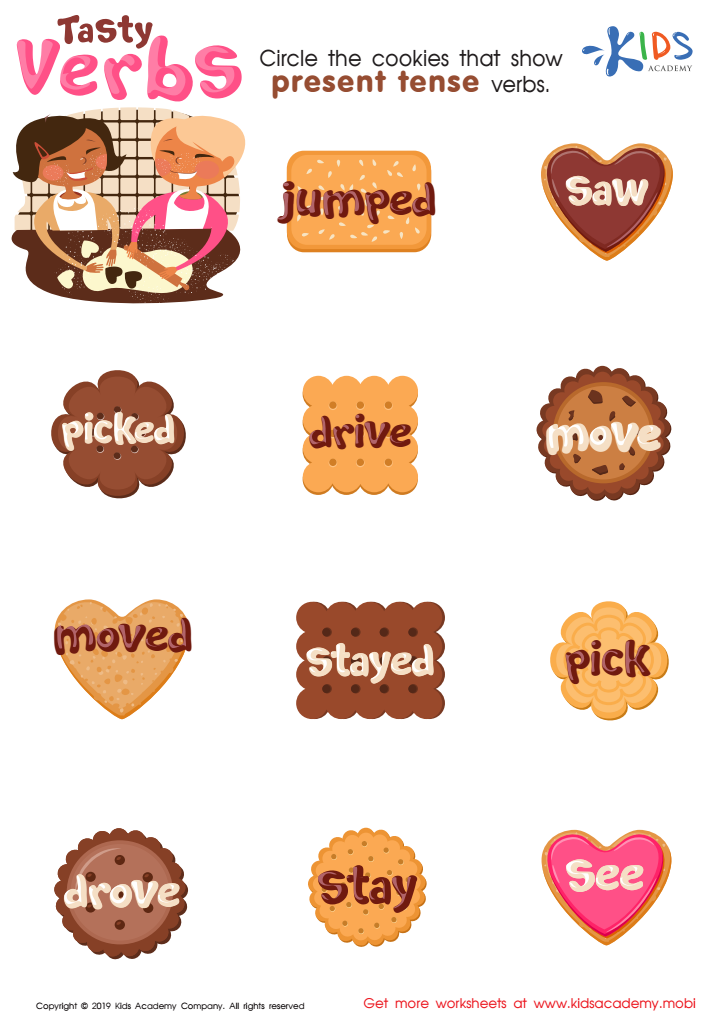
Tasty Verbs Worksheet








Verb identification is a crucial component of building vocabulary for children aged 6-8, and both parents and teachers should prioritize it for several reasons. Verbs are action words that form the backbone of sentences, conveying essential meanings that enhance comprehension. By helping children identify and understand verbs, we enable them to express their thoughts more clearly and confidently.
At this age, children are rapidly expanding their language skills, making it an ideal time to introduce concepts such as action verbs, linking verbs, and helping verbs. By fostering verb identification, educators and parents can enhance children's reading comprehension, as recognizing verbs allows for better understanding of the text's meaning. This skill aids in developing critical thinking abilities by encouraging children to analyze actions within stories and real-life situations.
Additionally, strong vocabulary skills contribute to improved writing capabilities, enabling children to construct more complex and nuanced sentences. Engaging children in fun activities that focus on verb identification, such as games and storytelling exercises, not only builds their vocabulary but also nurtures a love for language. Ultimately, focusing on verb identification lays a strong foundation for language and literacy development, setting children up for success in their educational journey.








