
Understanding suffixes Normal Reading Worksheets for Ages 6-8
3 filtered results
Difficulty Level
Grade
Age
-
From - To
Subject
Activity
Standards
Enhance your child's reading skills with our "Understanding Suffixes" worksheets, designed for children aged 6-8. These engaging activities help young learners grasp the concept of suffixes, enabling them to decode and understand new words efficiently. Each worksheet is crafted to support normal reading development by blending fun exercises with targeted learning objectives. Your child will learn to identify and use common suffixes, boosting their vocabulary and reading comprehension skills. Perfect for classroom use or additional practice at home, these worksheets lay a strong foundation for becoming confident, independent readers. Explore and download now for free!
Favorites
With answer key
Interactive
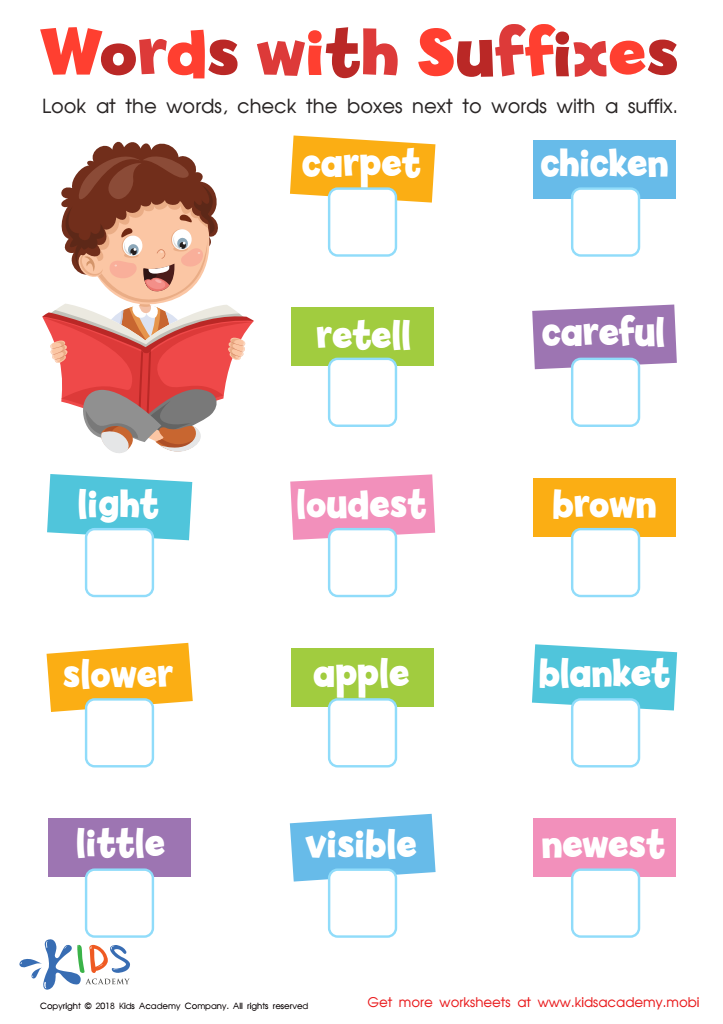
Reading: Words With Suffixes Worksheet
Help your students understand suffixes and build reading fluency with this worksheet. Have them read each word, then choose the ones with a suffix. Practicing this will lead to better comprehension and more confident reading. Save it for future use in language and reading classes.
 Assign to My Students
Reading: Words With Suffixes Worksheet
Worksheet
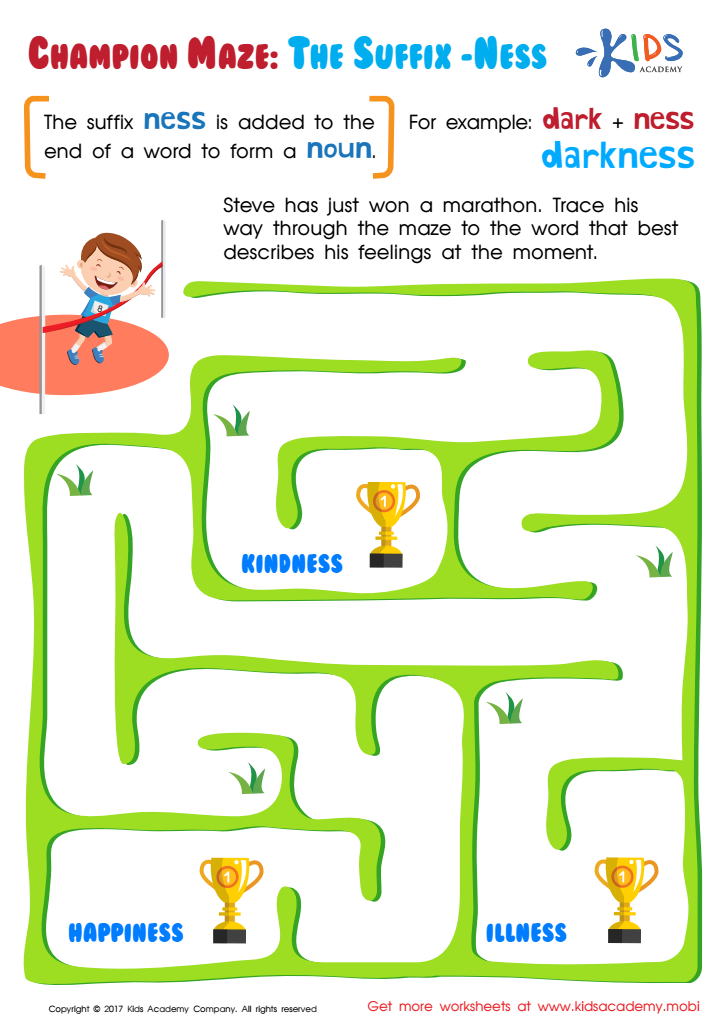
Suffix Ness Worksheet
Words are amazing! Add an ending and they can change part of speech. Make nouns out of adjectives with -ness. This worksheet has a fun maze to help learners increase vocabulary and language skills.
Suffix Ness Worksheet
Worksheet
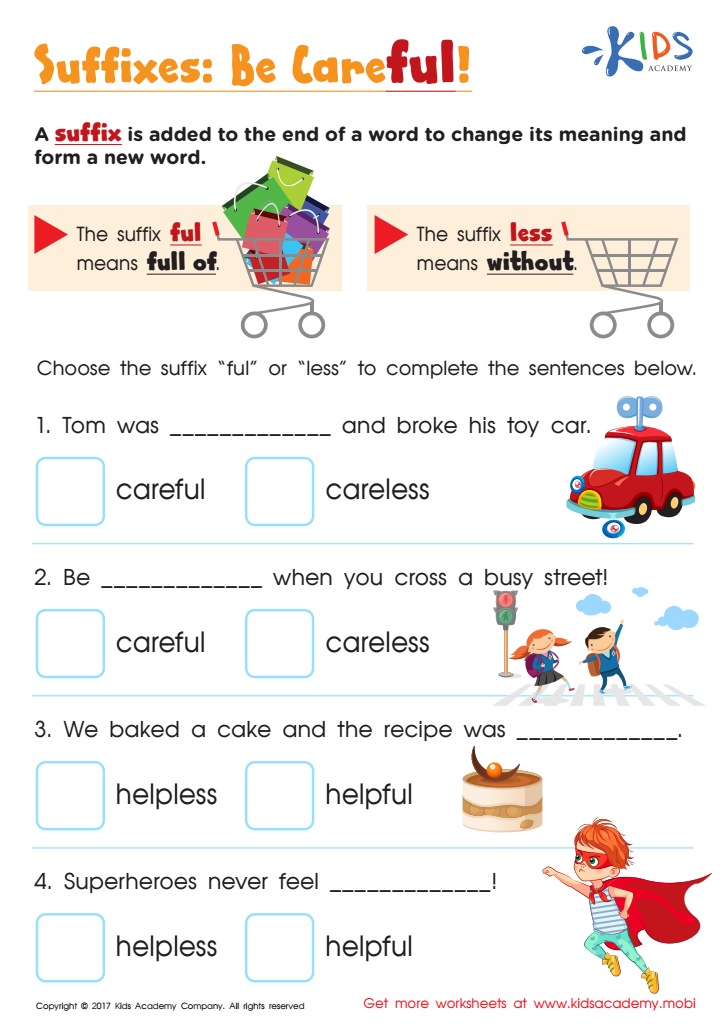
Suffixes Ful and Less Worksheet
Uh oh! Careful and careless might look similar, but have very different meanings. To avoid mix-ups, learn to spot and use the right suffixes. Use this suffixes ful and less worksheet to help your child master common suffixes!
Suffixes Ful and Less Worksheet
Worksheet
Join Kids Academy for Free
Who is primarily going to use this learning content?


.jpg)




Understanding suffixes is essential for young readers aged 6-8 because it significantly aids in vocabulary development, reading fluency, and comprehension. At this formative age, children are transitioning from simple word recognition to decoding complex words. Suffixes are added to the end of root words to change their meaning or grammatical function, such as "happy" becoming "happiness" or "talk" becoming "talked."
When children learn to identify common suffixes like "-ed," "-ing," "-ful," and "-ness," they start recognizing patterns in language. This recognition helps them break down and understand new words, ultimately expanding their vocabulary. For instance, a child who knows the word "help" can easily figure out the meaning of "helpful" with the understanding of the suffix "-ful."
Additionally, suffixes can change tenses and parts of speech, which contributes to better grammar. Knowing that adding "-ed" denotes past tense helps children grasp the timeline of events in stories, improving comprehension.
Teachers and parents play a crucial role by incorporating suffixes into reading lessons, making word games, and encouraging practical application during daily reading. This foundational skill not only enhances reading skills but also fosters a lifelong love for learning and language.








