
Logical thinking Normal Reading Comprehension Worksheets for Ages 6-8
3 filtered results
Difficulty Level
Grade
Age
-
From - To
Subject
Activity
Standards
Unlock your child's potential with our “Logical Thinking Normal Reading Comprehension Worksheets” designed specifically for ages 6-8. These printable worksheets from Kids Academy combine engaging stories and challenging questions to enhance both reading comprehension and logical thinking skills. Tailored to foster critical thinking and analytical abilities, each worksheet provides diverse scenarios that stimulate young minds. Responses to the stories encourage young readers to make inferences, identify key details, and draw conclusions, ensuring a solid foundation for future academic success. Perfect for at-home practice or classroom reinforcement, these worksheets make learning both enjoyable and effective.
Favorites
With answer key
Interactive
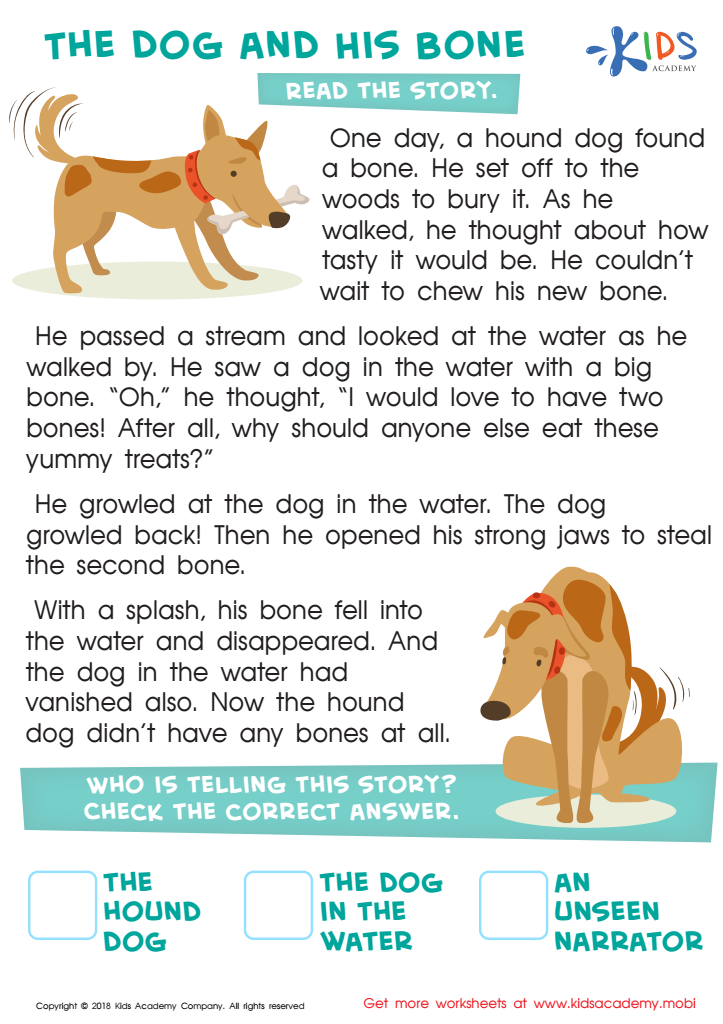
The Dog and His Bone Worksheet
Read the story of The Dog and His Bone to your kids, making sure they take in the details. Ask them the questions in this worksheet and help them check the answers. Encourage them to think carefully.
 Assign to My Students
The Dog and His Bone Worksheet
Worksheet
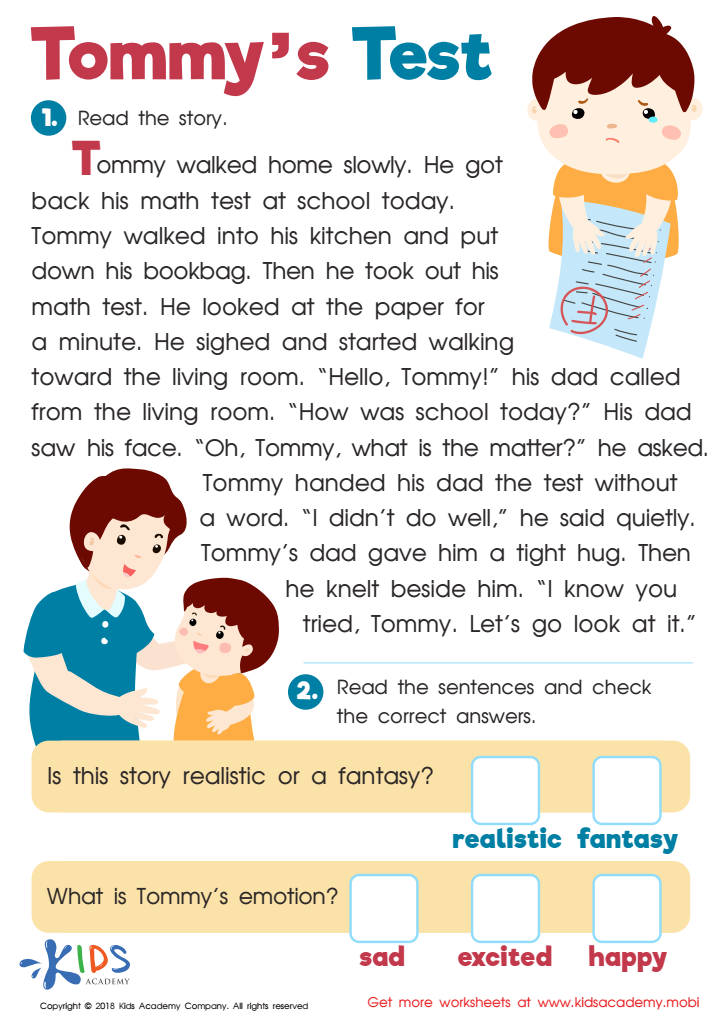
Tommys Test Worksheet
Reading short stories to your students builds a bond, teaches new words and lessons. Read the story aloud and then have them listen for details. Ask them the questions at the bottom and help them check the answers.
Tommys Test Worksheet
Worksheet
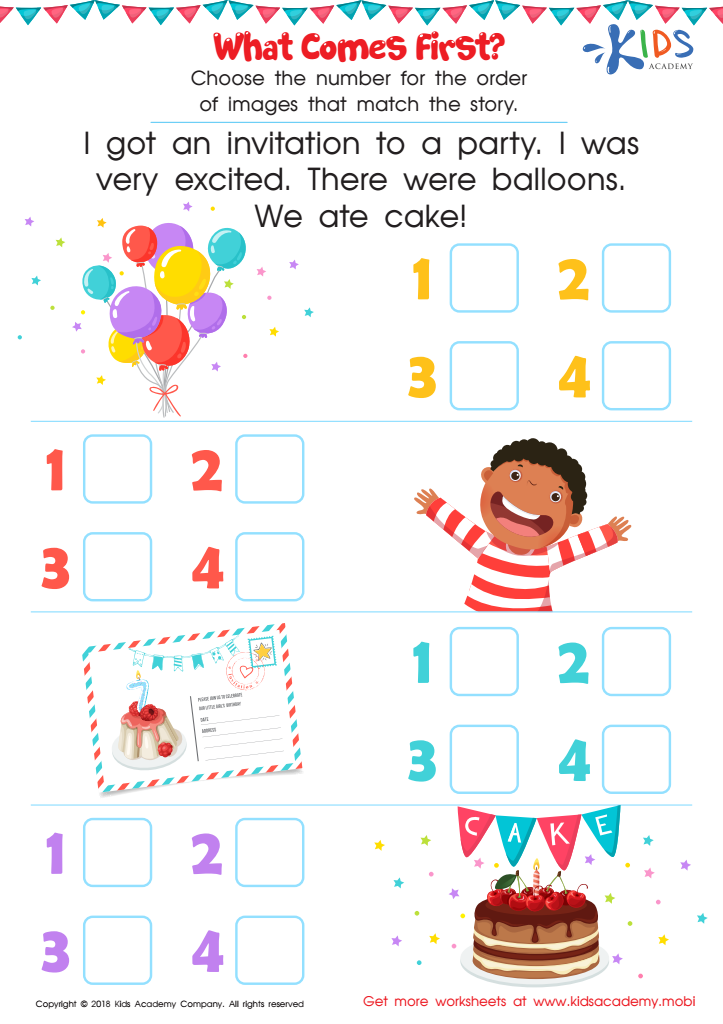
What Comes First Worksheet
Before you start, ask your child what they see in the picture. Read the story aloud together, then show them the images in order, numbered 1-5. Ask them to choose the numbers that match the story. Have fun and enjoy this party worksheet with your little one! (80 words)
What Comes First Worksheet
Worksheet
Join Kids Academy for Free
Who is primarily going to use this learning content?




.jpg)



Parents and teachers should prioritize developing logical thinking and reading comprehension in children aged 6-8 for several compelling reasons. These skills lay a very important foundation for further learning and cognitive development. Enhancing logical thinking in young learners promotes their ability to solve problems systematically, enhances decision-making skills, and encourages the application of reason in daily tasks. This mental framework is not only vital for academic subjects like math and science but also for establishing good habits in organizing tasks and understanding complex scenarios in life.
Similarly, strong reading comprehension is crucial at these early stages of education. It ensures that children can not only read text but also understand and interpret the meaning, leading to better academic performance across all subjects. Comprehension skills enable kids to follow instructions correctly, participate more effectively in classroom discussions, and develop a genuine love for reading. This love for reading can greatly enhance their vocabulary and general knowledge.
In combination, logical thinking and reading comprehension aid in fostering independent learning, preparing children for more advanced educational challenges, and supporting their ability to navigate the wider world with confidence. Developing these skills help set students up for success in both their academic journeys and their personal lives.








