Moral understanding Normal Reading Comprehension Worksheets for Ages 6-8
5 filtered results
-
From - To
Empower your child's moral understanding with our engaging reading comprehension worksheets, designed for ages 6-8. Each worksheet combines age-appropriate stories with thought-provoking questions to enhance both reading skills and moral reasoning. Through diverse narratives, children explore themes like honesty, kindness, and empathy, building a foundation for ethical decision-making. Kids will delight in our colorful, easy-to-follow exercises, while parents and teachers will appreciate the positive, values-oriented content. Perfect for home or classroom use, these worksheets support literacy development and character education simultaneously. Make reading time meaningful with resources that nurture young minds and foster a strong moral compass.
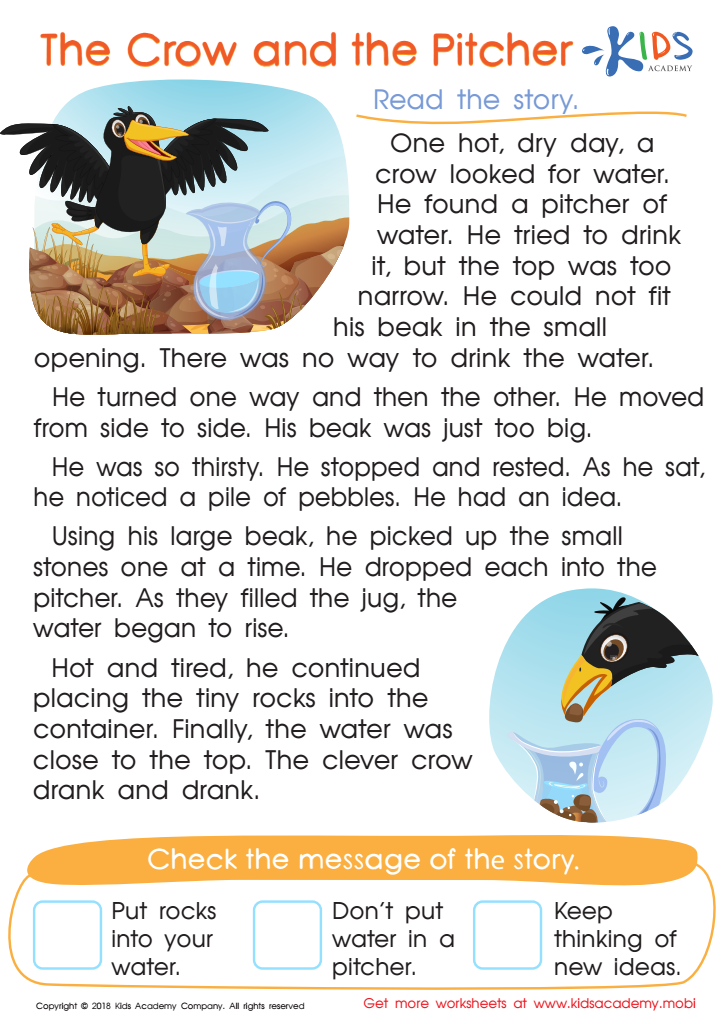
The Crow and the Pitcher Worksheet
 Assign to My Students
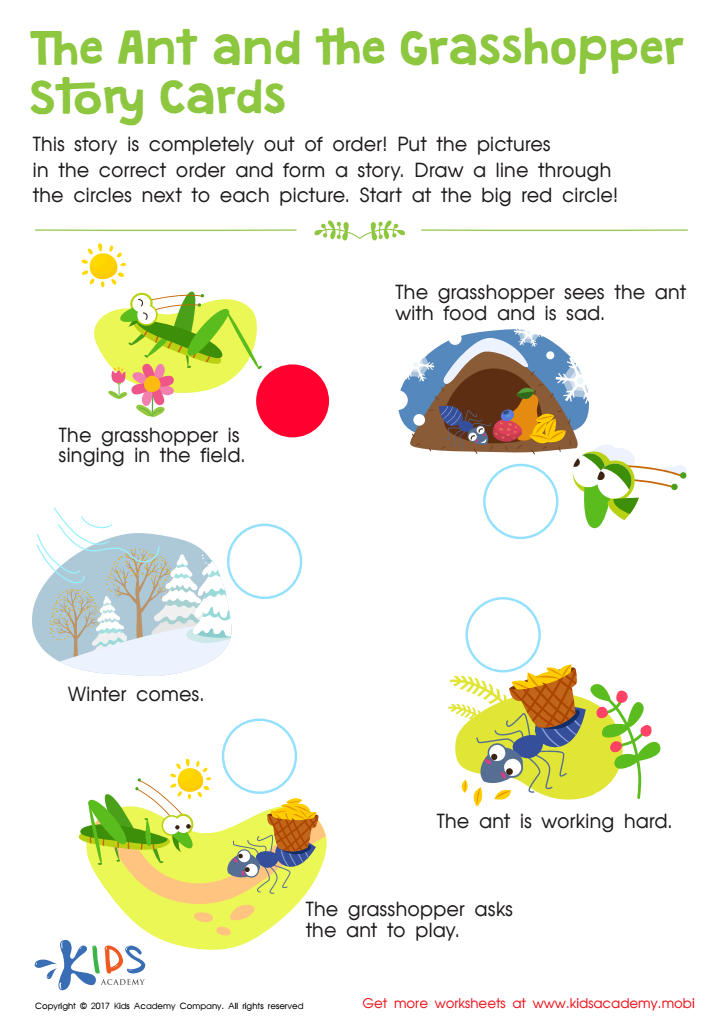
The Ant and The Grasshopper Worksheet
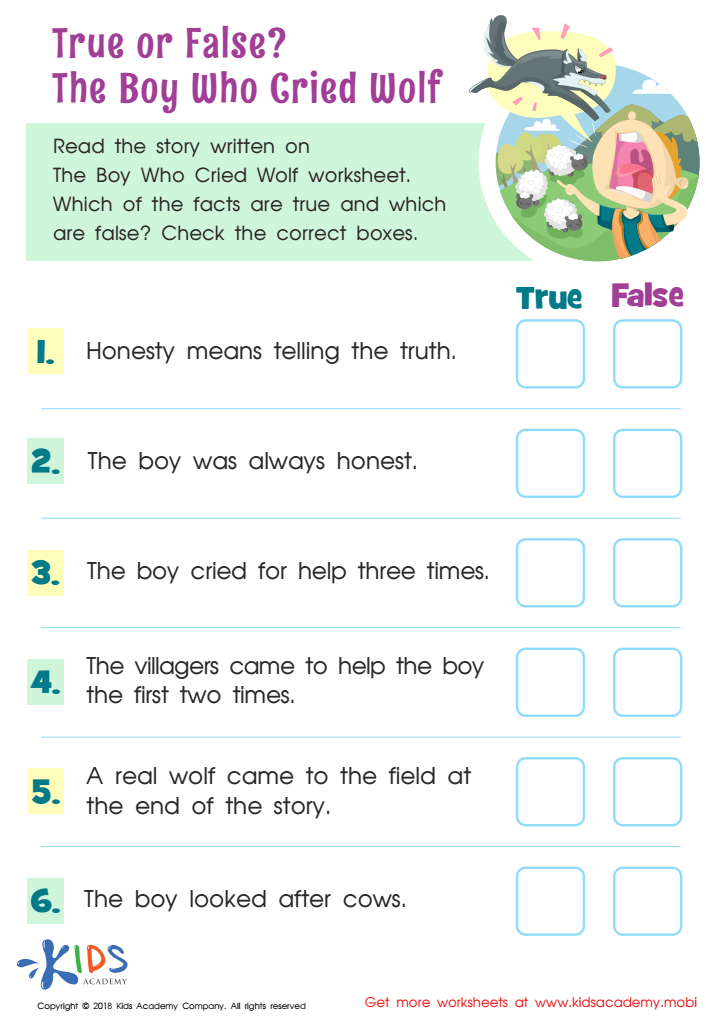
True or False? The Boy Who Cried Wolf Worksheet
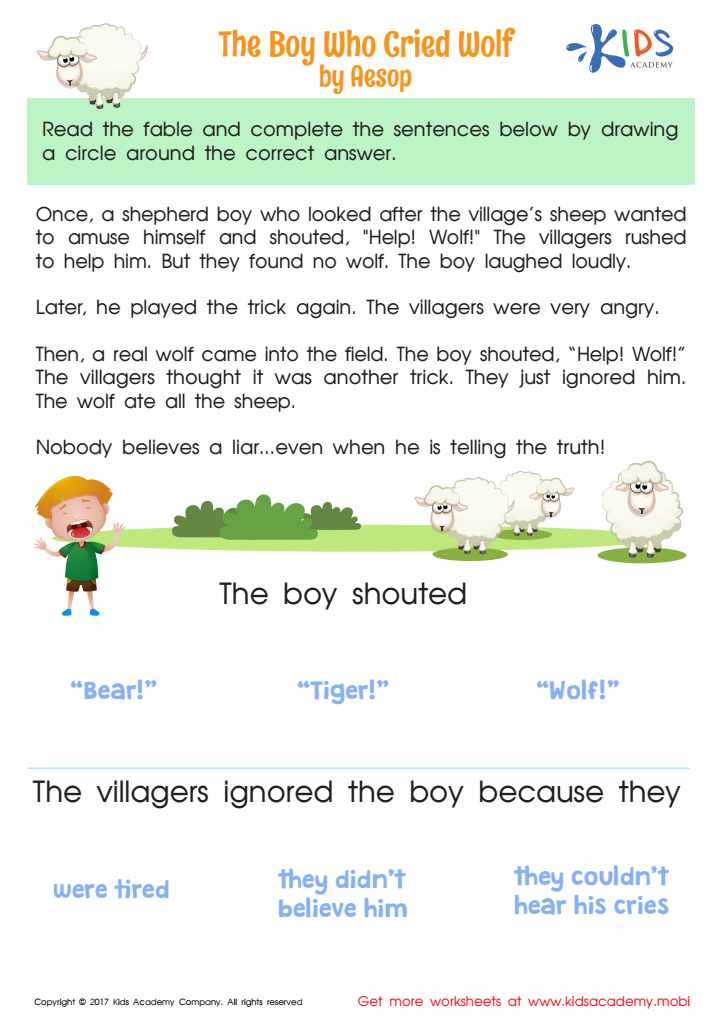
The Boy Who Cried Wolf Worksheet
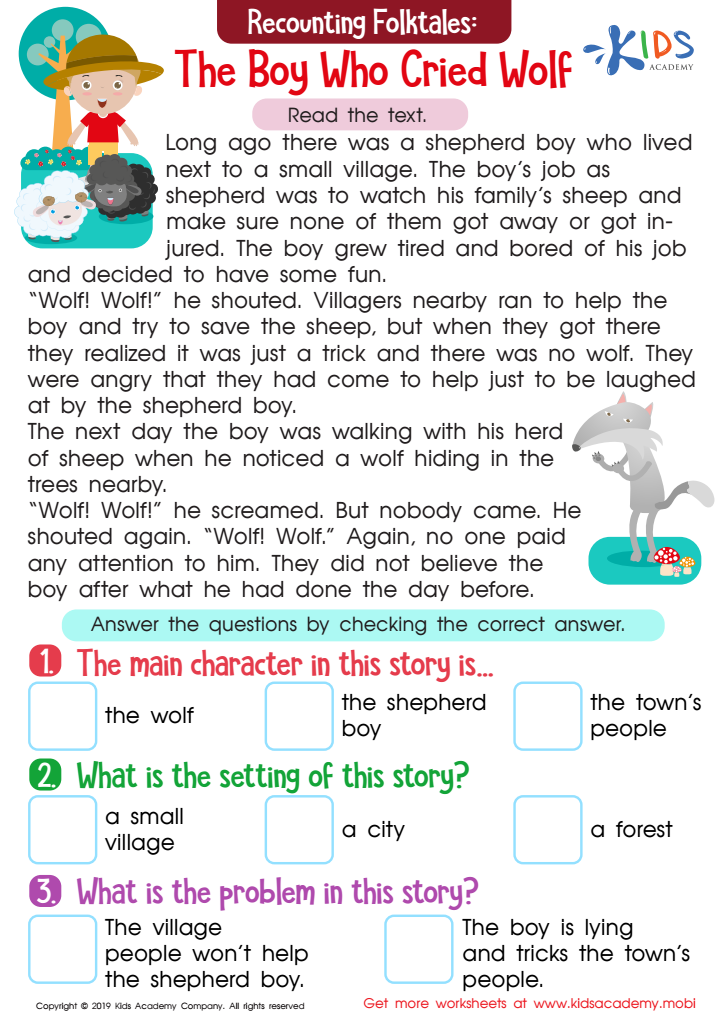
The Boy Who Cried Wolf Part 1 Worksheet


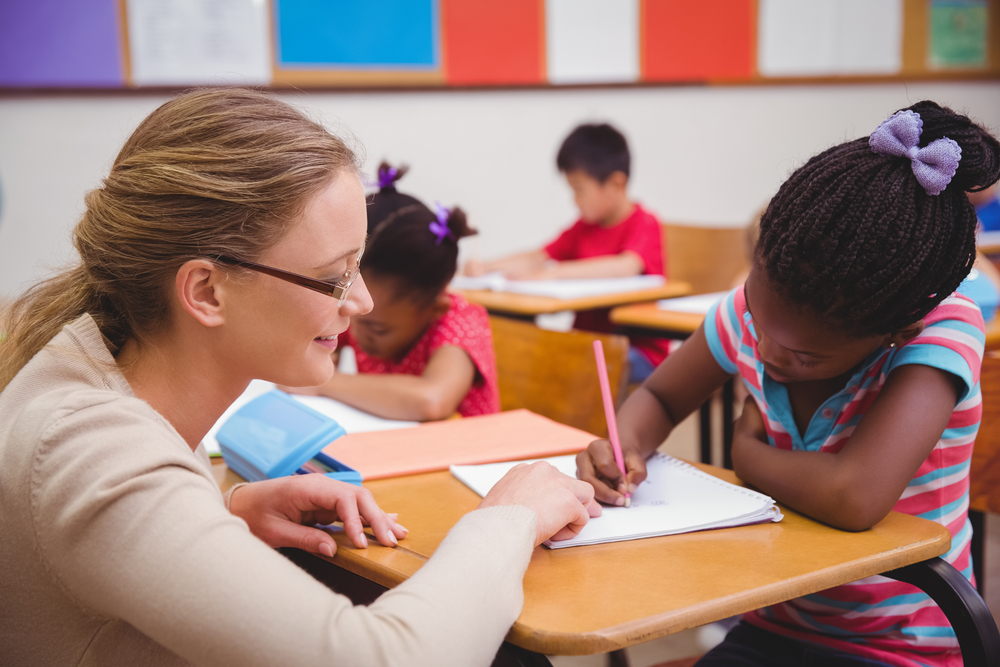


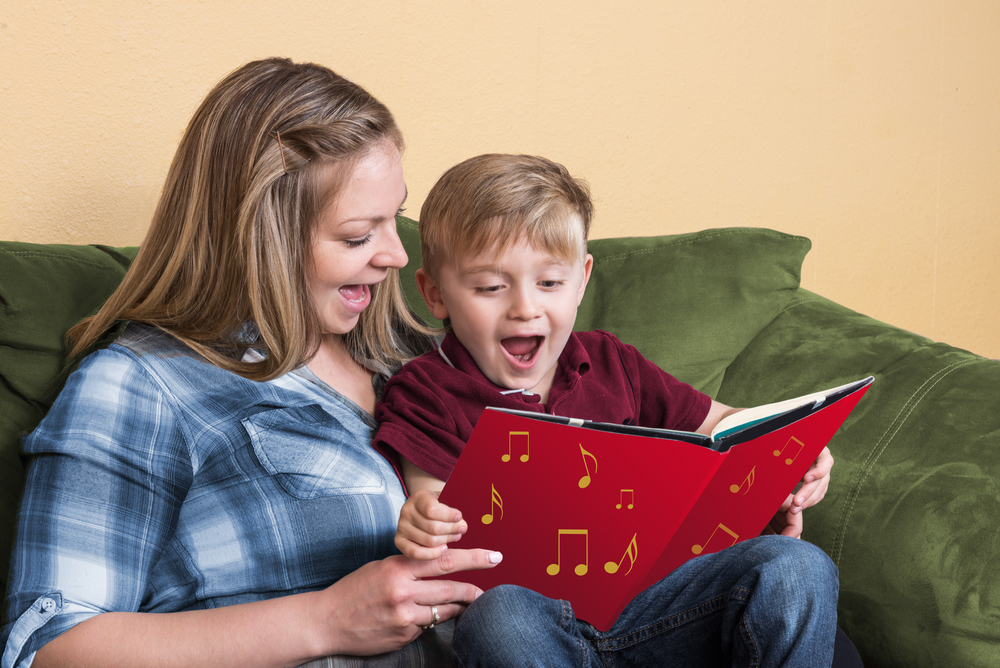

Moral understanding and reading comprehension are crucial for children aged 6-8 because they form the foundation for both character development and academic success. At this formative stage, children are highly impressionable and learn about right and wrong primarily through interactions with adults and stories. Teaching moral values helps children develop empathy, respect, and fairness, which are essential for positive social interactions and community participation. When parents and teachers actively engage in discussions about moral lessons, they help children build a framework for making ethical decisions.
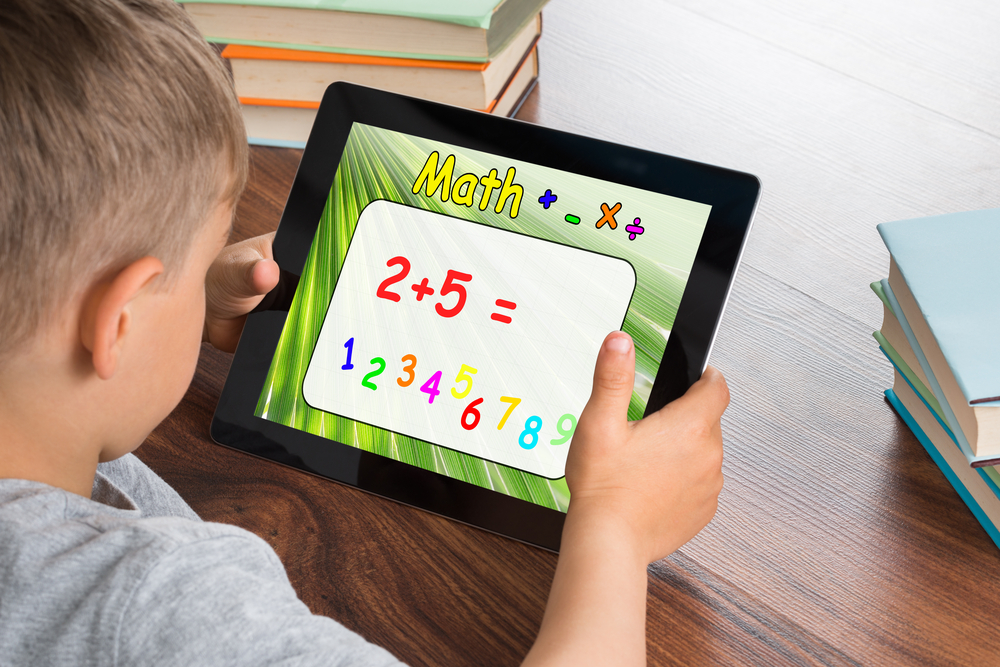
Simultaneously, normal reading comprehension at this age is vital for academic achievement. Children's ability to understand and interpret text directly impacts their performance in all subject areas. Proficient reading skills enable children to follow instructions, solve problems, and engage with more complex texts as they progress through school. Reading comprehension allows children to explore different perspectives, cultures, and ideas, broadening their understanding of the world.
By focusing on moral understanding and reading comprehension, parents and teachers cultivate well-rounded individuals who are not only knowledgeable but also empathetic and ethically grounded. Prioritizing these areas prepares children to navigate both academic and social challenges effectively, leading to a more successful and fulfilling life.








