Logical Reasoning Normal Reading Fiction Worksheets for Ages 6-8
5 filtered results
-
From - To
Discover the perfect blend of fun and learning with our "Logical Reasoning Normal Reading Fiction Worksheets for Ages 6-8". These carefully crafted worksheets enhance young minds by integrating engaging fiction stories with logical reasoning exercises, fostering imaginative and analytical thinking. Ideal for kids aged 6 to 8, they help improve comprehension, inference skills, and problem-solving abilities. Each worksheet combines captivating narratives with questions that challenge children to think critically and draw conclusions. Make learning enjoyable and effective with these dynamic resources designed to support reading growth and logical reasoning development in early learners. Get started and ignite a love for reading today!
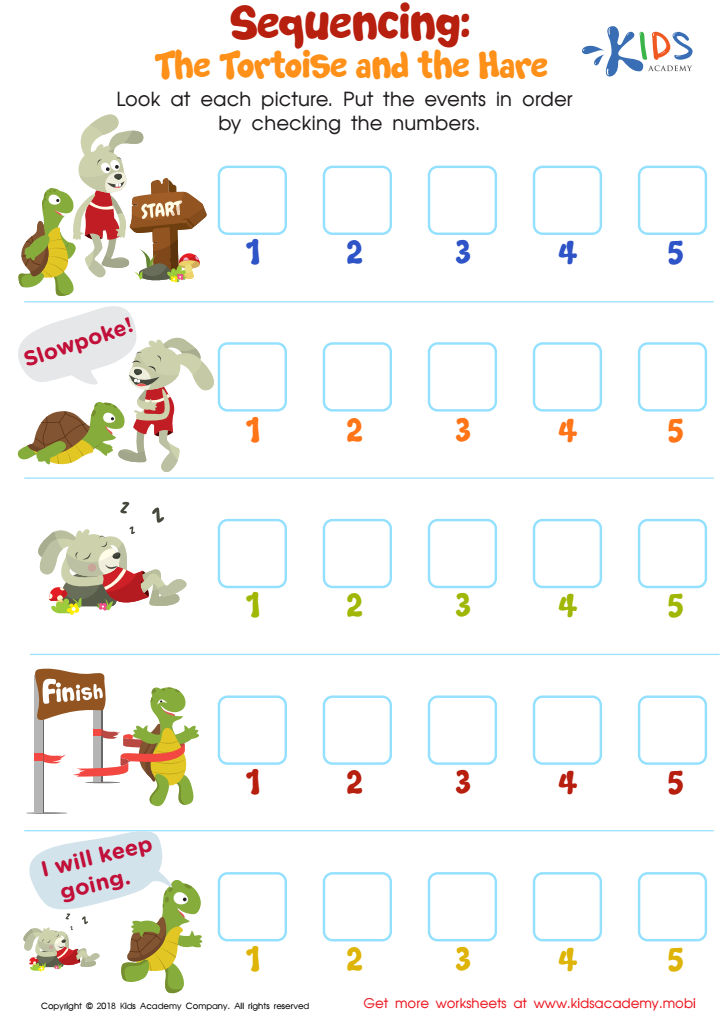
Sequencing: The Tortoise and the Hare Worksheet
 Assign to My Students
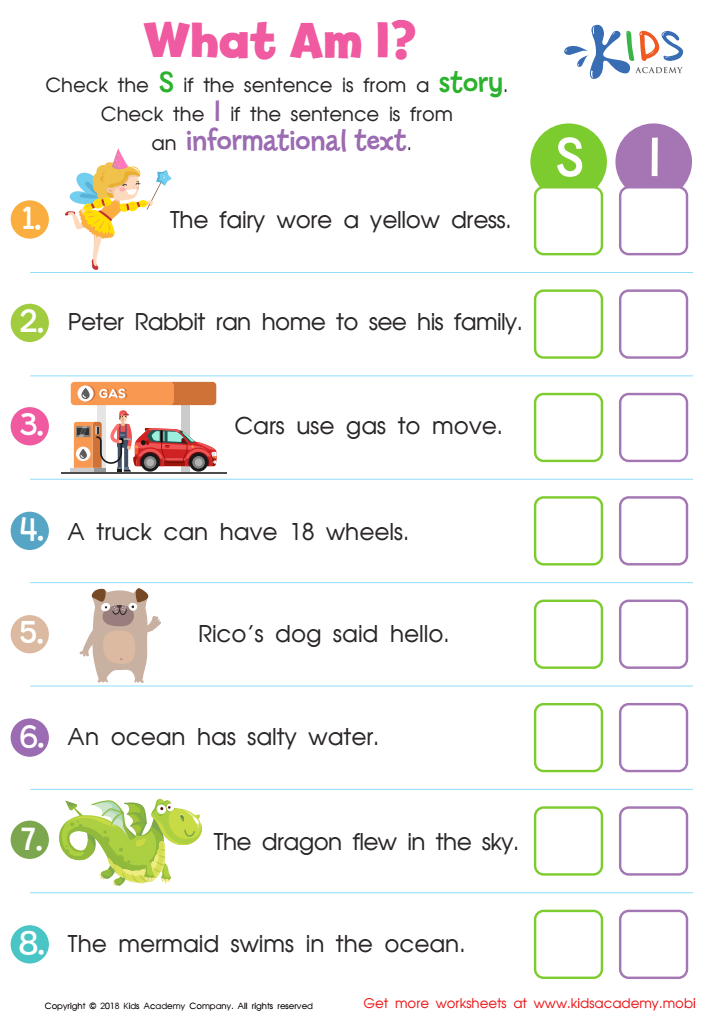
What Am I? Worksheet
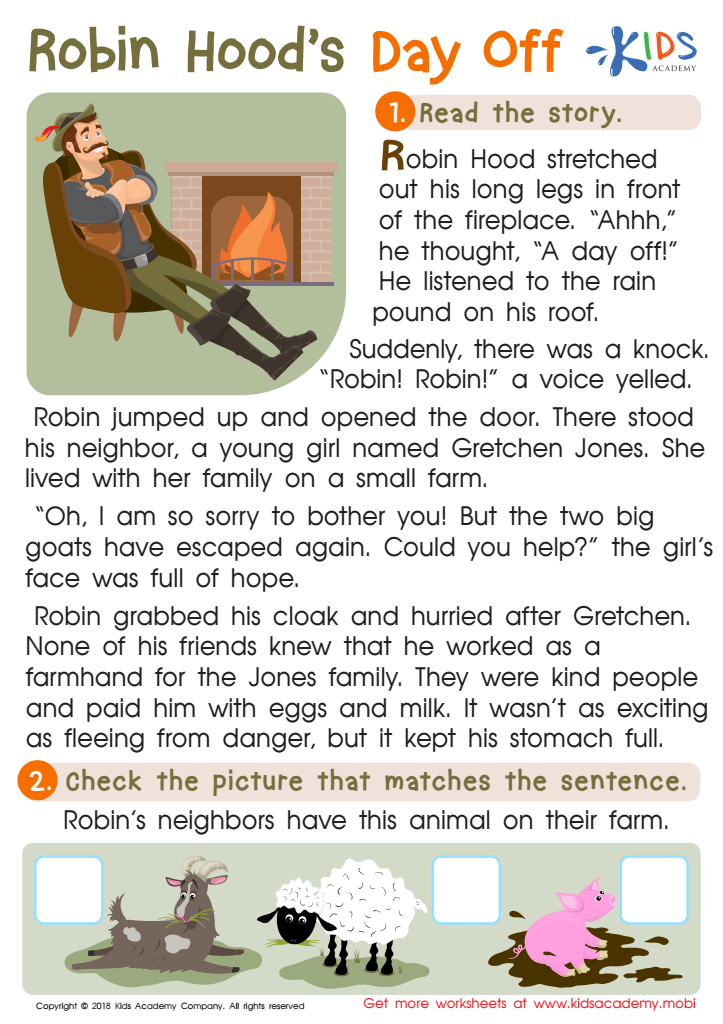
Robin Hood's Day Off Worksheet
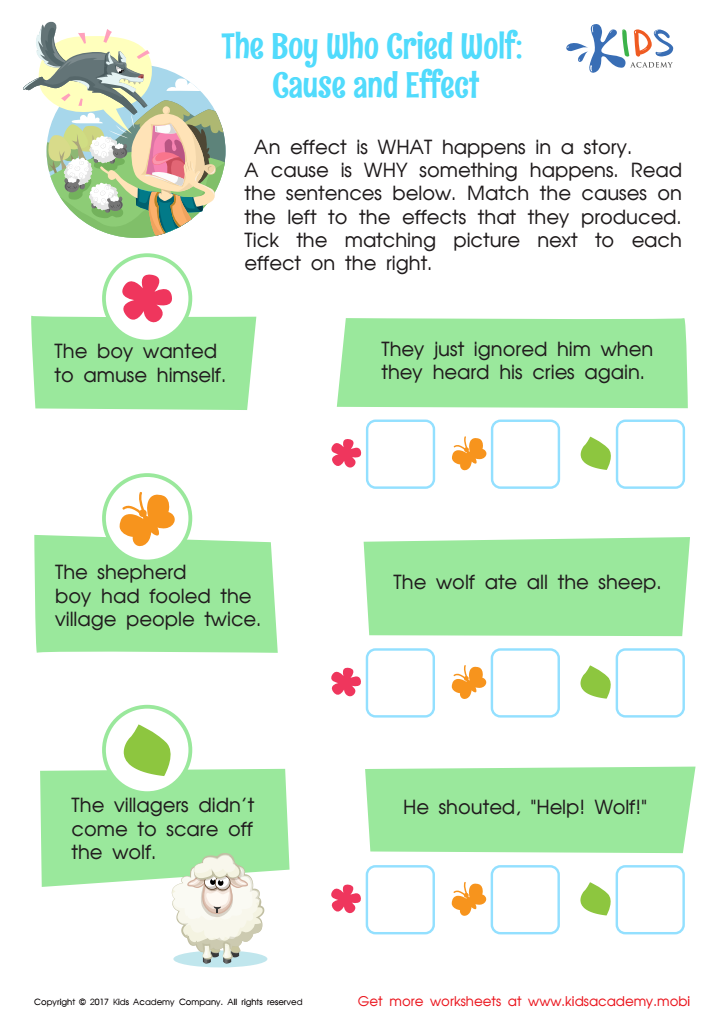
The Boy Who Cried Wolf: Cause and Effect Worksheet
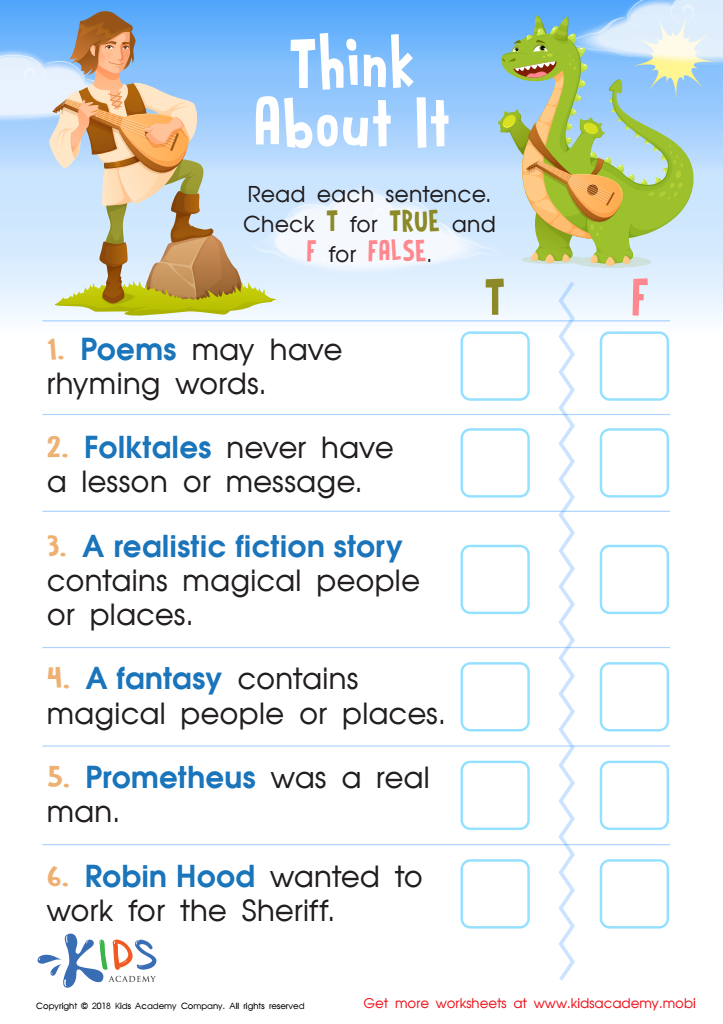
Think About It: Assessment Worksheet








Parents and teachers should place a significant emphasis on fostering logical reasoning and encouraging the normal reading of fiction for children aged 6-8, as these are pivotal years for cognitive and emotional development. Logical reasoning is the ability to think in structured, clear, and constructive ways. Skills like pattern recognition, problem-solving, and critical thinking allow children to approach challenges methodically and develop strong analytical foundations that are crucial for academic success in subjects like math and science.
Normal reading of fiction, on the other hand, enhances children's imagination and empathy. When children immerse themselves in stories, they familiarize themselves with different cultures, perspectives, and emotional landscapes. This not only promotes creativity but also helps them understand and relate to the feelings of others, fostering social-emotional development. Additionally, fiction exposes children to a rich vocabulary and complex sentence structures, enhancing their language skills and comprehension.
By integrating logical reasoning exercises with regular fiction reading, parents and teachers can provide a balanced development approach. Logical reasoning will refine their problem-solving and critical thinking abilities, while fiction will nurture their creativity, emotional intelligence, and language proficiency. Together, these skills prepare children to navigate both academic and personal aspects of life with confidence and empathy.







