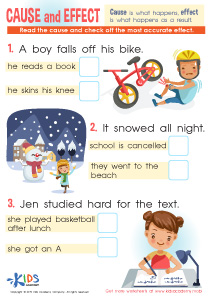
Comprehension skills Normal Reading Non-Fiction Worksheets for Ages 6-8
4 filtered results
Difficulty Level
Grade
Age
-
From - To
Subject
Activity
Standards
Enhance your child's reading comprehension skills with our engaging Non-Fiction Worksheets, tailored for kids aged 6-8. These interactive worksheets incorporate age-appropriate content designed to spark curiosity and deepen understanding. Children will explore various Non-Fiction topics, allowing them to practice identifying main ideas, making inferences, and recognizing text features. Each worksheet comes with clear instructions and captivating activities that foster critical thinking and analytical skills. Perfect for both in-class and at-home learning, our comprehension skills worksheets make learning enjoyable and effective. Equip your young readers with the tools necessary to navigate and appreciate the world of Non-Fiction, setting a strong foundation for future success.
Favorites
With answer key
Interactive
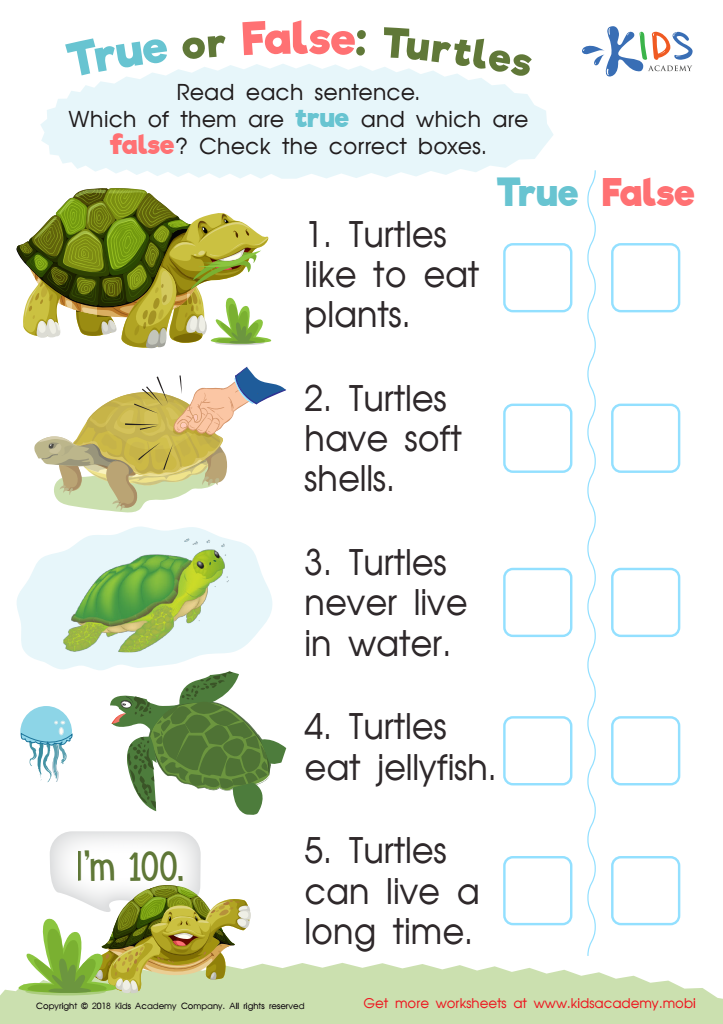
True or False: Turtles Worksheet
Print this free downloadable worksheet to strengthen your child's reading comprehension. Assist them to read each sentence and recall facts about turtles. Check true or false for each statement to verify their knowledge. Perfect for early learners!
 Assign to My Students
True or False: Turtles Worksheet
Worksheet
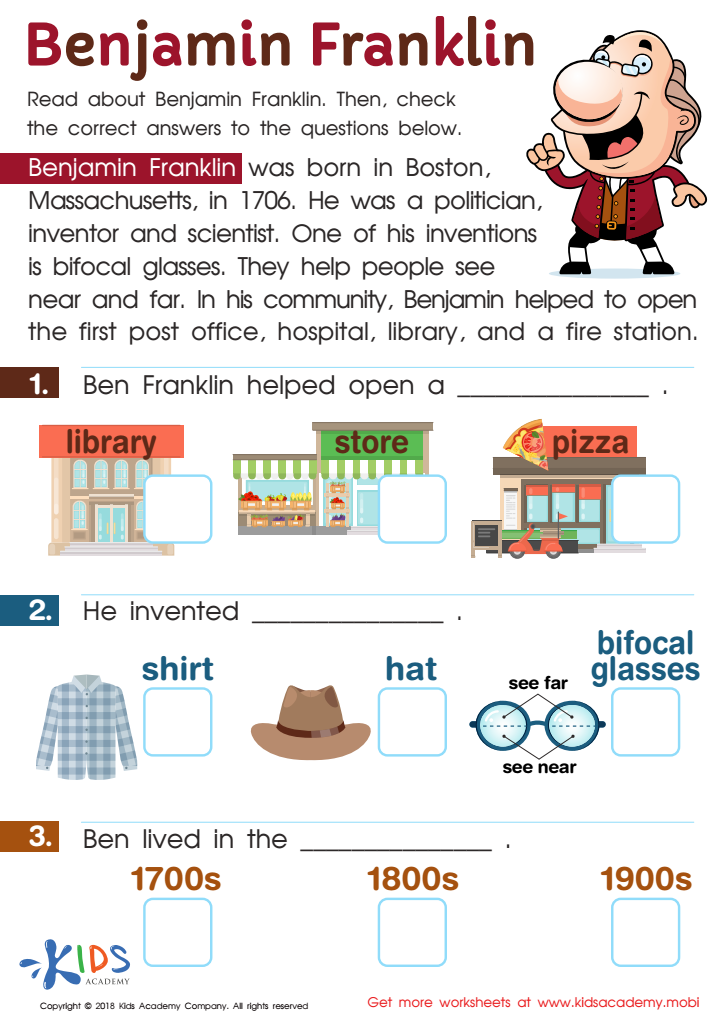
Benjamin Franklin Worksheet
Introduce your kids to one of history's most important figures - Benjamin Franklin! Tell them all about his remarkable contributions to the world and then use this worksheet to teach them even more. Read the text to them and check their answers against the questions afterwards.
Benjamin Franklin Worksheet
Worksheet
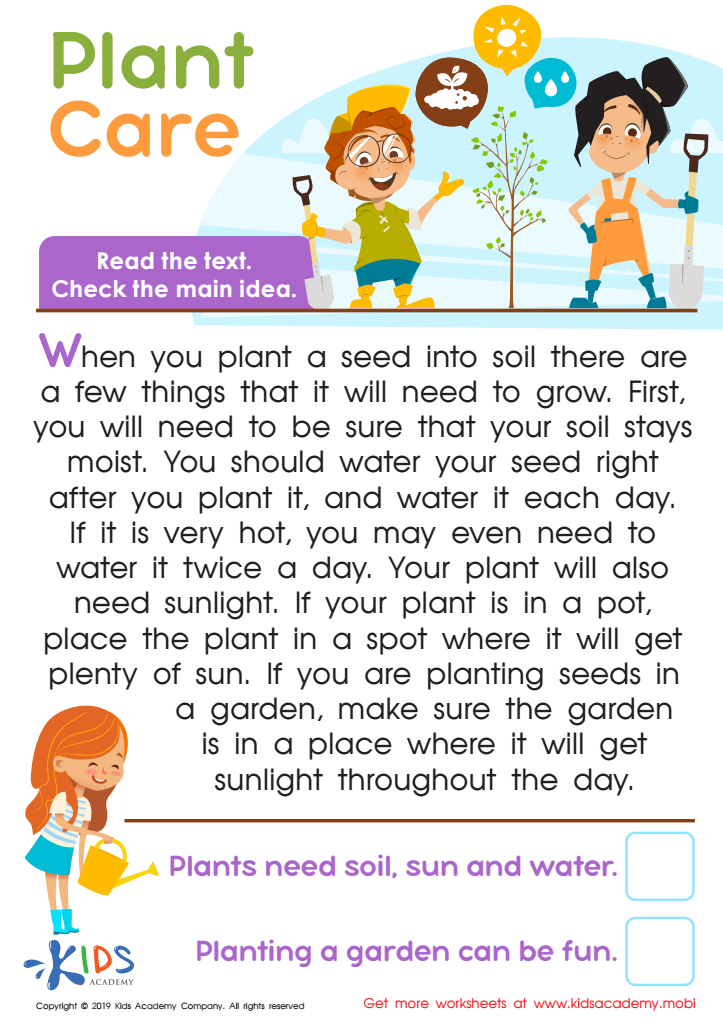
Plant Care Worksheet
Encourage your children to read by helping them practice. Print out the worksheet and read the text with them. Help them understand the words and find the main idea. This will improve their reading skills and prepare them for school.
Plant Care Worksheet
Worksheet
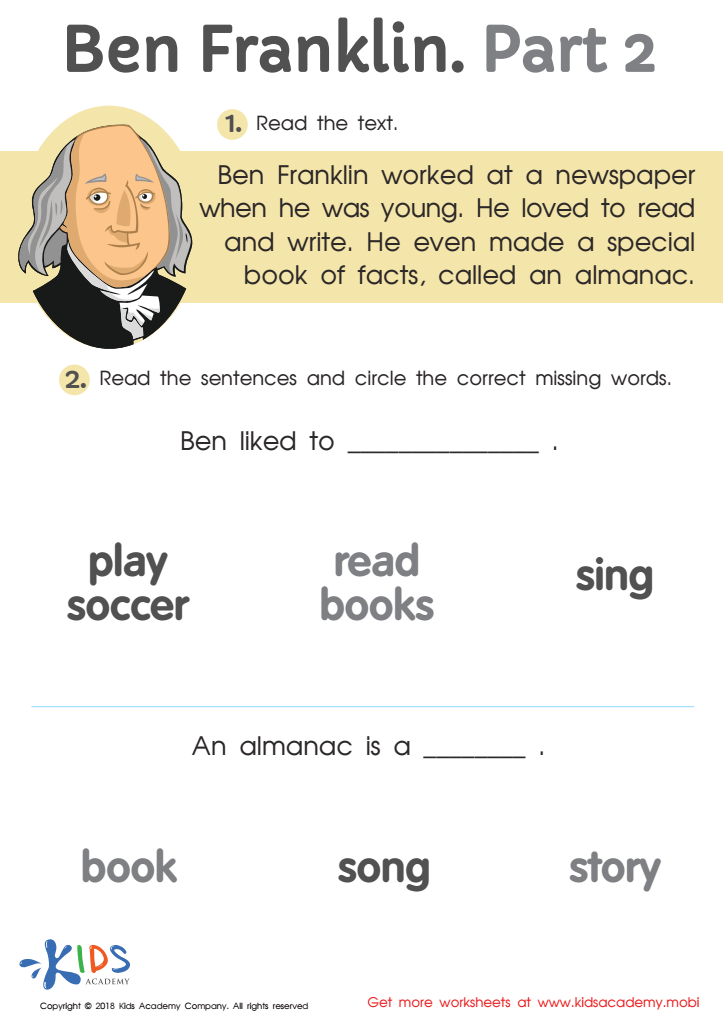
Ben Franklin Part 2 Worksheet
History is filled with great figures, like Benjamin Franklin. Let your kids in on the legacy by introducing them to the founder of the US fire department, diplomat, and inventor. Then, use a worksheet to have them fill in the blanks with the correct word to teach them more. Read the text, then read the sentences and have them circle the missing word.
Ben Franklin Part 2 Worksheet
Worksheet
Join Kids Academy for Free
Who is primarily going to use this learning content?








Understanding comprehension skills in non-fiction reading for children aged 6-8 is vital for their educational development. At this age, children are transitioning from learning to read to reading to learn. Strong comprehension skills enable them to extract important information, understand context, and think critically about real-world topics presented in non-fiction texts.
Parents and teachers should care because non-fiction reading fosters curiosity and a love for learning by engaging children with factual content that broadens their knowledge base. It aids in vocabulary development, reinforces concepts taught in other subjects, and cultivates higher-order thinking skills. These skills are essential for academic success as children progress through school, preparing them for research projects and analytical writing they will encounter in later grades.
Moreover, strong comprehension skills enhance communication abilities, helping children articulate ideas and makes connections to their own lives. Supporting children in this area also boosts their confidence as readers, which can lead to more enthusiastic participation in classroom discussions and activities. Ultimately, fostering non-fiction comprehension not only helps children academically but also equips them with the skills needed to navigate an information-rich world, thus emphasizing the importance of nurturing these skills early on.