Animal Classification Normal Animals Worksheets for Ages 6-8
6 filtered results
-
From - To
Explore animal classification with our engaging worksheets designed for children aged 6-8! Our "Animal Classification Normal Animals" collection introduces young learners to the basics of grouping animals based on common characteristics. These fun and educational activities cover mammals, birds, reptiles, amphibians, and more, promoting critical thinking and curiosity. Perfect for classroom use or at-home learning, these worksheets help kids build foundational science skills while developing a deeper understanding of the animal kingdom. Stimulate your child's interest in biology through hands-on learning tasks that make discovering animal life enjoyable and informative. Download now to embark on an exciting zoological adventure!
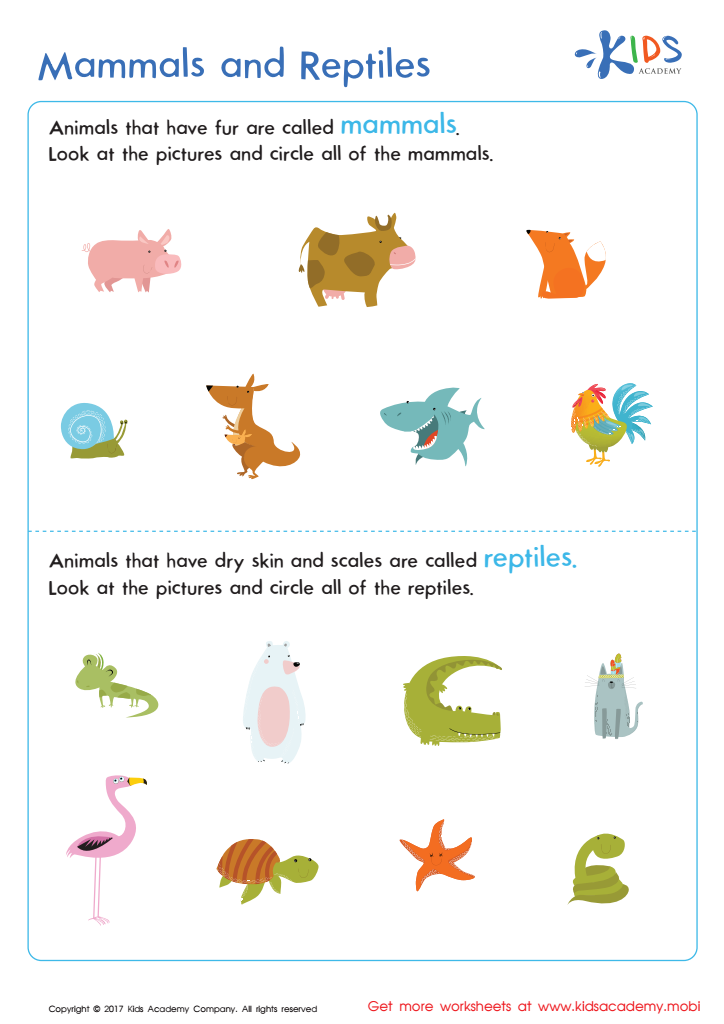
Mammals and Reptiles Worksheet
 Assign to My Students
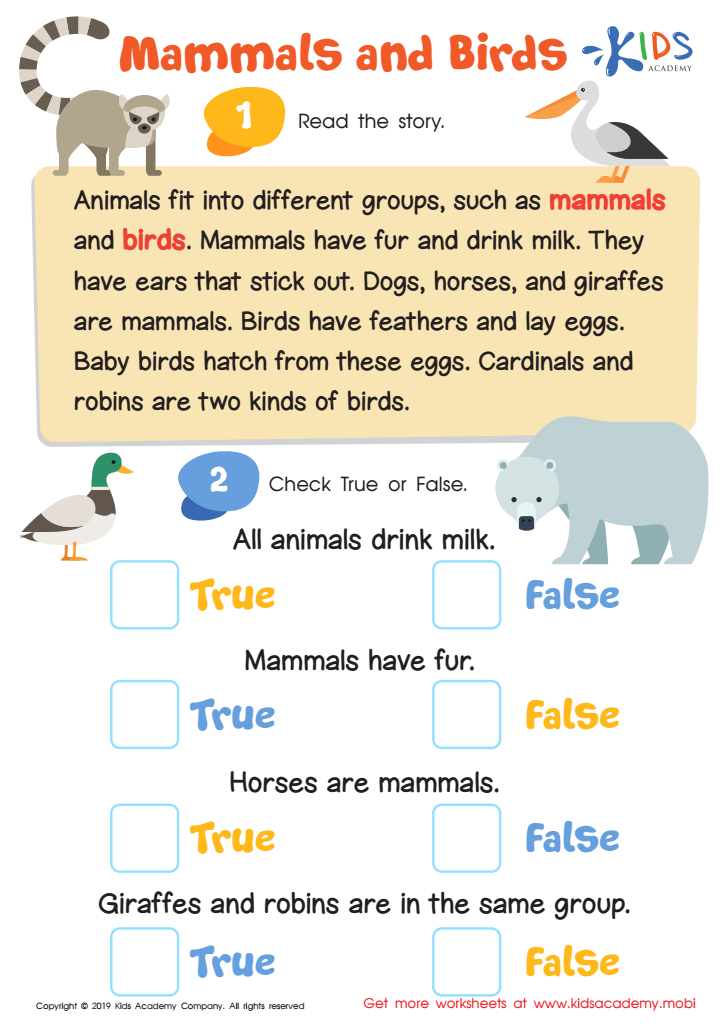
Mammals and Birds Worksheet
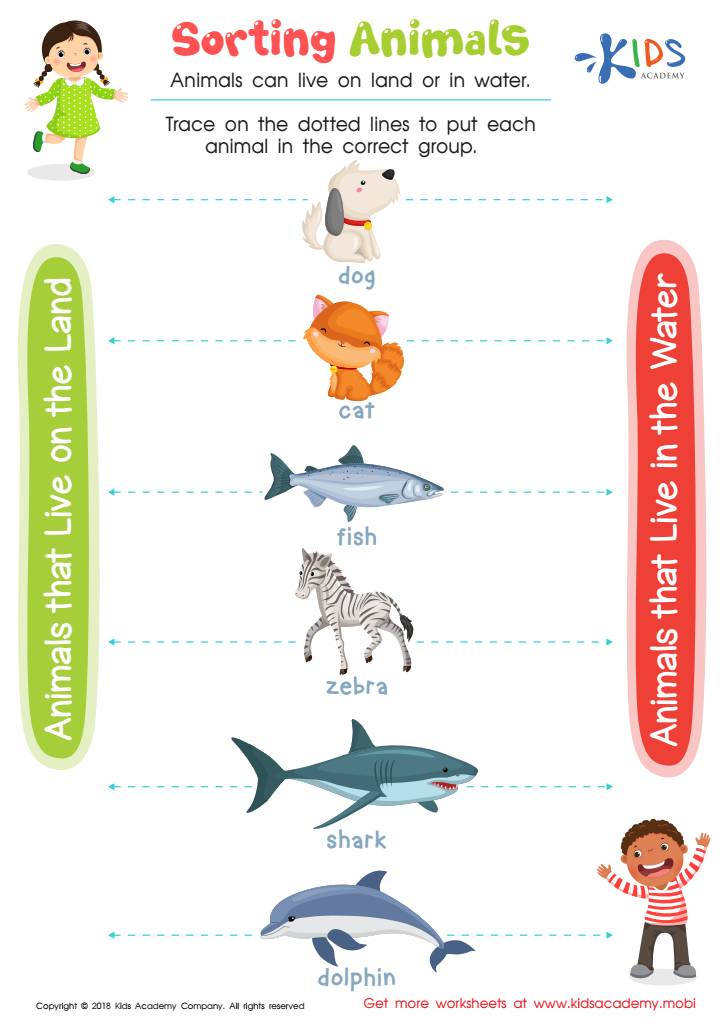
Sorting Animals Worksheet
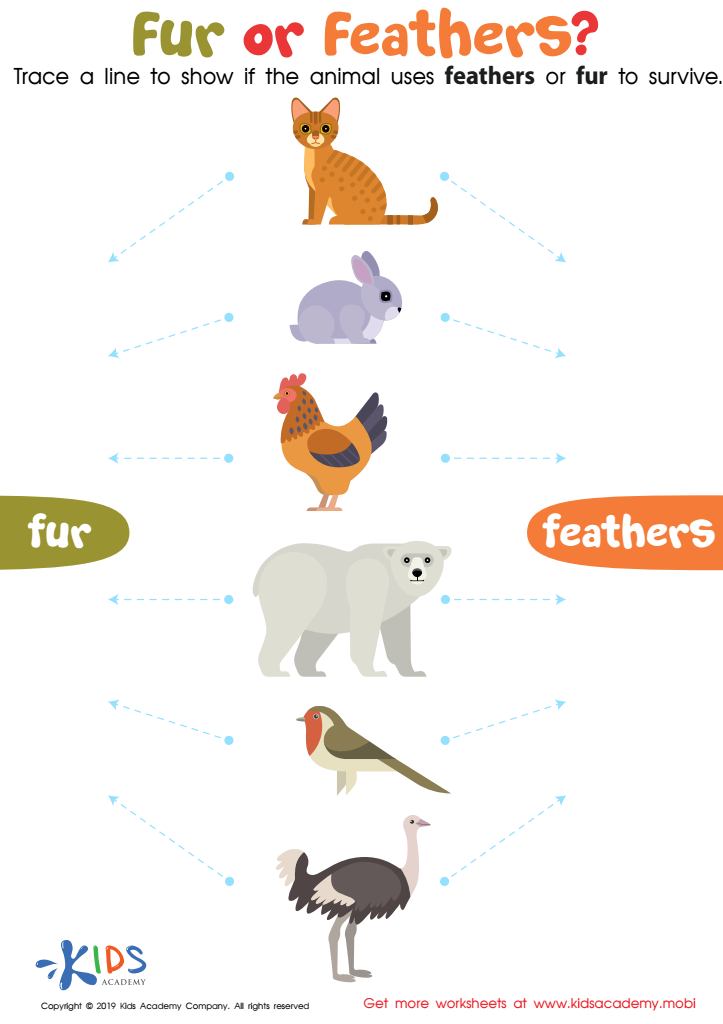
Fur or Feathers? Worksheet
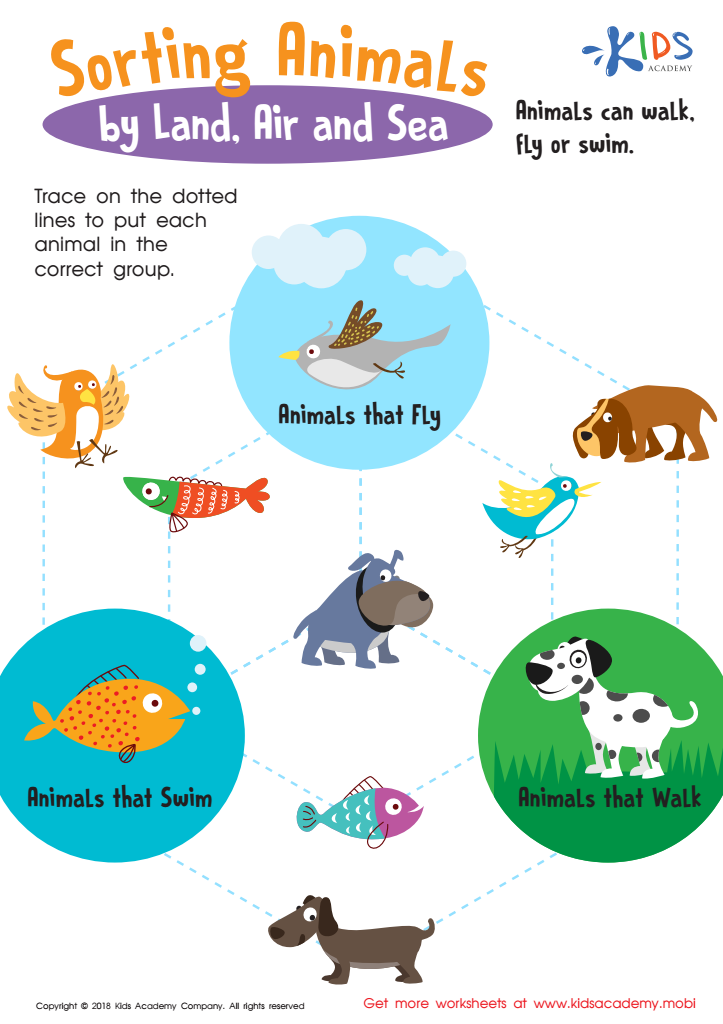
Sorting Animals by Land, Air and Sea Worksheet
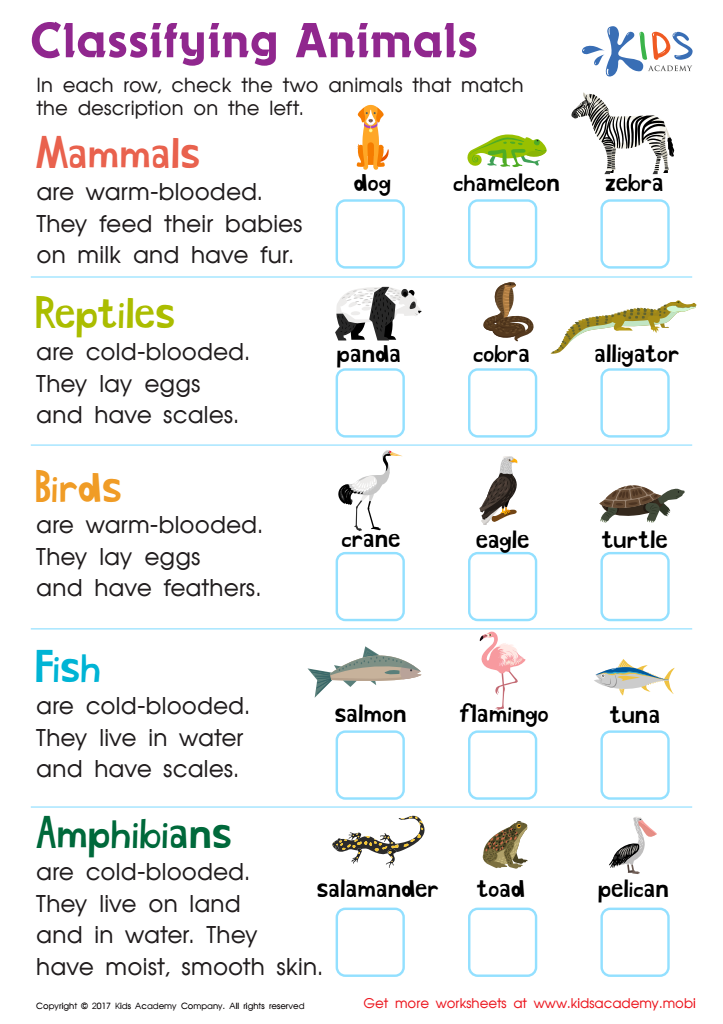
Classifying Animals Worksheet






Introducing children aged 6-8 to animal classification helps build foundational science skills and a deeper understanding of the natural world. This practice enhances critical thinking as children learn to observe differences and similarities among animals, categorizing them based on characteristics. Through this, they gain an appreciation for biodiversity and the relationships between various species.
For parents and teachers, this knowledge provides an engaging way to foster curiosity and a sense of wonder. Children at this age are naturally inquisitive, and topics like "Normal Animals" (household pets, farm animals, and familiar wildlife) capture their interest easily. Learning about animal classifications gives kids an organized framework to discuss and explore these animals' roles, habitats, and behaviors.
Educational benefits extend beyond science. The practice of sorting and classifying can improve mathematical and analytical skills, aiding in the understanding of broader concepts like categorization, number sense, and logical sequencing. Language development also improves as children learn new vocabulary and express their findings.
Moreover, discussing animal classification nurtures emotional bonds with nature, promoting empathy and ecological awareness from an early age. Parents and teachers can use these topics to instill values of responsibility, kindness, and conservation, shaping well-rounded, environmentally conscious individuals.








