
Developing critical thinking Normal Science Worksheets for Ages 6-8
3 filtered results
Difficulty Level
Grade
Age
-
From - To
Subject
Activity
Standards
Unlock your child's potential with our "Developing Critical Thinking Normal Science Worksheets for Ages 6-8." Specially designed for curious minds, these engaging worksheets inspire young learners to hone their analytical skills through hands-on activities and thought-provoking exercises. Our science sheets cover various topics from Earth science to biology, ensuring a comprehensive foundation in scientific literacy. Each worksheet stimulates curiosity and fuels a love for learning while enhancing critical thinking. Perfect for classroom use or at-home enrichment, our printable resources support your child's journey towards academic excellence. Equip your child with the essential tools for a lifelong love of science.
Favorites
With answer key
Interactive
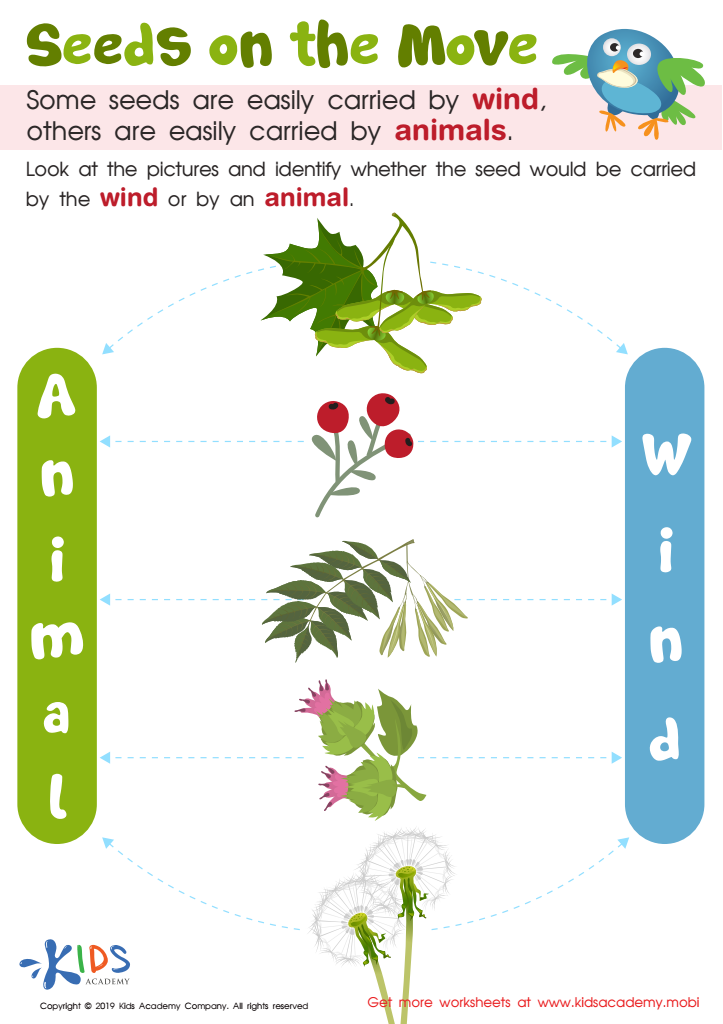
Seeds on the Move Worksheet
Help students understand the concept of spreading seeds with this fun traceable worksheet. Discuss the pictures, and see if they can identify whether the seed is carried by the wind or an animal. Explain how seeds can travel from place to place without human help, and how this helps them grow in new locations.
 Assign to My Students
Seeds on the Move Worksheet
Worksheet
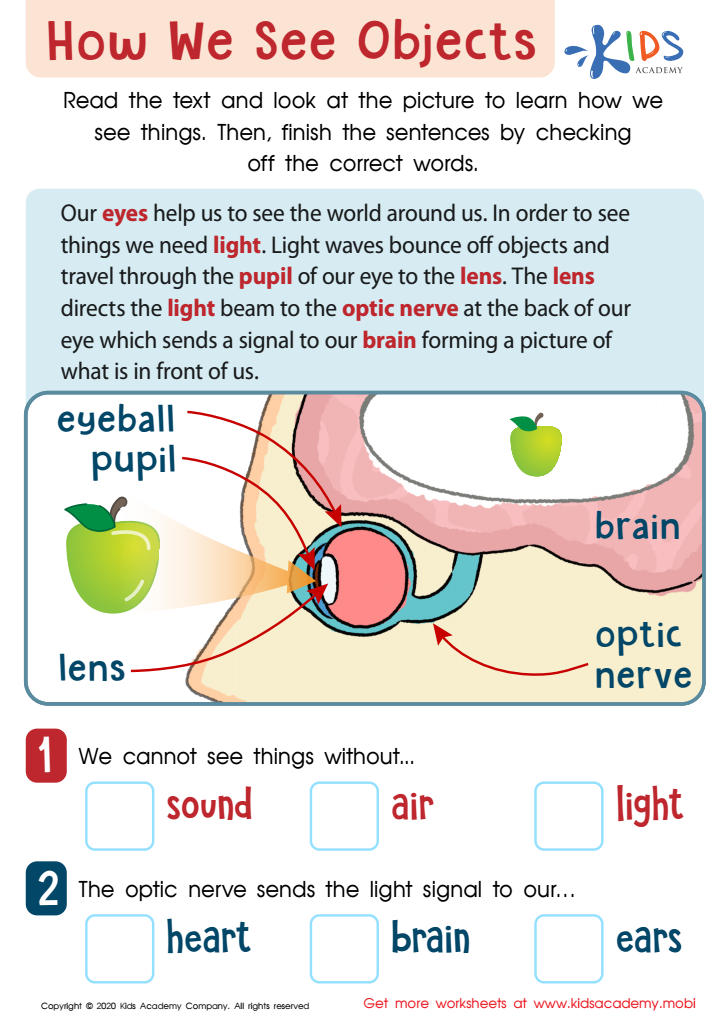
How We See Objects Worksheet
Remind your students of our five senses! This worksheet will teach them more about sight: read/listen to the text, look at pictures, then help them complete sentences. Check off the right words!
How We See Objects Worksheet
Worksheet
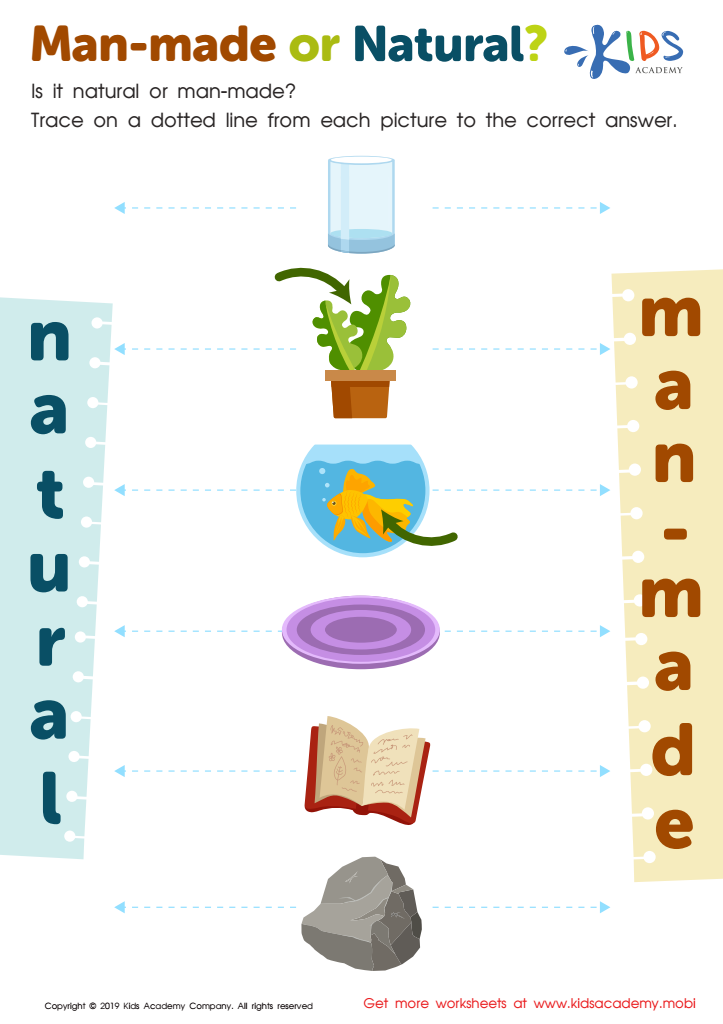
Man-Made or Natural? Worksheet
Ask your students to name natural and man-made objects. Check the worksheet to help them identify the objects, then trace the dotted line to determine if it's natural or man-made.
Man-Made or Natural? Worksheet
Worksheet
Learning Skills
Join Kids Academy for Free
Who is primarily going to use this learning content?








Developing critical thinking in children ages 6-8 is essential for their cognitive and social growth. At this stage, children are naturally curious and eager to learn about the world around them. By fostering critical thinking skills, parents and teachers can help children question information, analyze data, and consider multiple perspectives, laying the groundwork for lifelong learning and problem-solving.
Critical thinking encourages kids to ask "why" and "how" rather than just accepting facts at face value. This inquisitiveness supports scientific reasoning and helps children draw connections between their various experiences. When kids engage in activities like experiments or guided discovery, they learn to form hypotheses, test their ideas, and reflect on their findings, which are crucial components of normal science.
In addition to enhancing academic skills, critical thinking also benefits social development. Children learn to empathize with others by recognizing different viewpoints, which can improve communication and reduce conflicts with peers. Furthermore, these skills build resilience, as kids become more adept at facing challenges and adapting to new situations.
Ultimately, investing in the development of critical thinking creates a foundation for successful, independent learners. It equips young minds with the tools they need to navigate an increasingly complex world, making them adept problem-solvers and reflective individuals prepared to tackle future challenges.







