Identifying Animals Normal Science Worksheets for Ages 6-8
3 filtered results
-
From - To
Explore our engaging "Identifying Animals Normal Science Worksheets" designed specifically for children ages 6-8. These worksheets make learning fun as young learners dive into the world of animals, developing essential skills in identification and categorization. Perfect for reinforcing science concepts, our interactive exercises encourage children to recognize animal features, habitats, and behaviors. With colorful illustrations and easy-to-follow instructions, kids will enjoy completing activities that promote critical thinking and observation skills. Ideal for classroom use or at-home learning, these worksheets help foster a love for science while enhancing knowledge of the animal kingdom. Start your child’s educational adventure today!
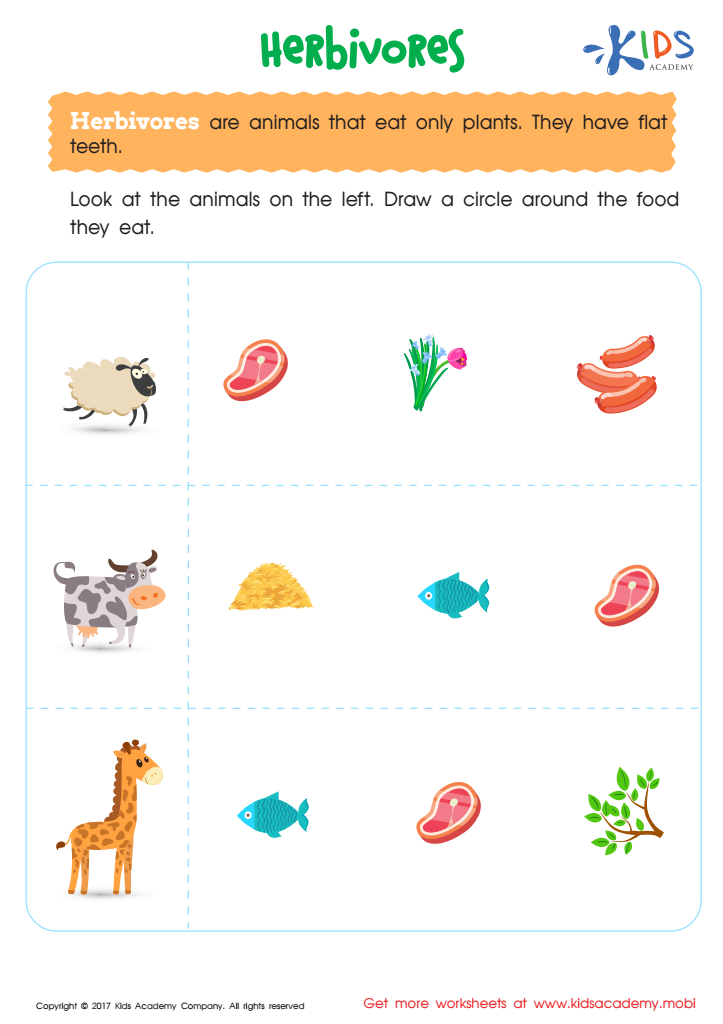
Herbivores Printable
 Assign to My Students
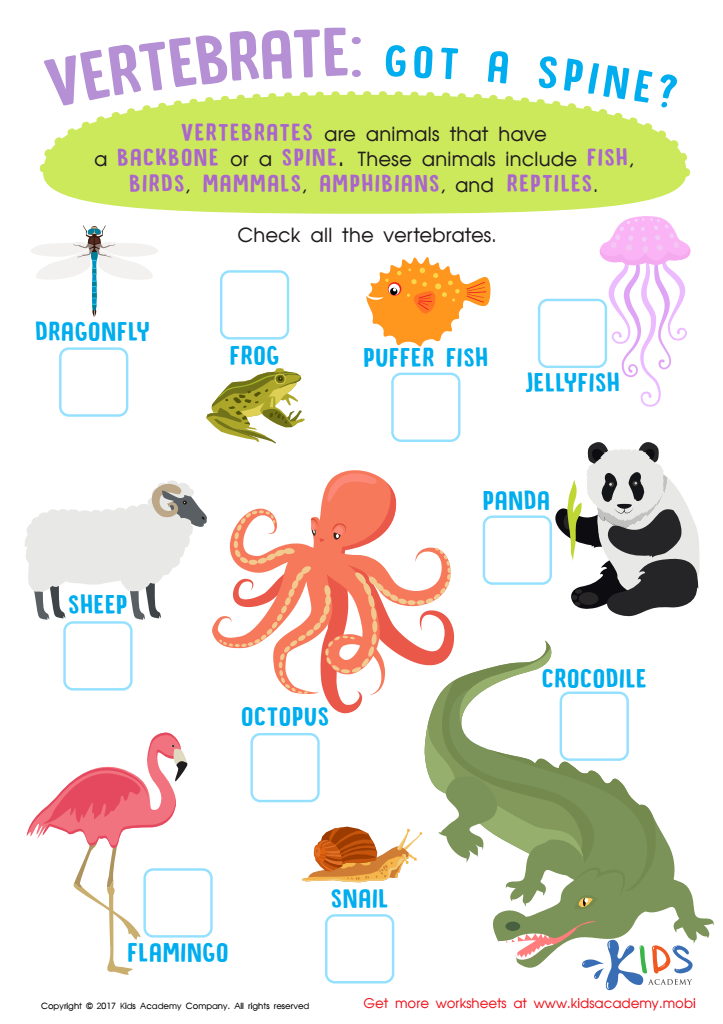
Vertebrates Animals Worksheet for 3rd Grade
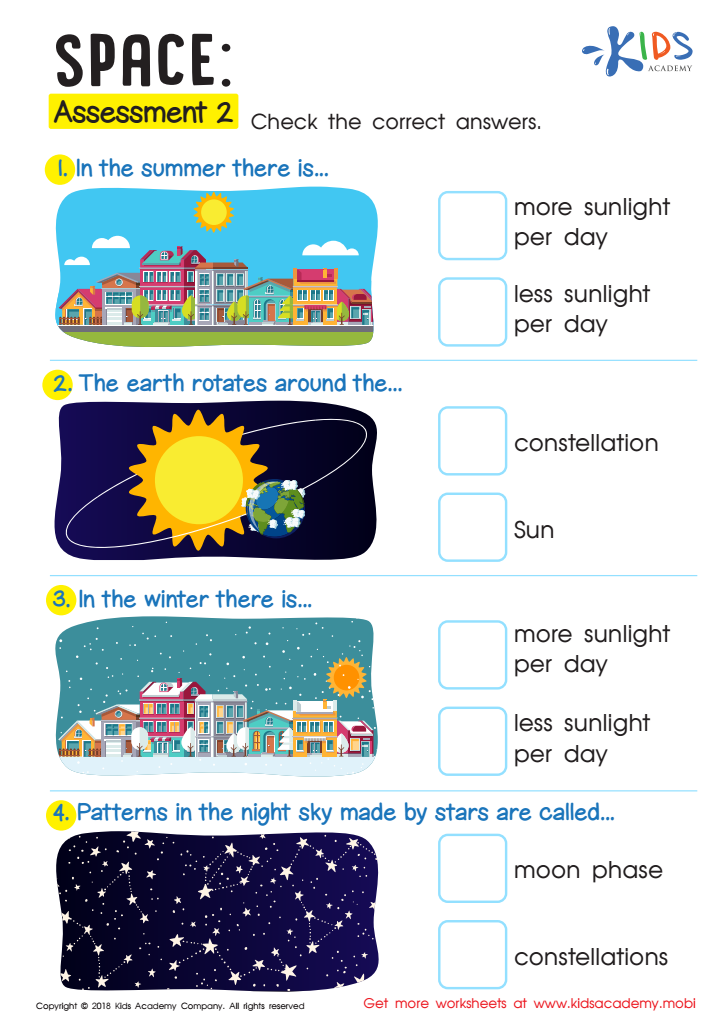
Space: Assessment 2 Worksheet







Identifying animals through hands-on activities and science exploration is crucial for children aged 6-8, as it fosters essential skills and a deeper understanding of the world around them. At this developmental stage, children are naturally curious and eager to learn about their environment. Engaging them in identifying animals enhances critical thinking, observation, and classification skills. It encourages them to ask questions and seek answers, laying the foundation for scientific inquiry.
Moreover, understanding animals nurtures empathy and respect for living creatures, promoting responsible attitudes towards wildlife and the environment. By recognizing different species and their habitats, children can appreciate biodiversity and its significance in maintaining ecological balance.
Additionally, this topic aligns well with various educational standards, making it a vital part of early science curricula. Parents and teachers should integrate animal identification into learning activities, such as nature walks or interactive games, to make science engaging and relatable.
Finally, incorporating animal recognition into discussions helps children develop language skills, as they learn new vocabulary and concepts, enhancing their communication abilities. In essence, by investing in early animal identification education, parents and teachers set the stage for lifelong learning and environmental stewardship.







