Observational skills development Normal Science Worksheets for Ages 6-8
3 filtered results
-
From - To
Enhance your child's observational skills with our engaging Science Worksheets designed specifically for ages 6-8. These tailored activities encourage young learners to explore their environment, sharpen their attention to detail, and develop critical thinking abilities. Through fun and interactive tasks, kids will learn to observe closely, make connections, and communicate their findings effectively. Our Normal Science Worksheets promote hands-on learning, making it easier for children to grasp essential scientific concepts while building confidence in their observational prowess. Perfect for at-home or classroom use, these worksheets provide an exciting way for children to discover the wonders of the world around them!
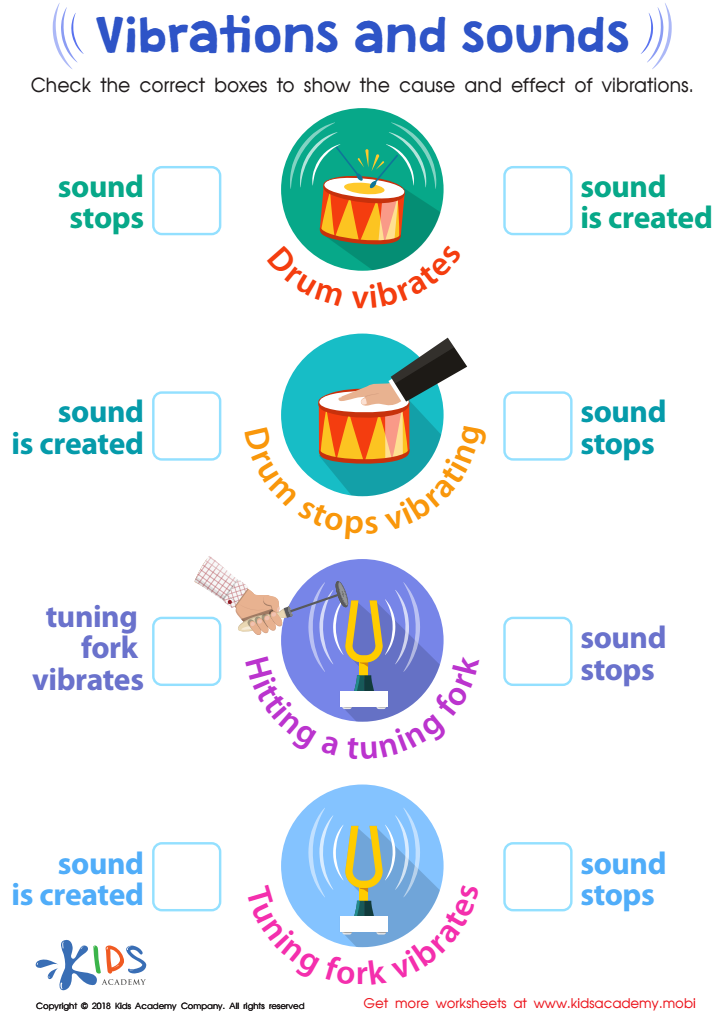
Vibrations and Sounds Worksheet
 Assign to My Students
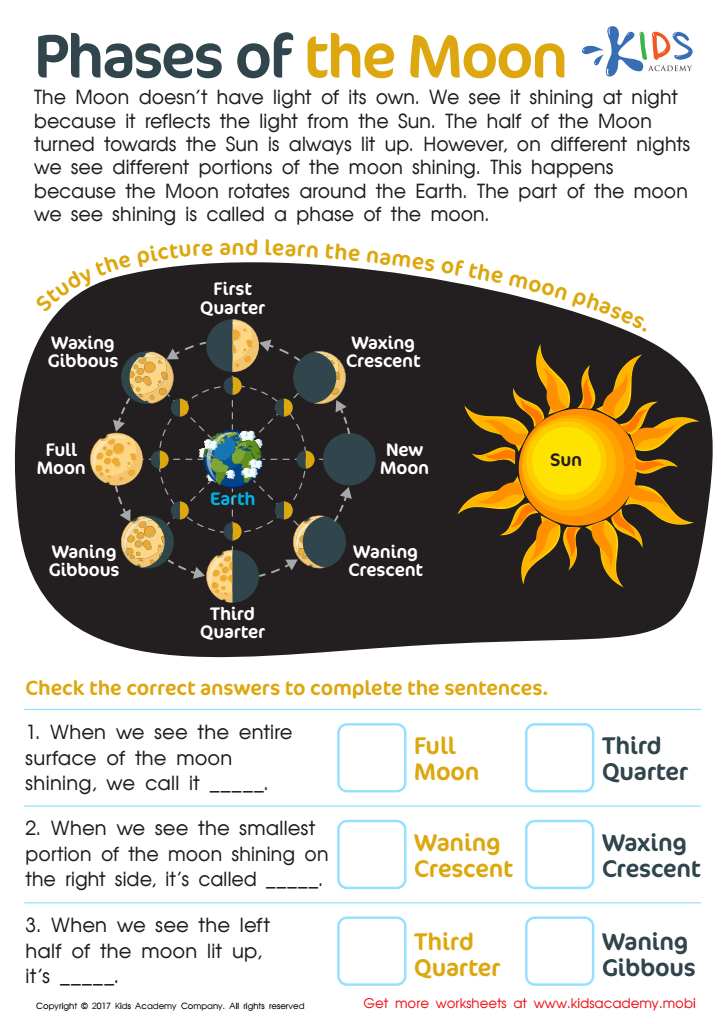
Phases of The Moon Worksheet
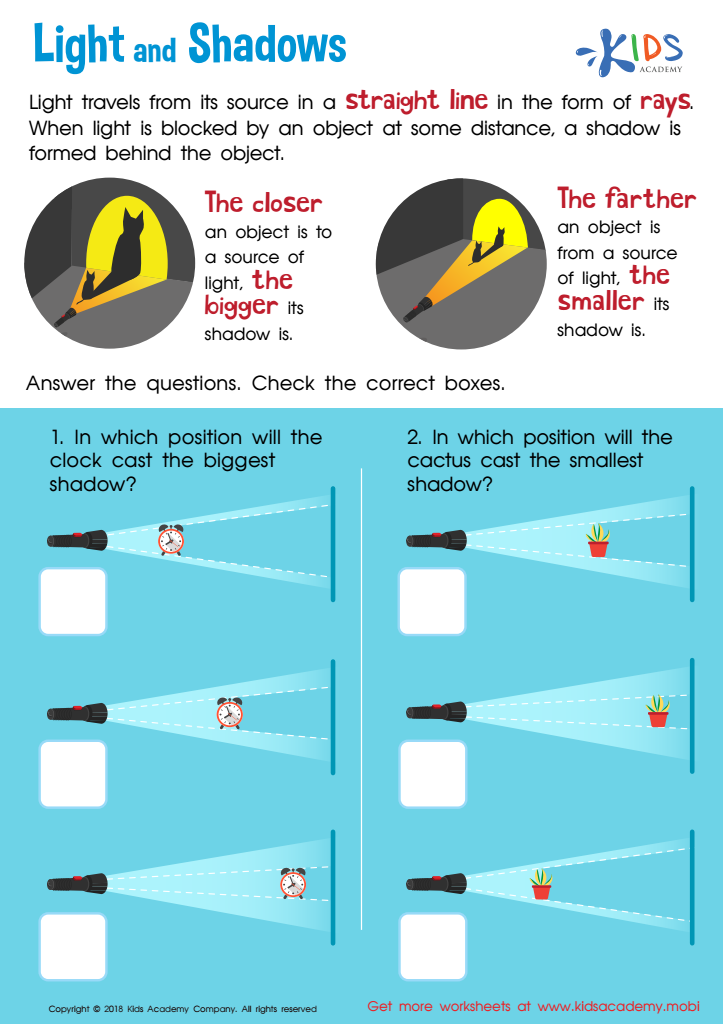
Light and Shadow Worksheet for Grade 3






.jpg)
Observational skills are vital for children aged 6-8, forming a cornerstone of their learning process and cognitive development. At this stage, children are naturally curious and eager to explore their environment. By fostering observational skills, parents and teachers encourage critical thinking and scientific inquiry.
Observational skills enable children to notice details, recognize patterns, and make connections between concepts in natural science. This stage of cognitive development promotes inquiry-based learning, where children ask questions, form hypotheses, and draw conclusions based on their observations. Such skills are essential not only for science education, but also for overall academic success, as they enhance literacy and numeracy skills by encouraging attention to detail.
Moreover, developing these skills enhances emotional intelligence and empathy, as children learn to observe and interpret social cues in their interactions with others. Parents and teachers play a crucial role in facilitating this development by providing hands-on experiences, outdoor exploration, and opportunities for reflective discussions.
Investing in observational skills at this formative age establishes a solid foundation for future learning, fostering a generation of inquisitive, critical thinkers prepared to tackle complex challenges in an increasingly scientific and technological world.







