Reading comprehension Normal Science Worksheets for Ages 6-8 - Page 4
75 filtered results
-
From - To
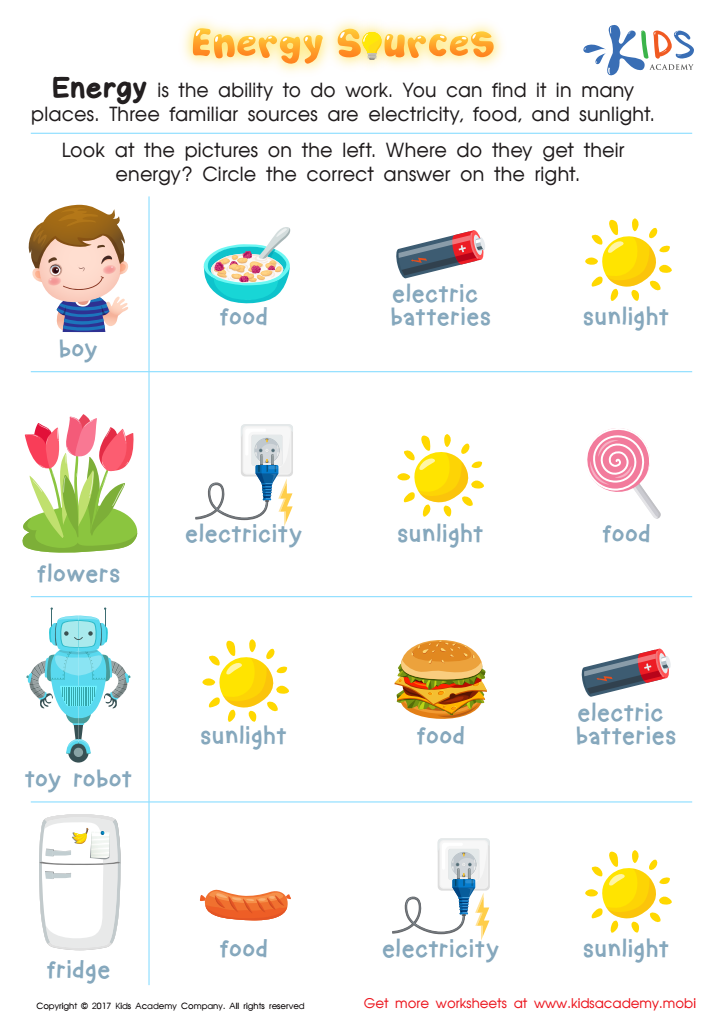
Energy Sources Printable
 Assign to My Students
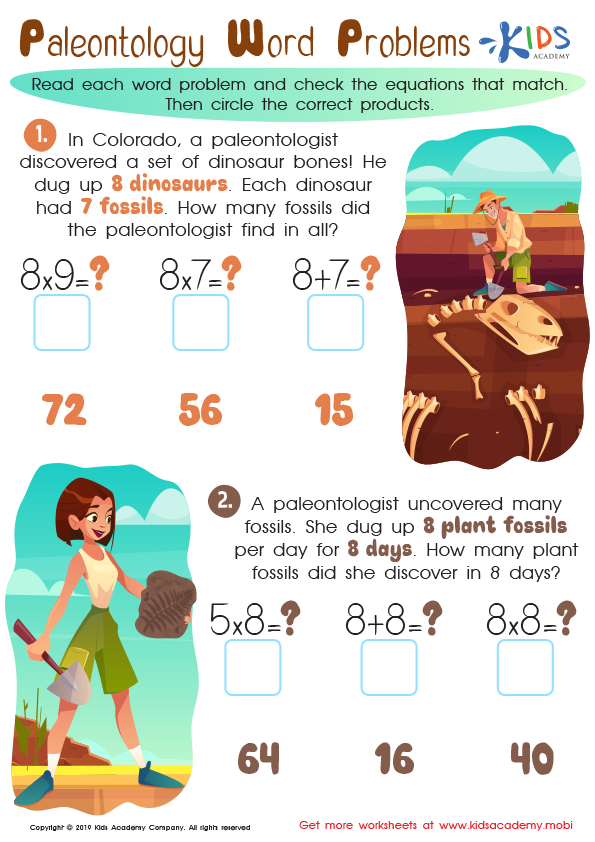
Archeology Word Problems Worksheet







Reading comprehension is a critical skill that lays the foundation for academic success and lifelong learning. For children ages 6-8, understanding what they read in normal science texts is particularly important as it nurtures curiosity about the natural world and develops crucial cognitive abilities.
Firstly, reading comprehension in science helps children acquire fundamental knowledge about their environment. It introduces them to basic scientific concepts and terminology, fostering a sense of curiosity and encouraging exploration. For instance, reading about plants, animals, or simple physical phenomena not only enriches their vocabulary but also enhances their understanding of the world around them.
Secondly, developing strong comprehension skills at this age can have a lasting impact on academic performance. Science often involves complex information and problem-solving, and good comprehension enables children to grasp these concepts better and excel in their studies. It also aids in developing critical thinking and analytical skills. By understanding cause-and-effect relationships and logical sequences presented in science texts, children learn to think more deeply and critically about various topics.
Lastly, strong reading habits promote overall literacy and communication skills. These are essential not only for academic success but for effective communication throughout life. By prioritizing reading comprehension in science for young children, parents and teachers set the stage for a brighter, more knowledgeable future.







