Understanding landforms Normal Science Worksheets for Ages 6-8
3 filtered results
-
From - To
"Understanding Landforms" is a compelling science worksheet collection designed for children ages 6-8. These engaging activities help young learners explore and identify various landforms such as mountains, valleys, plains, and plateaus. Through fun exercises and illustrations, kids will gain a solid foundation in geography while enhancing their observation and critical-thinking skills. Ideal for home or classroom use, these worksheets make learning about Earth's diverse landscapes both educational and enjoyable. Equip your child or students with the knowledge to appreciate and understand our planet's unique features through interactive and age-appropriate science lessons.
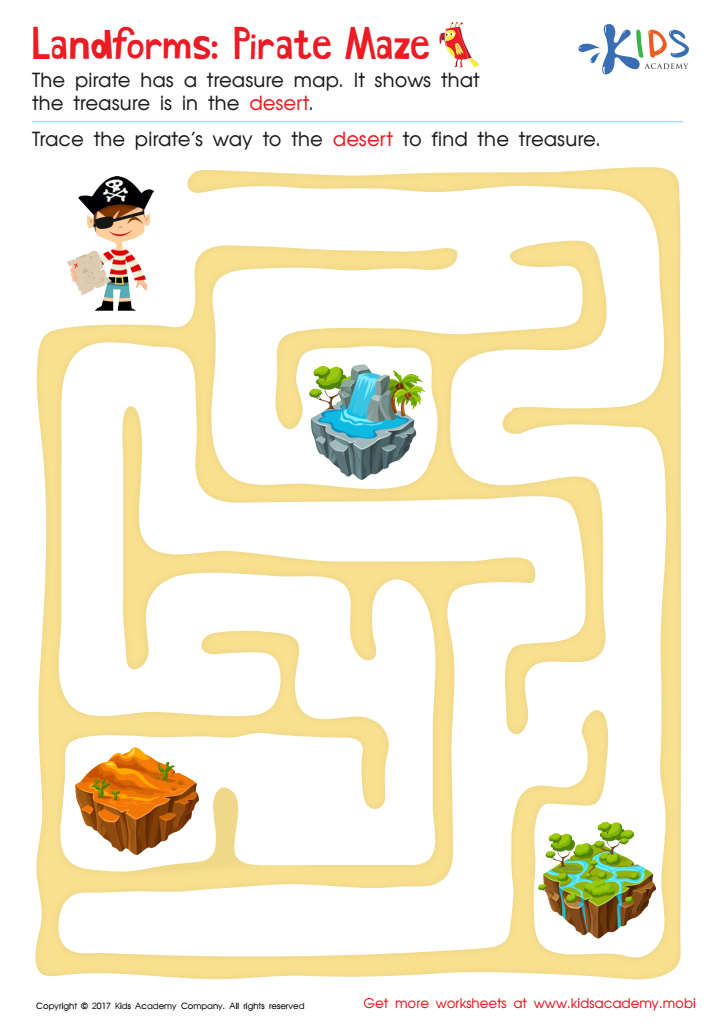
Landforms: Pirate Maze Printable
 Assign to My Students
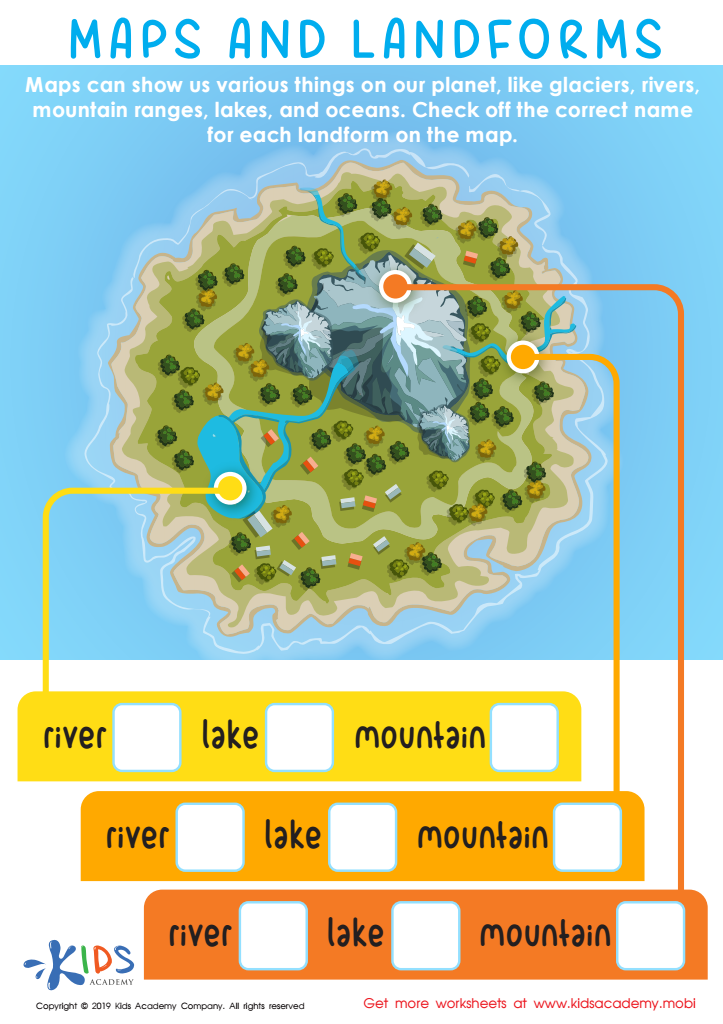
Maps and Landforms Worksheet
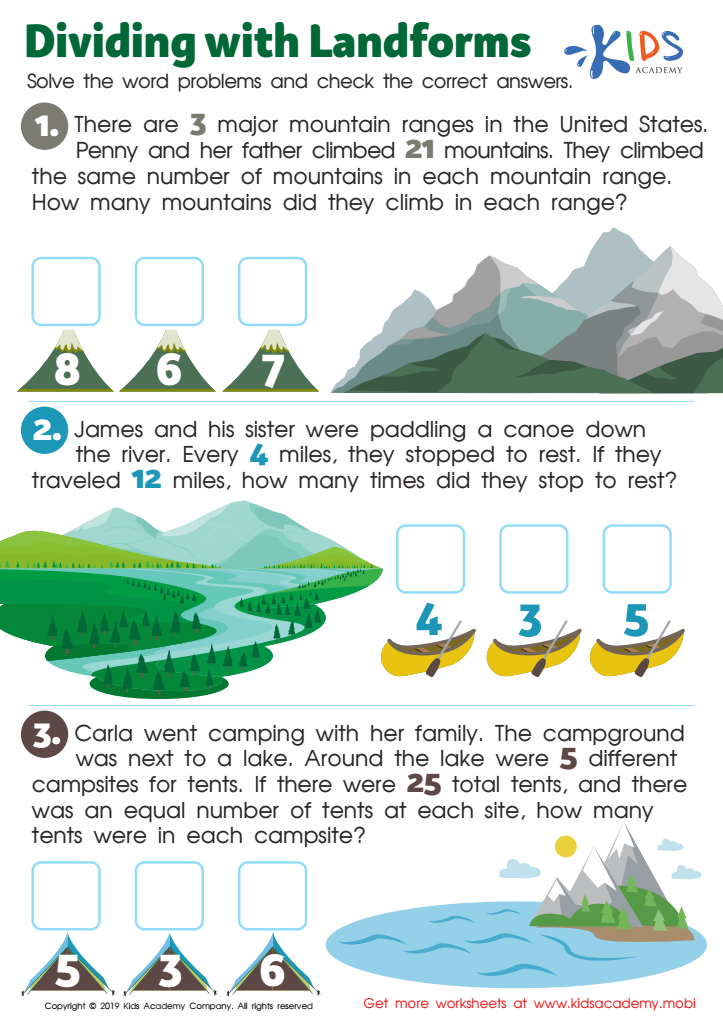
Dividing with Landforms








Understanding landforms is vital for young learners as it lays the foundation for broader geographic, scientific, and environmental knowledge. For children aged 6-8, recognizing different landforms such as mountains, valleys, rivers, and plains sparks curiosity about the world around them. This foundational knowledge supports cognitive development by encouraging observational skills and critical thinking.
Parents and teachers should care because learning about landforms enhances students’ spatial awareness and map-reading skills, crucial components of geographic literacy. This awareness helps children better understand Earth’s physical features and their significance in everyday life—for example, recognizing why certain areas are prone to earthquakes or why rivers are important for human settlements.
Studying landforms encourages interdisciplinary learning. It intertwines basic concepts of geology, ecology, and Earth science with subjects such as history or social studies, where natural landscapes often influence human activities and cultural development. Additionally, familiarizing students with these natural features fosters an appreciation for the environment, promoting stewardship and responsible behavior towards nature.
In sum, grasping the basics of landforms equips children with essential knowledge that extends well into various academic disciplines, while also instilling a sense of wonder and respect for the natural world. Engaging young minds with these concepts can set them on a path of lifelong learning and environmental consciousness.







