
Enhancing observation skills Normal Physical Science Worksheets for Ages 6-8
3 filtered results
Difficulty Level
Grade
Age
-
From - To
Subject
Activity
Standards
Enhance your child's observation skills with our engaging Normal Physical Science Worksheets designed for ages 6-8. This interactive resource fosters critical thinking and curiosity as children explore essential scientific concepts. Through fun activities and hands-on exercises, young learners will practice keen observation, data collection, and analytical thinking. Our worksheets are crafted to align with early grade curriculum standards, ensuring kids build a strong foundation in physical science while developing integral cognitive skills. Discover a world of knowledge where children can observe, question, and understand their environment, making learning both enjoyable and educational. Perfect for home or classroom use!
Favorites
With answer key
Interactive
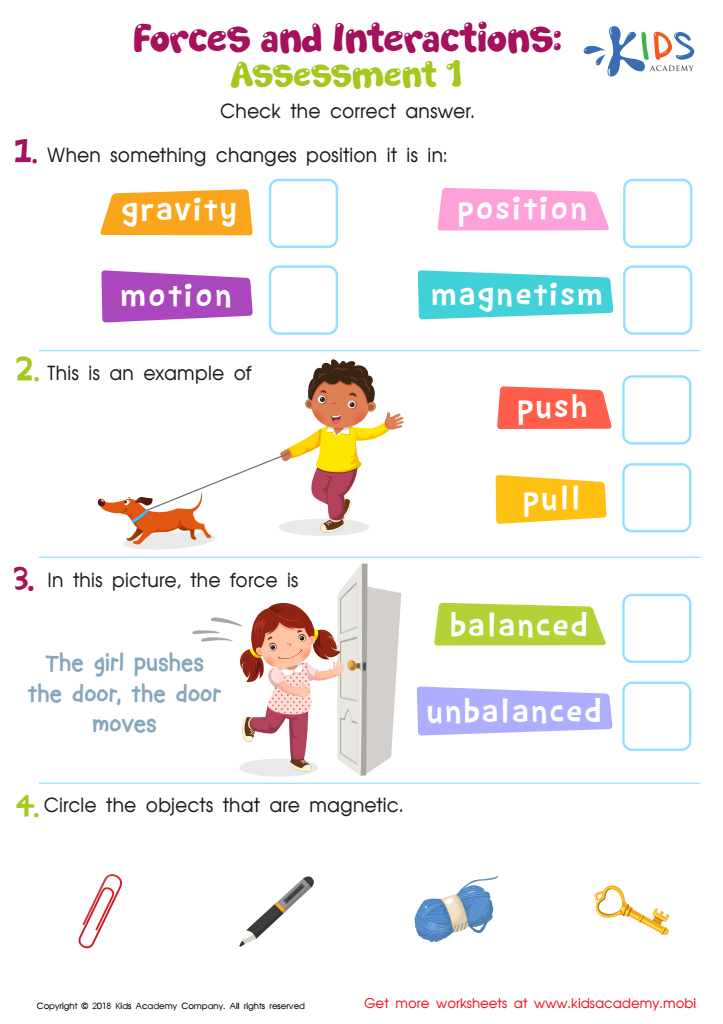
Forces and Interactions Printable
Test your child's physics know-how with this vibrant forces and interactions printable worksheet! Kids can assess their understanding of the different types of forces while they complete it. Read each example and check the boxes to show what they know!
 Assign to My Students
Forces and Interactions Printable
Worksheet
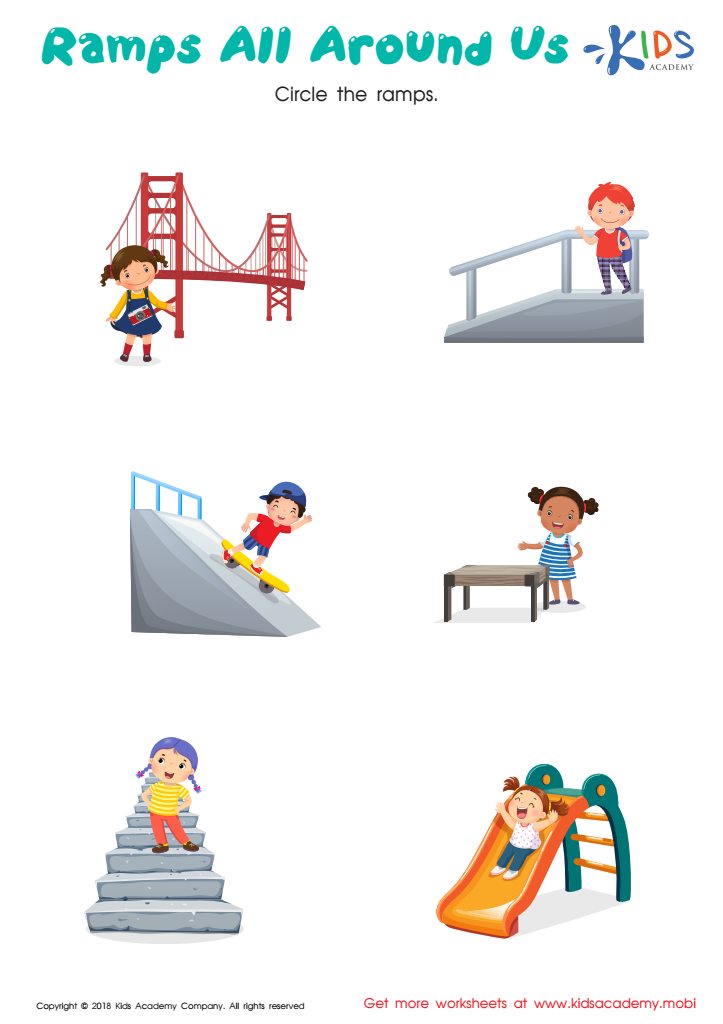
Ramps All Around us Worksheet
Ask your kids if they know what ramps are, then have them give you examples of places they've seen them. This worksheet has pictures of ramps - have your child identify and circle them.
Ramps All Around us Worksheet
Worksheet
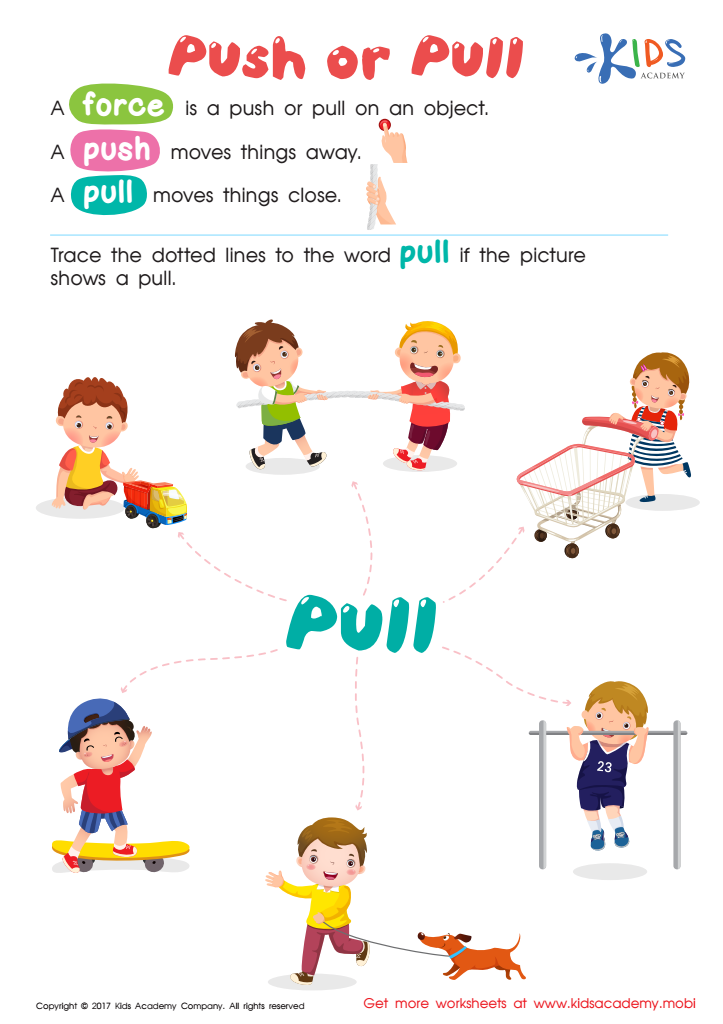
Pull or Push Worksheet
With this fun worksheet, they'll explore physics by sorting objects into categories according to their mode of motion. It's a great way to get them interested in science.
Pull or Push Worksheet
Worksheet
Join Kids Academy for Free
Who is primarily going to use this learning content?








Enhancing observation skills in young children, particularly in the context of Normal Physical Science, is crucial for several reasons. Firstly, these skills are foundational for scientific inquiry; children learn to notice details, ask questions, and make predictions based on their observations. At ages 6-8, their curiosity is at a peak, making this an ideal time to cultivate critical thinking and analytical skills through structured observation.
Parents and teachers should care about fostering these skills because they lay the groundwork for a child's lifelong learning journey. Developing observation skills not only enhances a child's understanding of the natural world—such as basic physical science concepts like gravity, motion, and properties of materials—but also encourages them to engage actively in their environment.
Furthermore, strong observational skills contribute to various competencies including attention to detail, patience, and problem-solving abilities. By linking observations to scientific concepts in relatable activities, educators can help children make connections to real-life situations, fueling their interest in learning. This early engagement in scientific thought promotes a deeper understanding of science while nurturing creativity and collaboration, empowering children to become inquisitive individuals ready to tackle future challenges in any field.







