Understanding magnetism Normal Physical Science Worksheets for Ages 6-8
4 filtered results
-
From - To
Discover the fascinating world of magnetism with our "Understanding Magnetism" Normal Physical Science Worksheets designed for children aged 6-8. These engaging and educational resources introduce young learners to the basic principles of magnetism, including magnetic poles, attraction, and repulsion. Featuring vibrant illustrations and interactive activities, these worksheets encourage hands-on learning and help develop critical thinking skills. Perfect for both home and classroom use, our worksheets provide fun challenges that foster curiosity and inspire a love for science. Explore magnetism through exciting experiments and relatable examples, making learning a memorable experience for your child. Start your scientific journey today!
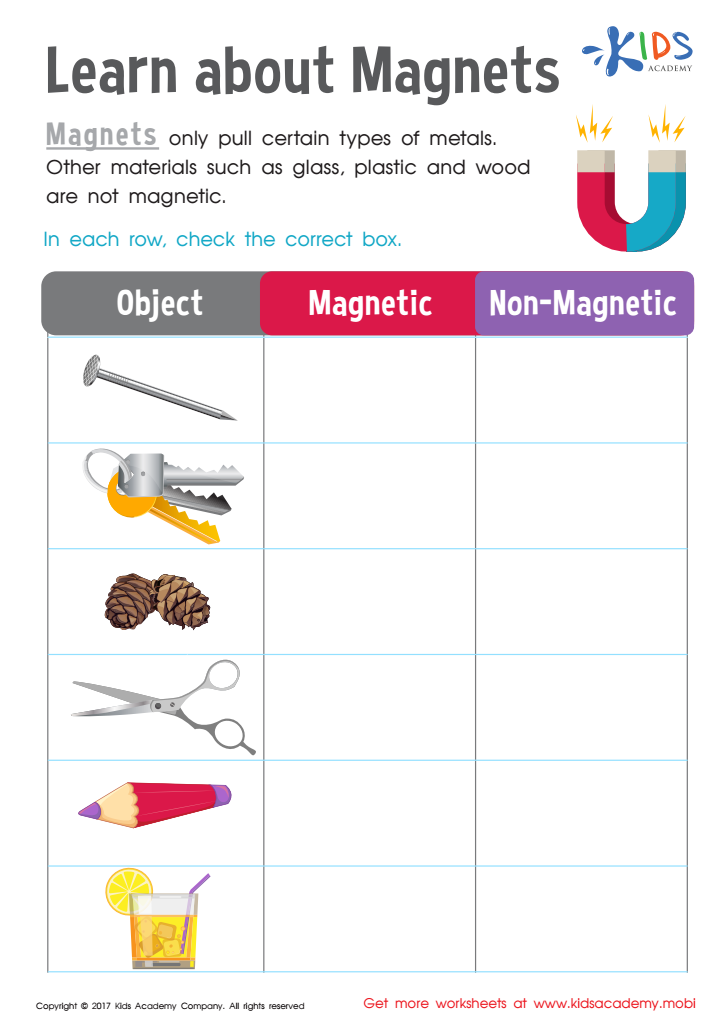
Magnetic Or Not Worksheet
 Assign to My Students
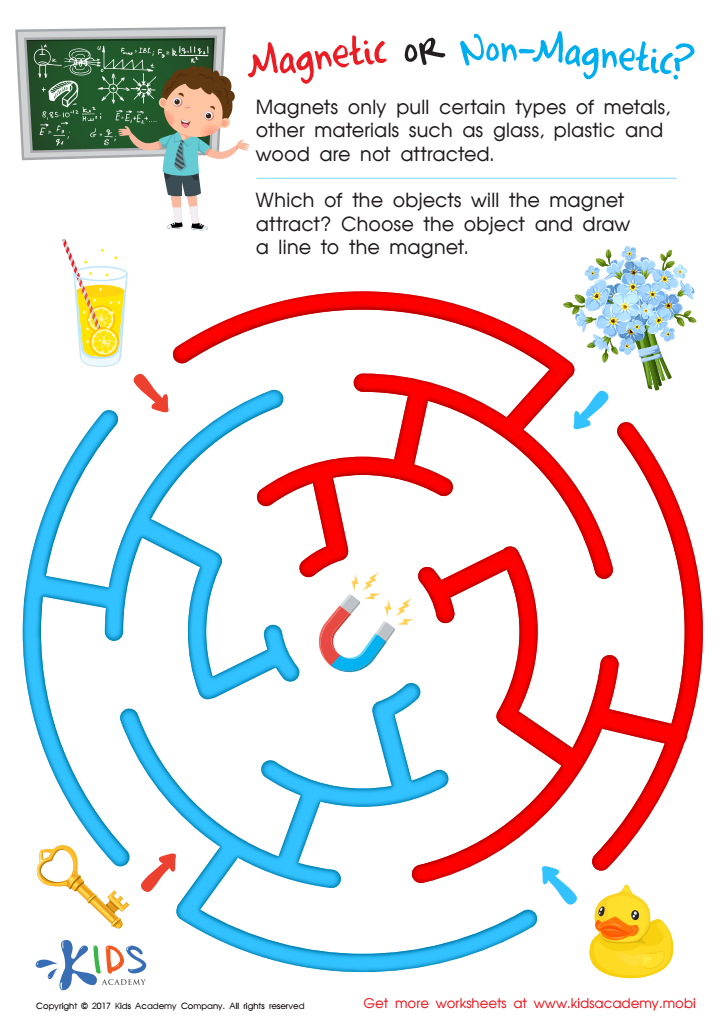
Magnetic or Non–Magnetic Worksheet
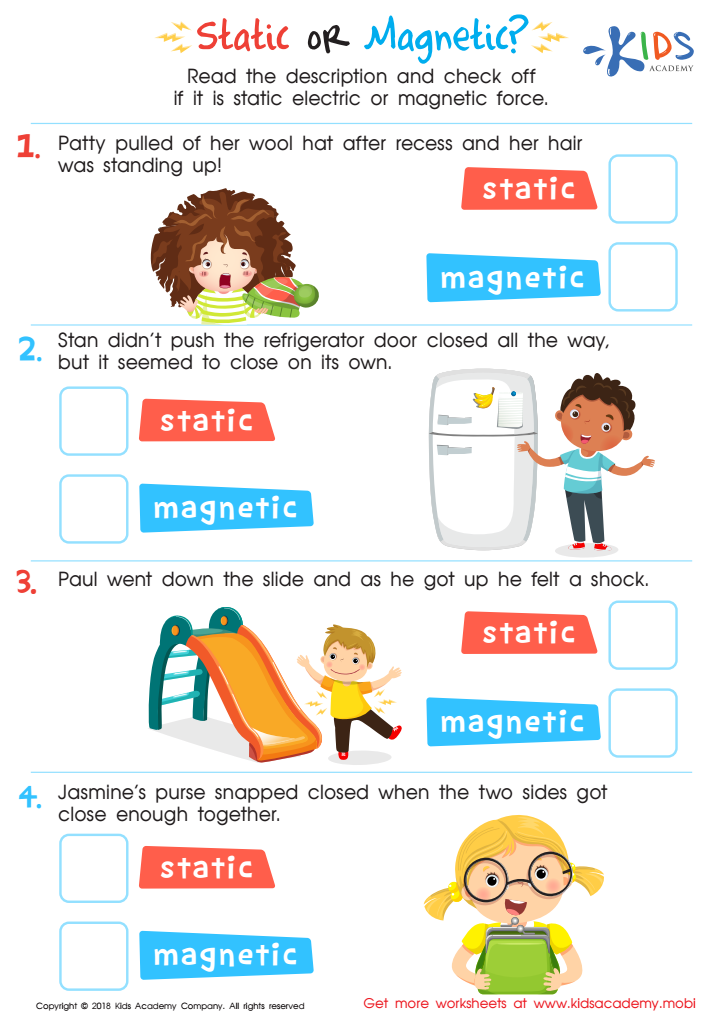
Static or Magnetic Printable Worksheet
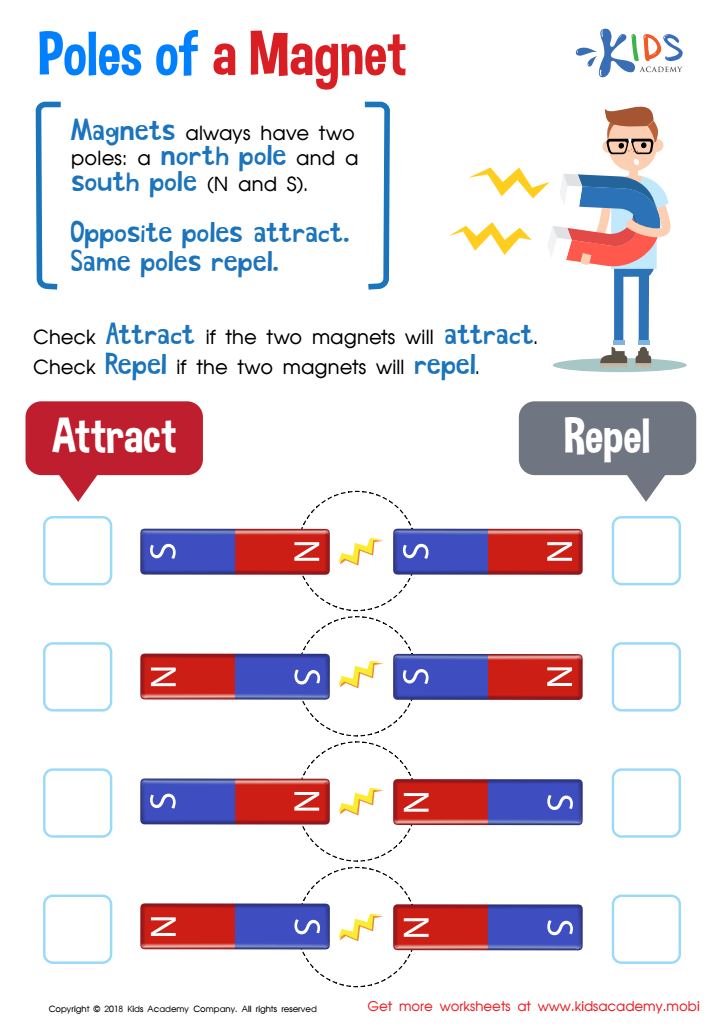
Magnet Poles Attract or Repel Worksheet







Understanding magnetism is essential for children aged 6-8 as it lays the foundation for exploring scientific concepts and fosters critical thinking. At this age, children are naturally curious and eager to learn about the world around them. Introducing magnetism through hands-on activities can enhance their observational skills and spark their interest in physical science.
Magnetism is not just an abstract concept; it has practical applications in everyday life. By teaching children about magnets, parents and teachers can help them identify magnetic objects, understand how compasses work, and explore the principles behind electric devices. This knowledge cultivates a sense of wonder and encourages them to ask questions about the forces that govern our world.
Moreover, understanding magnetism promotes problem-solving skills. Engaging students in experiments, such as creating simple magnetic games or exploring magnetic fields, helps develop their analytical thinking and fosters teamwork in collaborative settings. Additionally, early exposure to science can inspire future interest in STEM fields, which are critical for contemporary job markets.
Incorporating magnetism in early education can create a strong foundation in scientific literacy, nurturing curious minds and preparing them for more advanced concepts in the future.







