
Cultural awareness Normal Governance and Civics Worksheets for Ages 6-8
3 filtered results
Difficulty Level
Grade
Age
-
From - To
Subject
Activity
Standards
Enhance your child's understanding of the world with our engaging Cultural Awareness, Normal Governance, and Civics Worksheets for ages 6-8. Our expertly designed activities help young learners appreciate diverse cultures, understand basic governance principles, and develop essential civics skills. These worksheets foster critical thinking, empathy, and social awareness, helping children recognize the importance of community and global citizenship. Perfect for classroom use or at-home enrichment, our resources offer fun, interactive ways to introduce kids to the values of tolerance, responsibility, and cooperation. Let your child discover the joy of learning with our comprehensive Social Studies worksheets.
Favorites
With answer key
Interactive
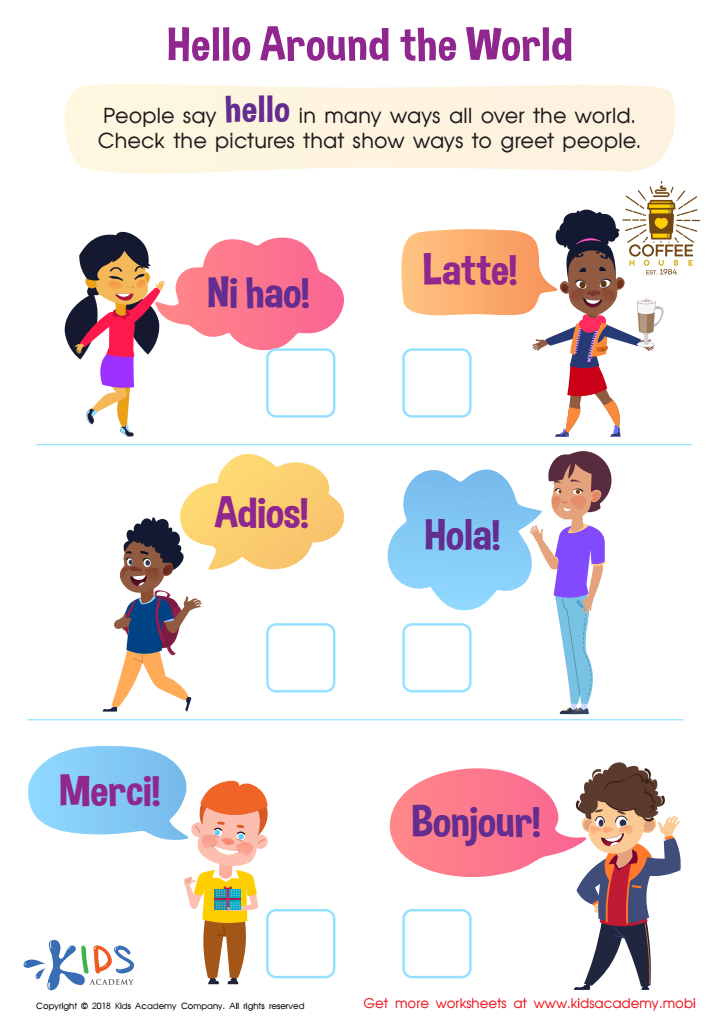
Hello Around the World Worksheet
This fun and cheery worksheet helps kids explore different cultures and how people greet each other around the world. With colorful pictures and clues, they'll check off greetings from different countries and learn more about the world.
 Assign to My Students
Hello Around the World Worksheet
Worksheet
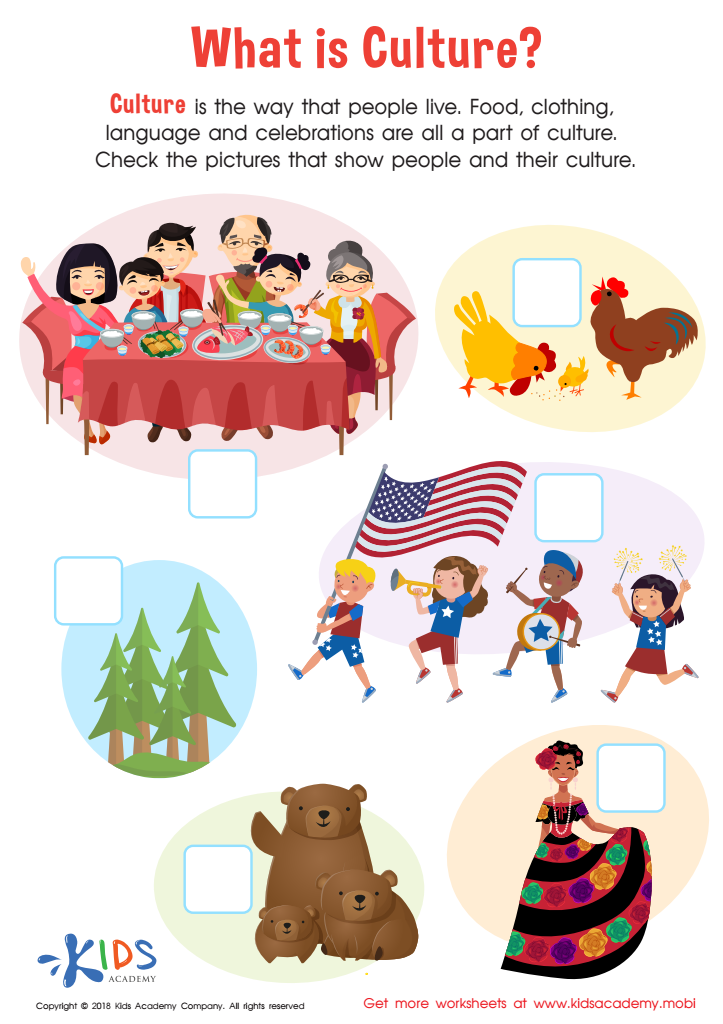
What Is Culture? Worksheet
Before beginning, talk to your kids about different cultures and how they may differ from yours. Explain that culture is the way of life and includes food, clothing, language and celebrations. Ask if they know any friends or classmates with a different culture and see if they can tell you about it. Then, help them look through this printout and check the pictures that show people and their culture.
What Is Culture? Worksheet
Worksheet
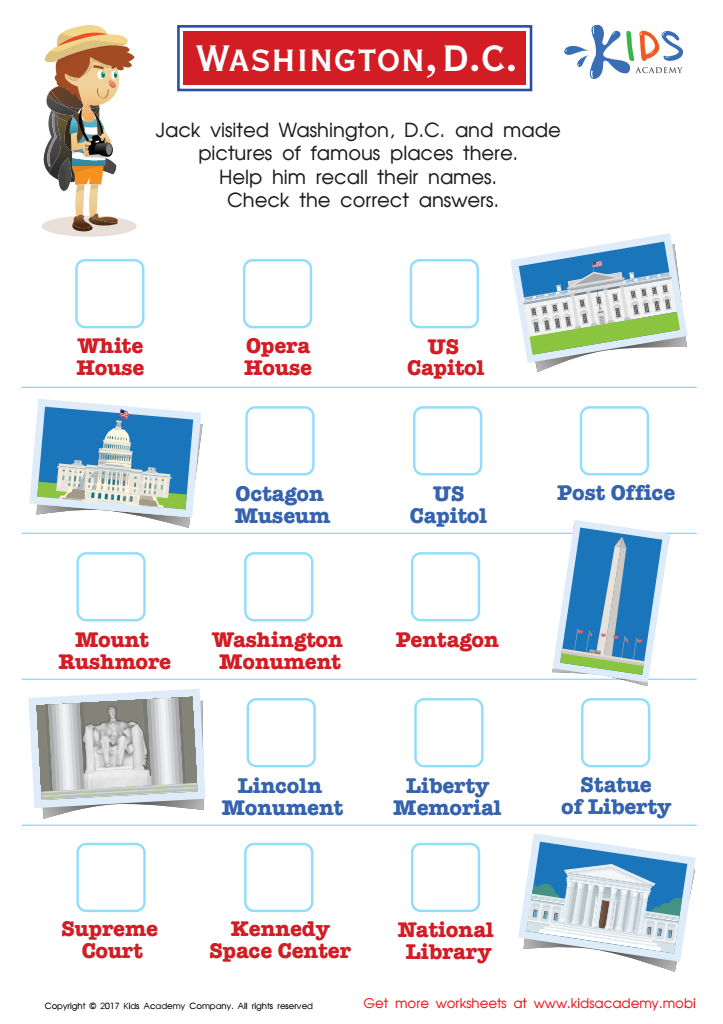
Washington D.C. Printable Worksheet
Join Jack on an adventure to explore the iconic attractions of Washington, D.C.! This printable worksheet helps kids learn about and recognize buildings and monuments that form part of the nation's history. It's a fun way to introduce children to the importance of these landmarks.
Washington D.C. Printable Worksheet
Worksheet
Join Kids Academy for Free
Who is primarily going to use this learning content?


Parents and teachers should place a strong emphasis on cultural awareness, norms of governance, and civics in early education for children ages 6 to 8 for several compelling reasons. Firstly, these early years are crucial for setting the foundation of a child's social and moral development. Introducing cultural awareness helps children appreciate diversity and fosters empathy, teaching them to respect and value differences in race, religion, and lifestyle from a young age. This cultivates a sense of inclusion and combats prejudices, making them open-minded individuals.
Secondly, understanding the basics of governance and civics equips children with knowledge about how communities function and the importance of rules and responsibilities. Knowing why we have leaders, laws, and what roles they serve helps children grasp the structure of their own communities and their place within them. This understanding of shared social responsibilities enhances the child's sense of belonging and citizenship.
Finally, teaching these concepts promotes critical thinking and cooperative skills. Children learn to question, consider multiple viewpoints, and participate in discussions about fairness and community well-being. These capabilities are essential life skills that not only benefit the individual child but also contribute to more cohesive, culturally-rich, and just societies. Therefore, neglecting these areas would be a disservice to their growth and to the broader community.








