
Letter Tracing Practice Normal Alphabet Worksheets for Ages 6-9
4 filtered results
Difficulty Level
Grade
Age
-
From - To
Subject
Activity
Standards
Help your child master the fundamentals of writing with our engaging Letter Tracing Practice Worksheets, specifically designed for ages 6-9. These printable resources provide a fun and interactive way for young learners to practice tracing the normal alphabet. Each worksheet features clear, bold letters that guide children in developing their handwriting skills, improving letter recognition, and enhancing fine motor abilities. Ideal for home or classroom use, our worksheets foster independent learning and boost confidence in writing. Download our letter tracing worksheets today and give your child a head start on their literacy journey! Perfect for early educators and parents alike!
Favorites
With answer key
Interactive
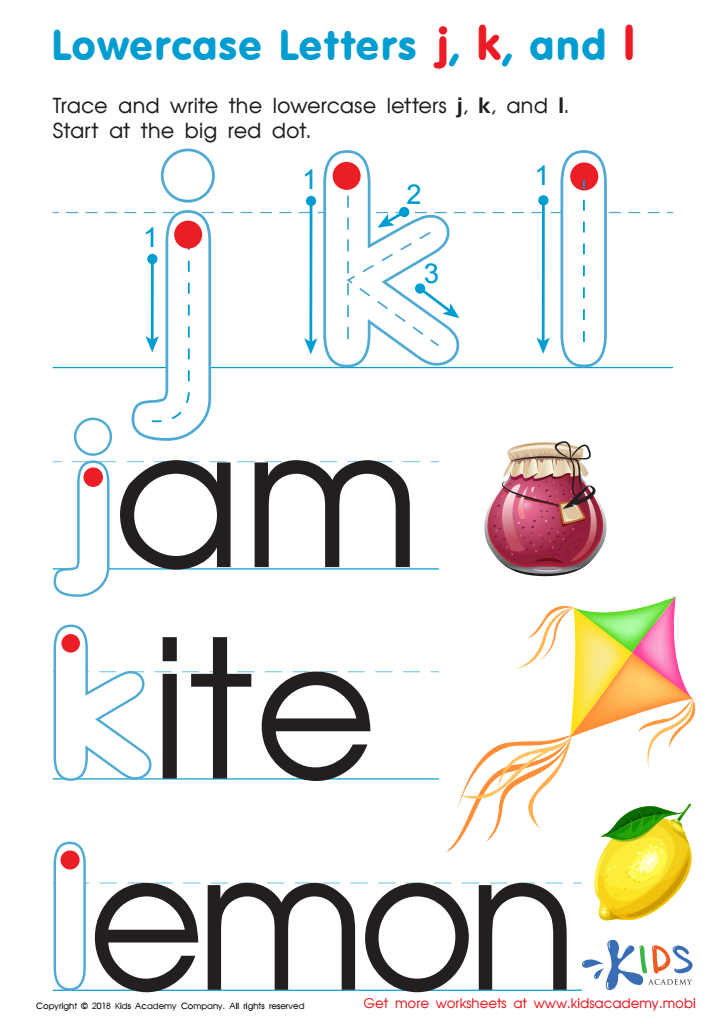
Lowercase Letters j k l Worksheet
Teach your child the difference between uppercase and lowercase letters. Have them trace and write the lowercase letters j, k, and l, starting at the red dot. Guide your child's hand to form the letters correctly.
Lowercase Letters j k l Worksheet
Worksheet
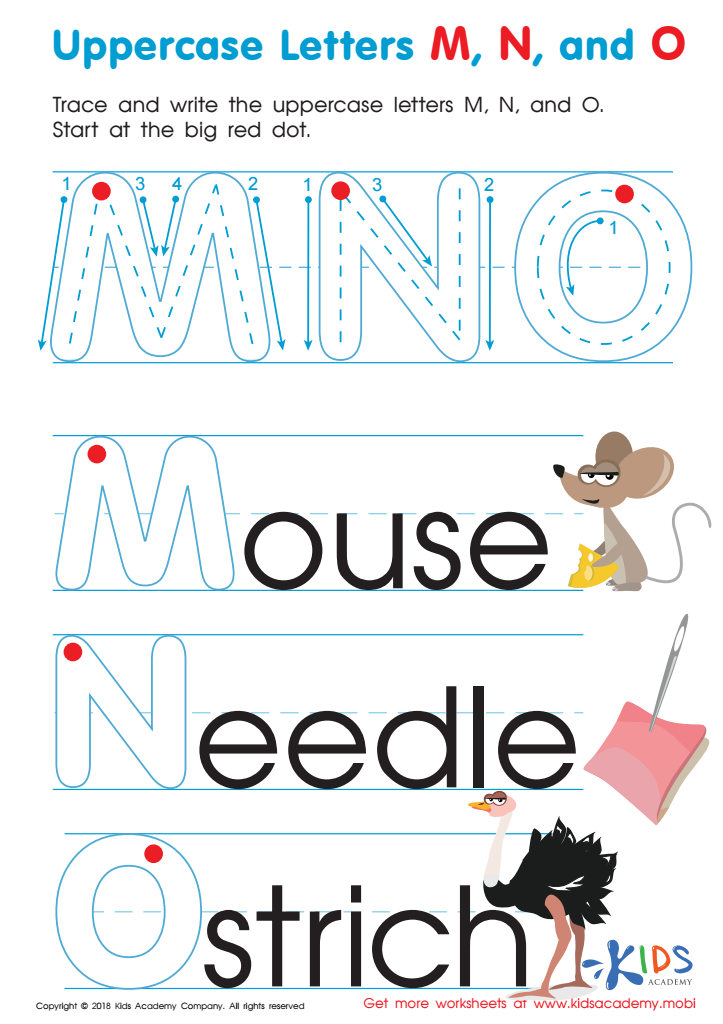
Uppercase Letters M, N, and O Worksheet
Download our easy-to-understand worksheet to help kids write M and N with ease! They'll trace dotted lines and follow arrows as they fill in the letters using a big red dot as a guide. The cute graphics will help them remember sounds too! Get your child writing quickly and confidently with this fun activity.
Uppercase Letters M, N, and O Worksheet
Worksheet
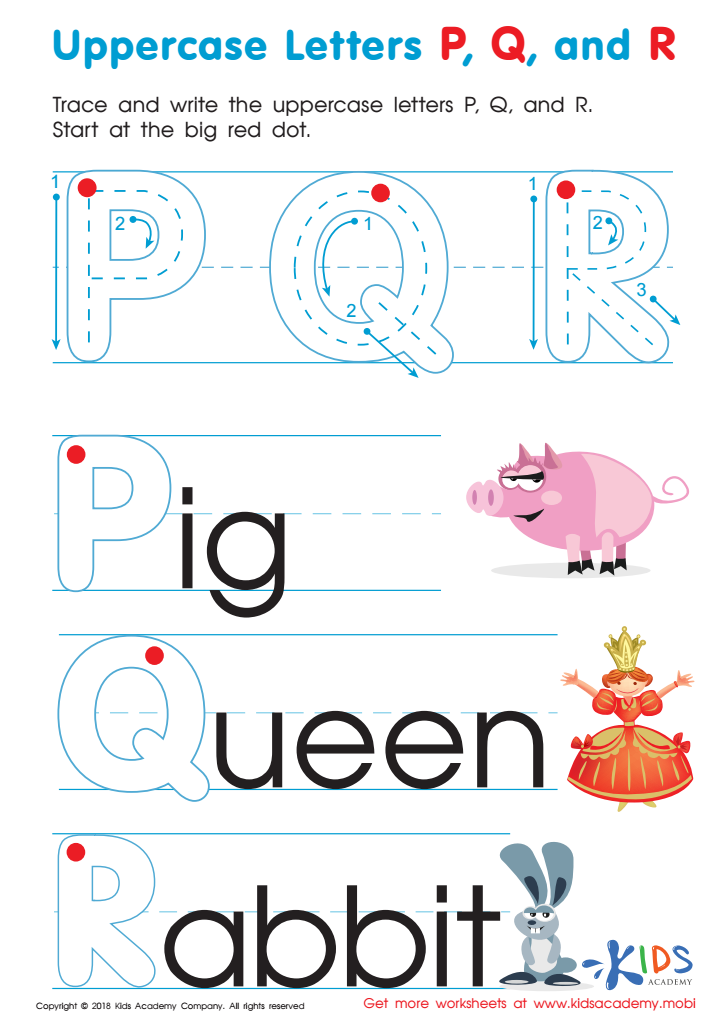
Uppercase Letters P, Q, and R Worksheet
Cute images of a pig, queen and rabbit make it fun to learn letter sounds. Follow the arrows to learn the strokes, then trace each letter from the big red dot. Perfect for kids to learn how to read and write P, Q, and R!
Uppercase Letters P, Q, and R Worksheet
Worksheet

Letter F Coloring Sheet
Coloring pages help kids learn to recognize letters and sounds. Our "F" page has kids color a fish and a fan. It's a great way to introduce them to the letter "F" using words they already know.
Download (PDF)
 Assign to My Students
Assign to My Students
Letter F Coloring Sheet
Worksheet
Join Kids Academy for Free
Who is primarily going to use this learning content?






Letter tracing practice for ages 6-9 is essential for developing foundational literacy skills in young learners. During this critical stage, children refine their fine motor skills, coordination, and handwriting, all of which are crucial for effective communication. Tracing letters helps children understand letter shapes and their correct formations, fostering confidence in writing.
Additionally, letter tracing enhances cognitive development by reinforcing letter recognition and the connection between phonetics and letters. This practice can support early reading readiness, as children become better acquainted with the alphabet and its sounds. For parents and teachers, consistent tracing activities integrate learning within a fun context, aiding children in establishing a positive attitude toward writing and language.
Moreover, this practice can serve as a precursor to more complex tasks such as spelling and sentence construction, providing a solid foundation for future literacy-related skills. Engaging children in their learning process, through hands-on tracing activities, nurtures their curiosity and promotes a love for learning.
Overall, fostering letter tracing practices encourages a holistic approach to education, addressing the developmental needs of children while making the learning experience enjoyable and effective. Prioritizing this skill set is an investment in their lifelong learning journey.







