Uppercase identification Normal Alphabet Worksheets for Ages 6-9
5 filtered results
-
From - To
Enhance your child's literacy skills with our Uppercase Identification Normal Alphabet Worksheets, specially designed for ages 6-9. These engaging activities focus on recognizing and distinguishing uppercase letters, laying a solid foundation for reading and writing. Our worksheets feature colorful illustrations and interactive exercises that make learning fun and captivating. Perfect for classroom or at-home practice, these resources help children boost their confidence and proficiency in the alphabet. Each worksheet reinforces letter identification through varied exercises, fostering early learning in a playful way. Equip your young learners with essential skills that will last a lifetime with our thoughtfully crafted uppercase identification worksheets!
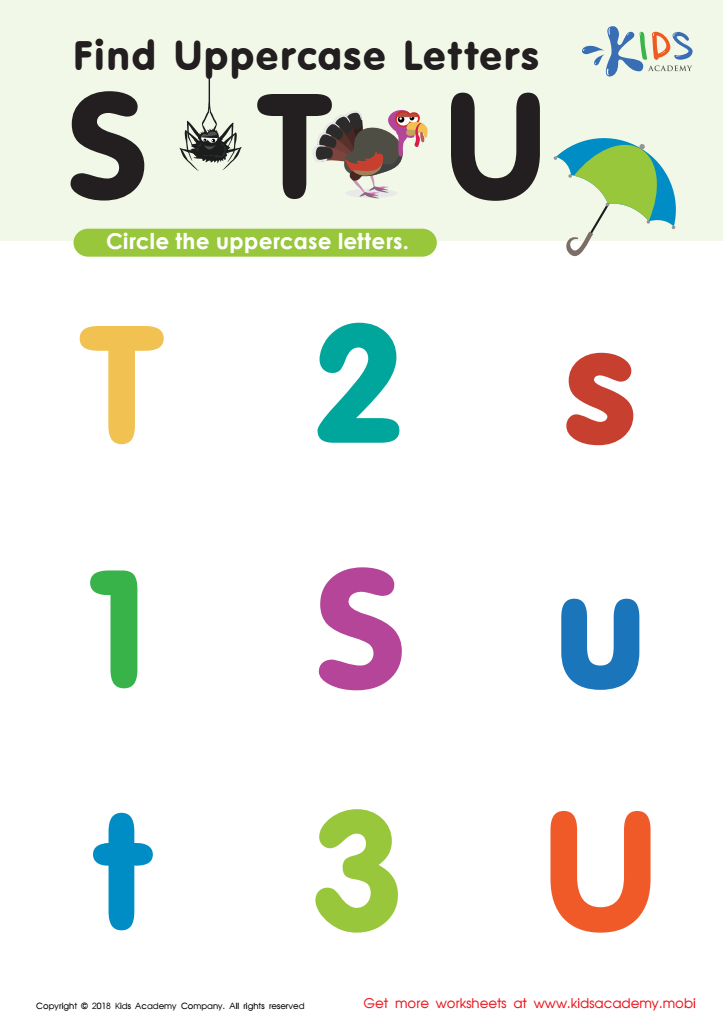
Find Uppercase Letters Worksheet
 Assign to My Students
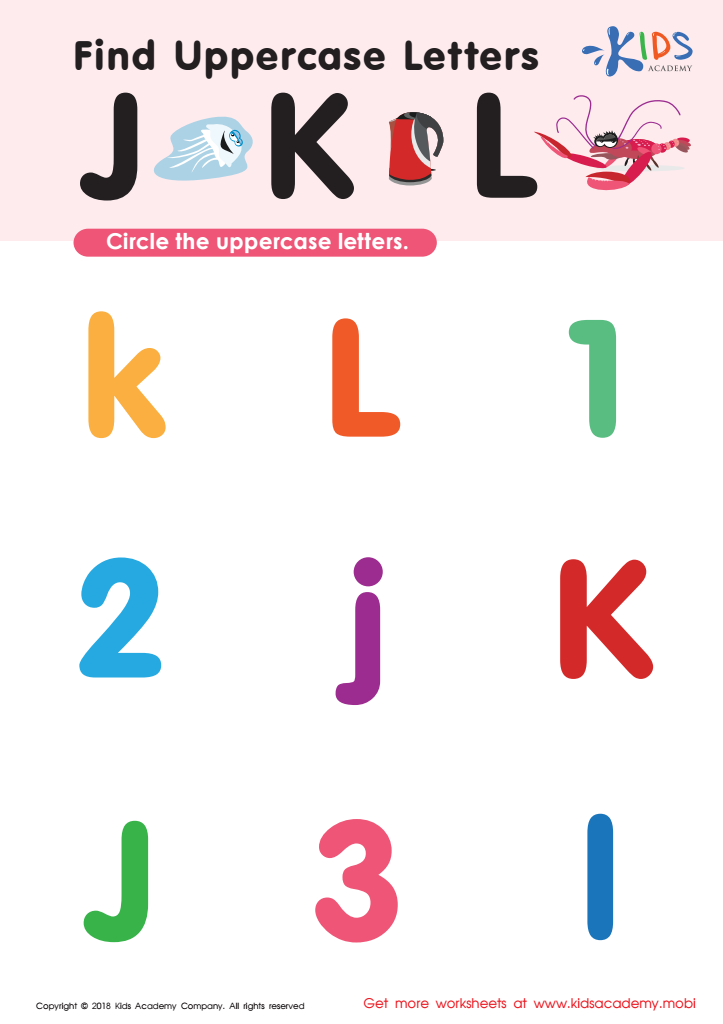
Find Uppercase Letters J, K, and L Worksheet
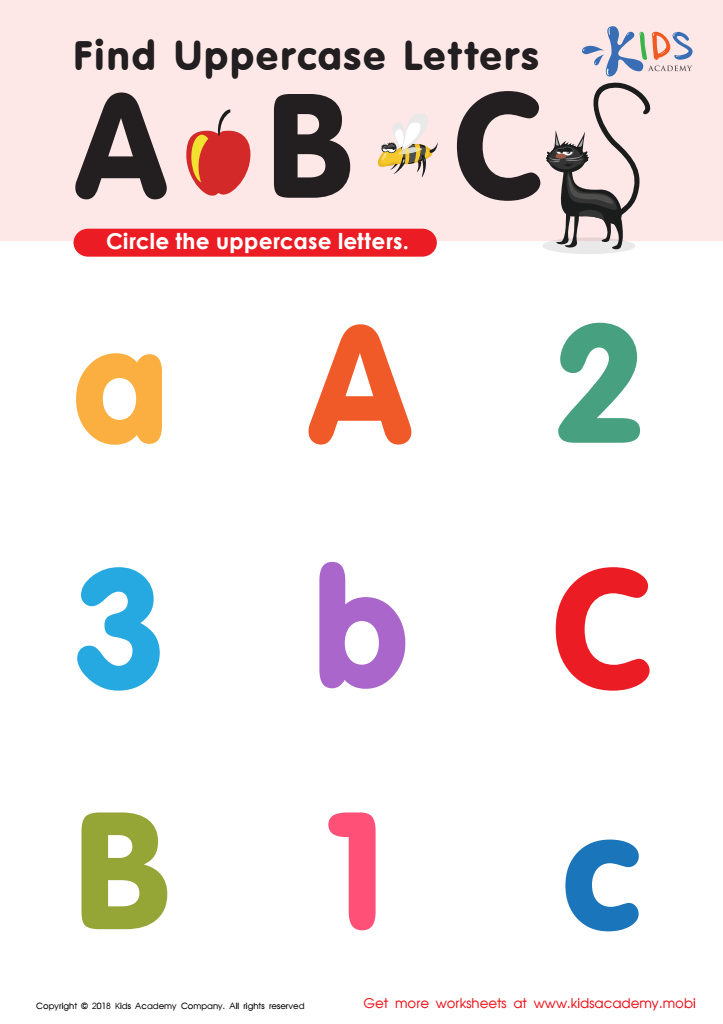
Find Uppercase Letters A, B, and C Worksheet
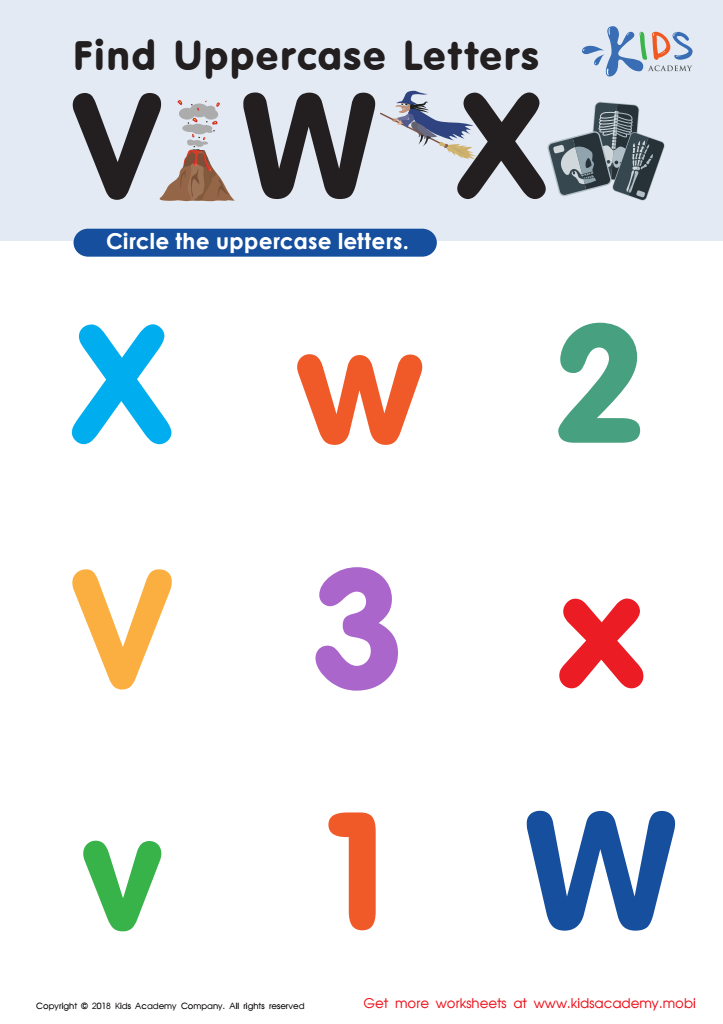
Find Uppercase Letters V, W, X Worksheet
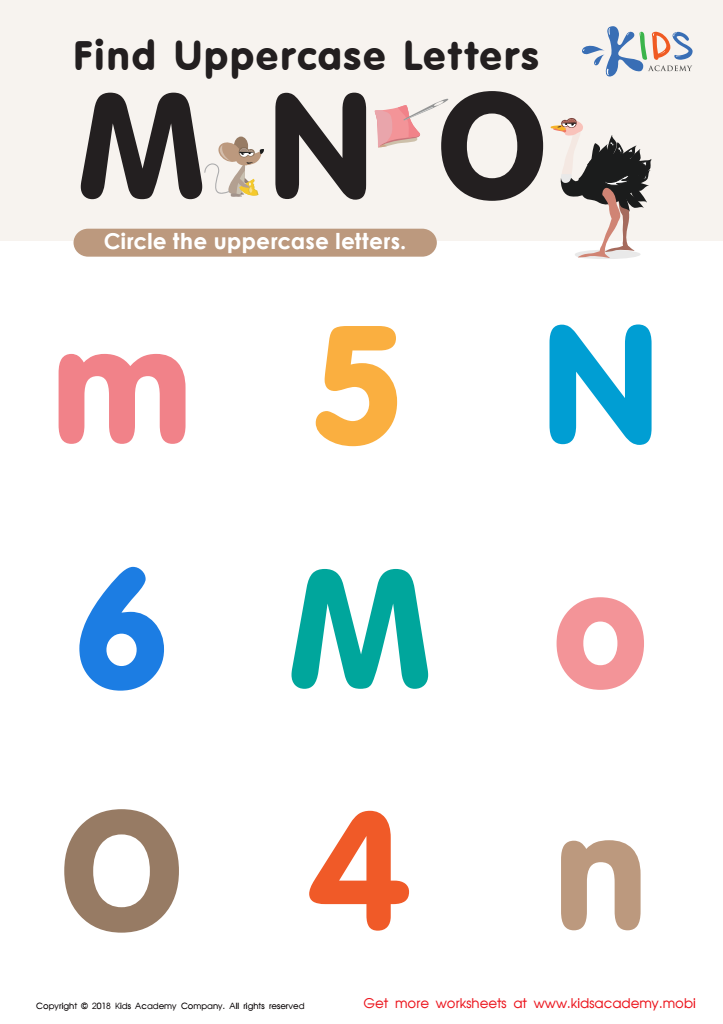
Find Uppercase Letters M, N, and O Worksheet





Uppercase letter identification is a foundational skill for children aged 6-9, making it crucial for parents and teachers to pay attention to this aspect of literacy development. Mastering uppercase letters strengthens children's understanding of the alphabet, enabling them to recognize and differentiate these letters in print. This recognition is essential for reading proficiency, as books, signs, and classroom materials often begin sentences with uppercase letters.
Furthermore, uppercase letters play a significant role in name recognition, vocabulary building, and spelling practice. When children learn to identify uppercase letters, they gain confidence in their reading abilities, which motivates them to engage with texts.
Parents and teachers can foster this skill through engaging activities, such as letter games, flashcards, or creative art projects, making learning enjoyable and interactive. Additionally, understanding uppercase letters supports children's writing skills, allowing them to produce legible work and develop their unique handwriting styles.
Ultimately, encouraging uppercase letter identification sets the stage for lifelong literacy skills, paving the way for successful communication and learning in all subject areas. It equips children with essential tools for their academic journey, helping them become competent and confident readers and writers.







