
Alphabet Learning Normal Letter Recognition Worksheets for Ages 6-9
3 filtered results
Difficulty Level
Grade
Age
-
From - To
Subject
Activity
Standards
Enhance your child's letter recognition skills with our Alphabet Learning Normal Letter Recognition Worksheets designed for ages 6-9! These engaging and interactive worksheets provide a fun way for young learners to identify, read, and write lowercase and uppercase letters. By completing a variety of activities, such as tracing, matching, and coloring, children will strengthen their alphabet skills while boosting their confidence and literacy foundation. These worksheets cater to various learning styles and help children build essential pre-reading abilities. Ideal for classroom activities or home practice, our resources will make learning the alphabet an enjoyable experience! Download your activities today!
Favorites
With answer key
Interactive
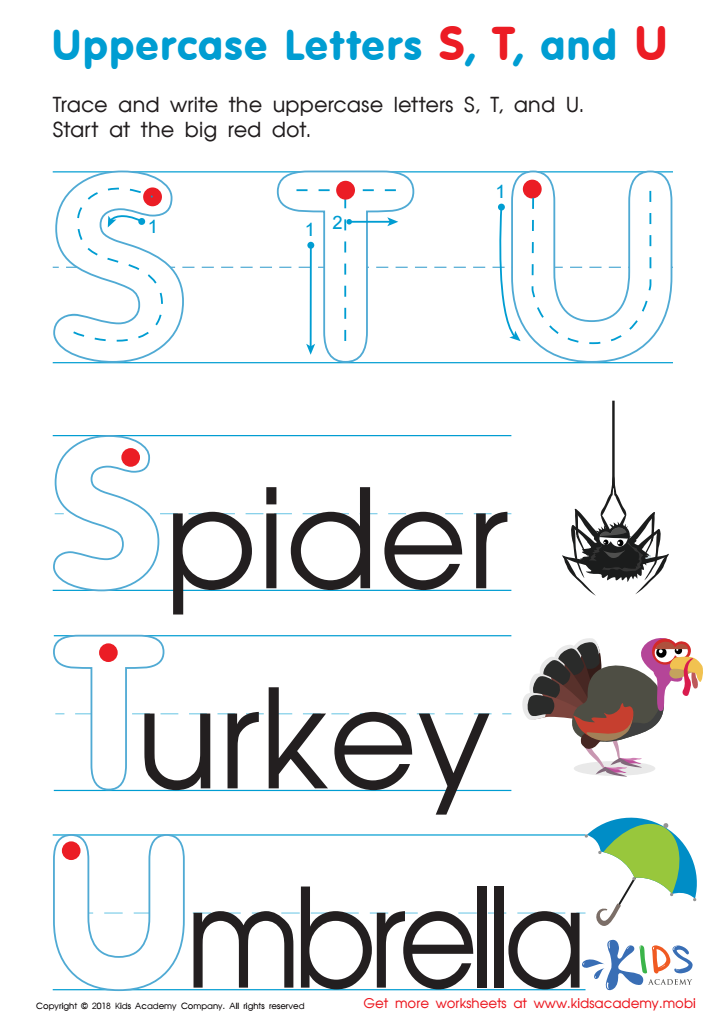
Uppercase Letters S, T, and U Worksheet
Help your kids learn to write upper-case letters with this fun tracing sheet. Start at the big red dot for each letter: S, T, and U. Show them the pictures and ask what letter each word starts with. Guide their hand and watch them learn!
 Assign to My Students
Uppercase Letters S, T, and U Worksheet
Worksheet
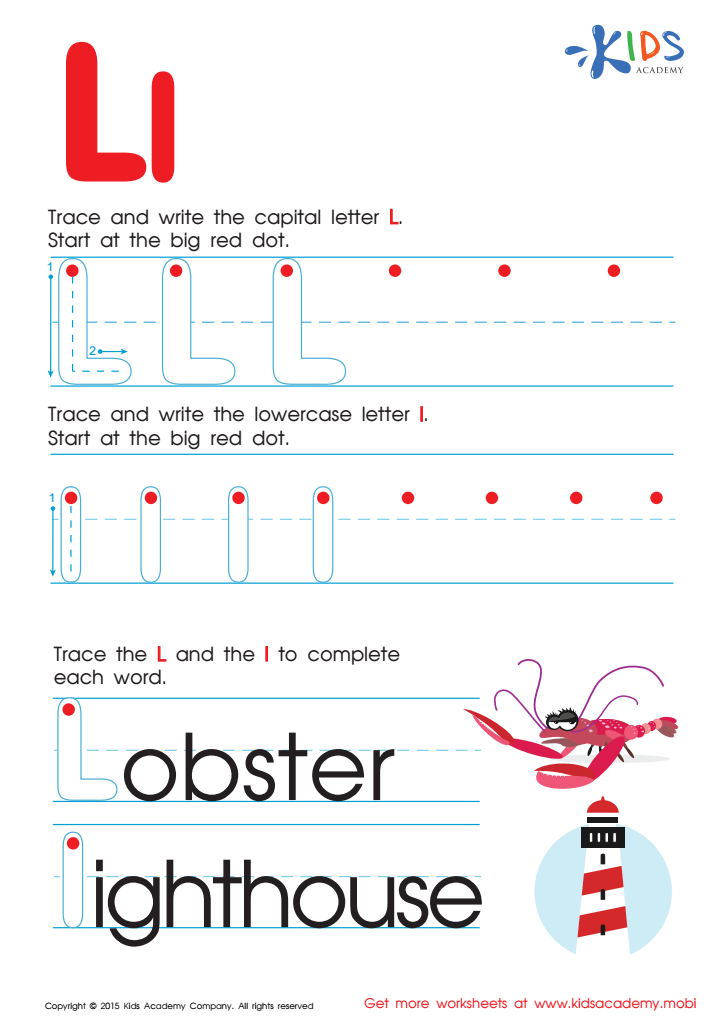
Letter L Tracing Page
Trace uppercase and lowercase letters to practice writing. Pay attention to the lowercase letters, like the "L", that are not as tall as an uppercase "I" or as short as a lowercase "i". Words like "lobster" and "lighthouse" are waiting to be completed. Enjoy!
Letter L Tracing Page
Worksheet
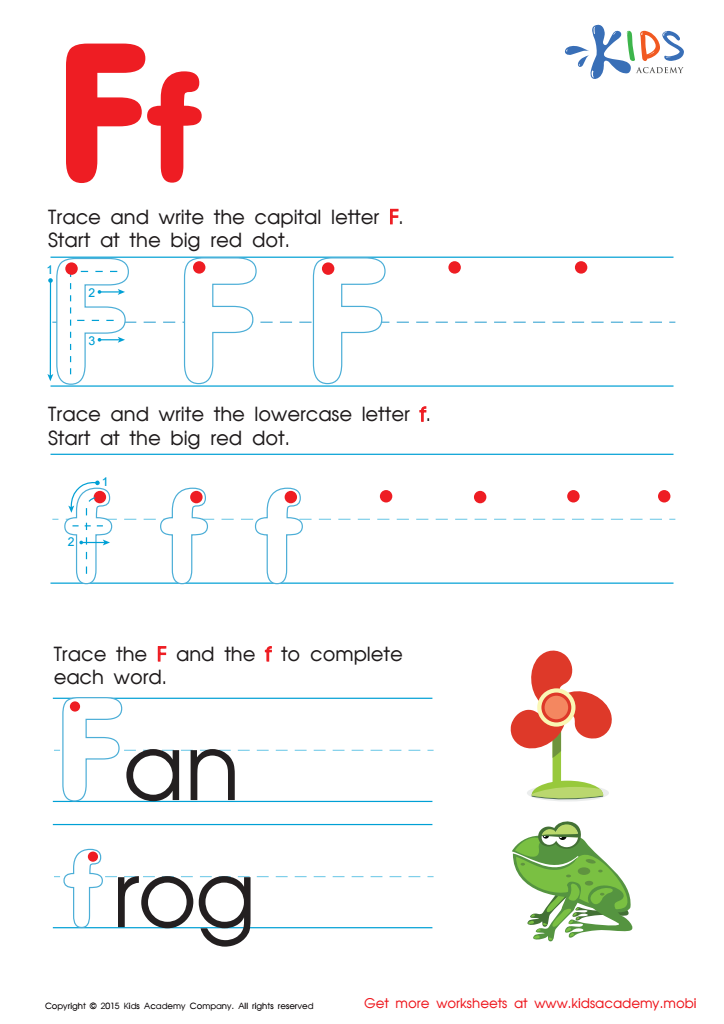
Letter F Tracing Page
Trace "F" with your pencil! Start at the red dot and draw lines — it's fun! Check it out — it looks great! Keep practicing to make it even better. Then, try completing words. Help out the broken fan and funny frog! Get free alphabet worksheets and activities for your kids. Come see our new tracing pages!
Letter F Tracing Page
Worksheet
Join Kids Academy for Free
Who is primarily going to use this learning content?








Alphabet learning, particularly letter recognition, is crucial for children aged 6-9 as it lays the foundation for their reading and writing skills. During these formative years, children are rapidly developing their cognitive abilities, and mastering letter recognition is a key milestone. Proficient letter recognition enables children to decode words, which is essential for reading comprehension and overall literacy development.
Moreover, the ability to quickly identify letters contributes to a child's confidence in their academic abilities. When children can easily recognize letters, they are more likely to participate actively in reading activities, fostering a love for books and literacy that carries into adulthood. For teachers, promoting letter recognition can create a positive learning environment that supports diverse learning styles. Through engaging activities, such as games and interactive lessons, teachers can make learning enjoyable, keeping students motivated.
For parents, understanding the significance of letter recognition supports their involvement in their child's education. Parents can reinforce learning at home through everyday activities, enhancing their child's interest in literacy. Ultimately, prioritizing alphabet learning and letter recognition equips children with essential skills for academic success and lifelong learning. By focusing on these foundational skills, parents and teachers play a crucial role in ensuring children's future literacy and communication skills.








